
Karlštejn
"Charles IV built it to keep the crown jewels safe and women out. He succeeded at one of those things."
Karlštejn is the castle every Czech schoolchild draws, the one on the postcards, the one a half-hour train ride from Prague delivers you almost directly beneath — which means it is also, on any summer day, completely overrun. I want to be honest about that before anything else, because the gap between the castle’s beauty and the experience of visiting it on a July afternoon is wide enough to fall into. We made the mistake the first time. We came back early on a weekday in spring and it was a different place entirely.
The emperor’s strongbox
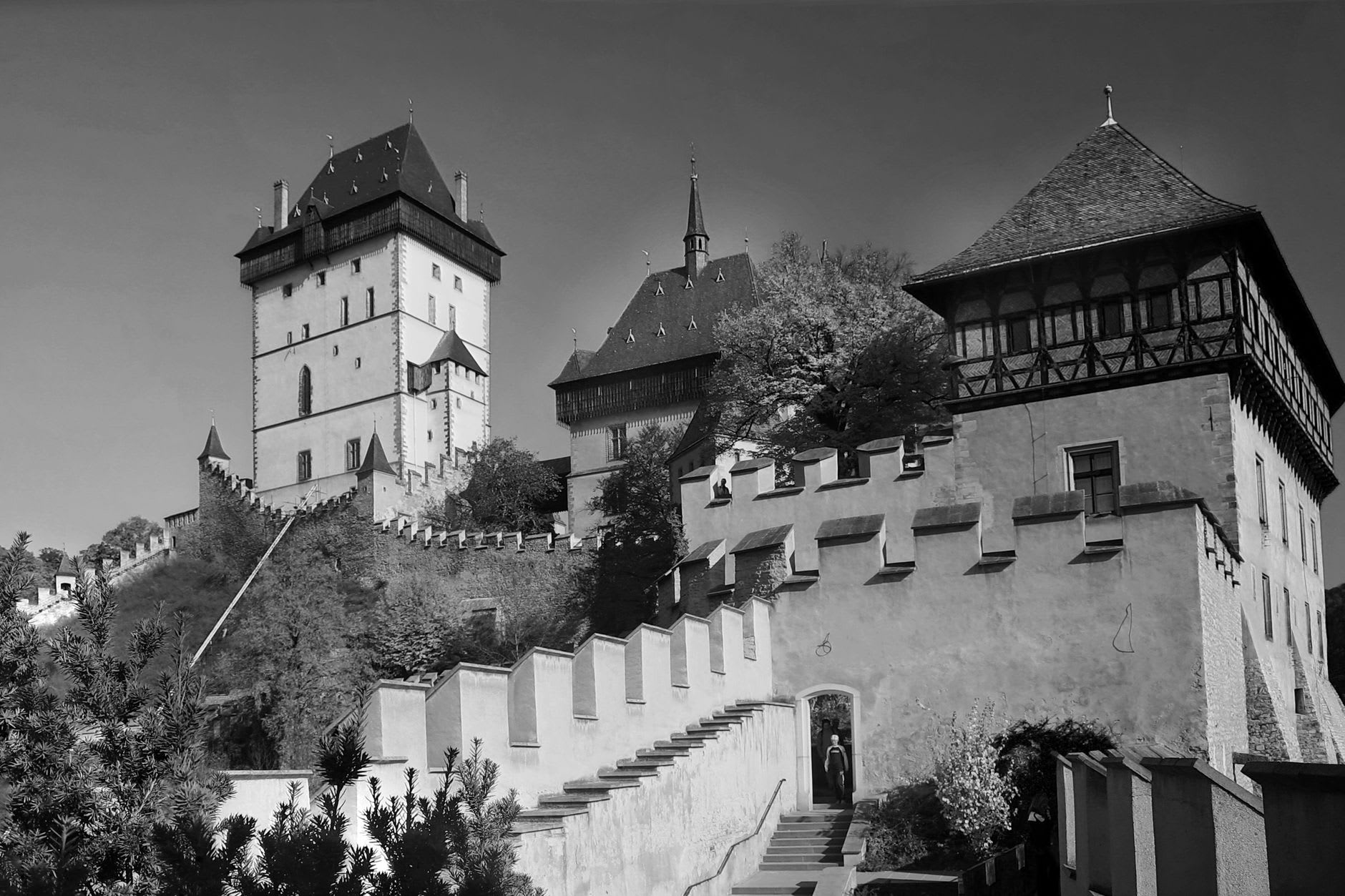
Charles IV — Holy Roman Emperor, King of Bohemia, the man who built half of medieval Prague and arguably invented the idea of the city as we know it — had Karlštejn raised in the mid-fourteenth century for a very specific purpose: to keep things safe. Specifically the imperial crown jewels and a hoard of holy relics, stored in a castle designed as a series of ascending fortifications, each more secure and more sacred than the last, climbing the wooded crag in tiers until you reach the Great Tower at the top.
The pinnacle of it all is the Chapel of the Holy Cross, and it is genuinely one of the strangest, most overwhelming interiors I have stood in anywhere. The walls are studded with over a thousand pieces of polished semi-precious stone — jasper, amethyst, carnelian — set into gilded plaster among more than a hundred panel paintings, the gold and stone meant to evoke the walls of the heavenly Jerusalem. Charles is said to have come here to pray alone, surrounded by the relics, in a room built to feel like the antechamber of paradise. Access is strictly limited and on a separate, longer guided tour that must be booked well ahead — and yes, it is worth the bother.
The climb, the village, and a legend about women
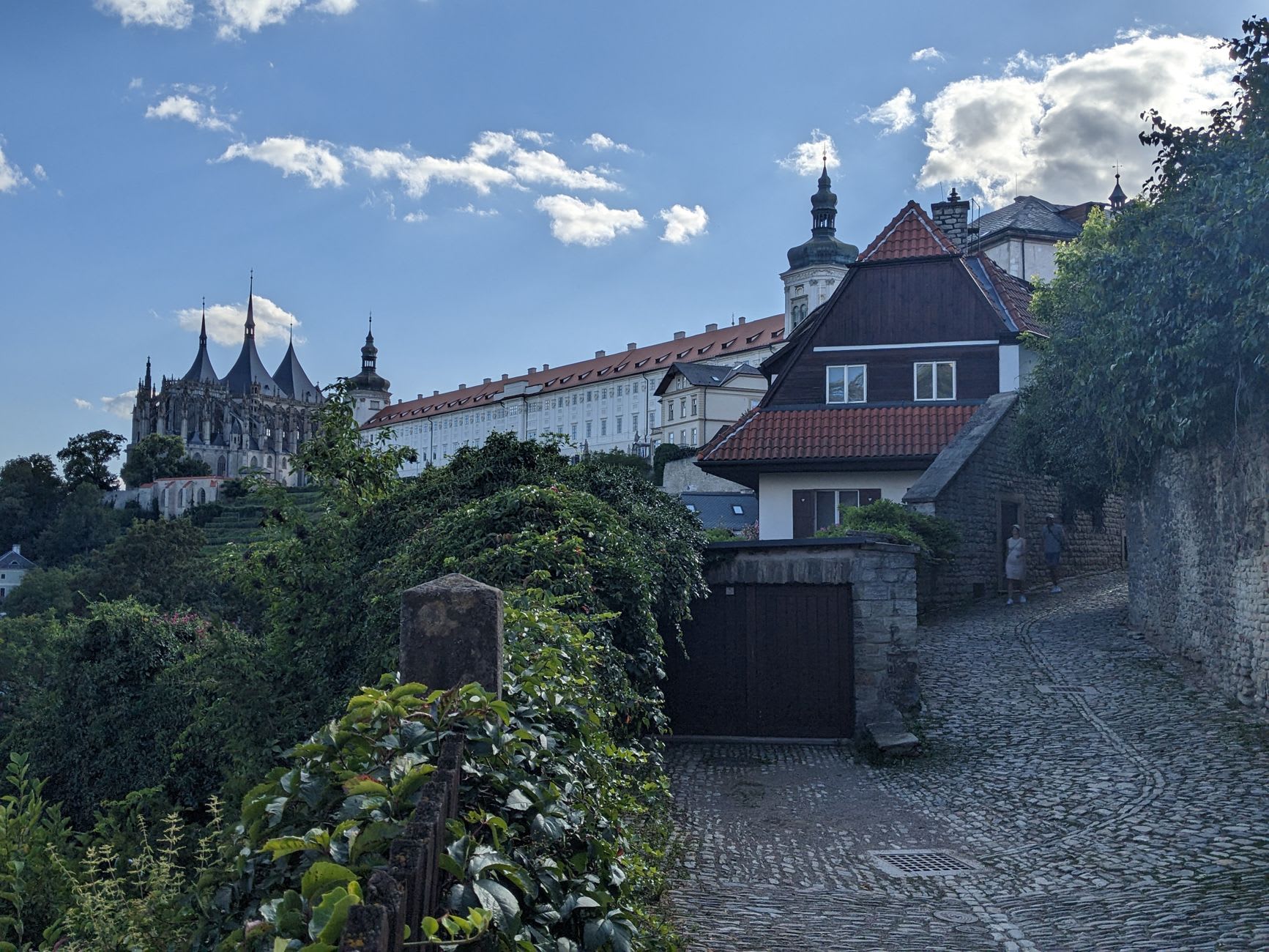
The castle sits above a small village of the same name, and the walk up is steeper and longer than the photographs suggest — a cobbled lane lined, frankly, with a gauntlet of souvenir stalls and crystal shops and stands selling trdelník, the spit-roasted sugar pastry that is sold everywhere in Bohemia and is, I maintain, not actually traditional. Lia bought one anyway. We do not always agree on these matters.
There is a famous old legend that Charles forbade women from staying overnight inside the castle, and that any noblewoman who broke the rule would be punished — a story the guides tell with relish and that historians regard as almost certainly invented. Whatever the truth, Lia made a point of lingering deliberately in the upper courtyard, daring the ghost of the fourteenth century to do something about it. Nothing happened. The view from up there, out over the Berounka river valley and the surrounding forest, is the real reward of the climb — Bohemia rolling away in soft green folds, the village roofs far below, and the castle at your back looking, for once, almost peaceful.
When to go: April, May, or October on a weekday morning, when the crowds thin and the light on the stone is best. Book the longer tour that includes the Chapel of the Holy Cross well in advance — it runs only part of the year and sells out. Skip July and August weekends entirely unless crowds genuinely don’t bother you.