Karlovy Vary
"I drank the water from a porcelain cup, scalded my tongue, and understood immediately why Goethe kept coming back."
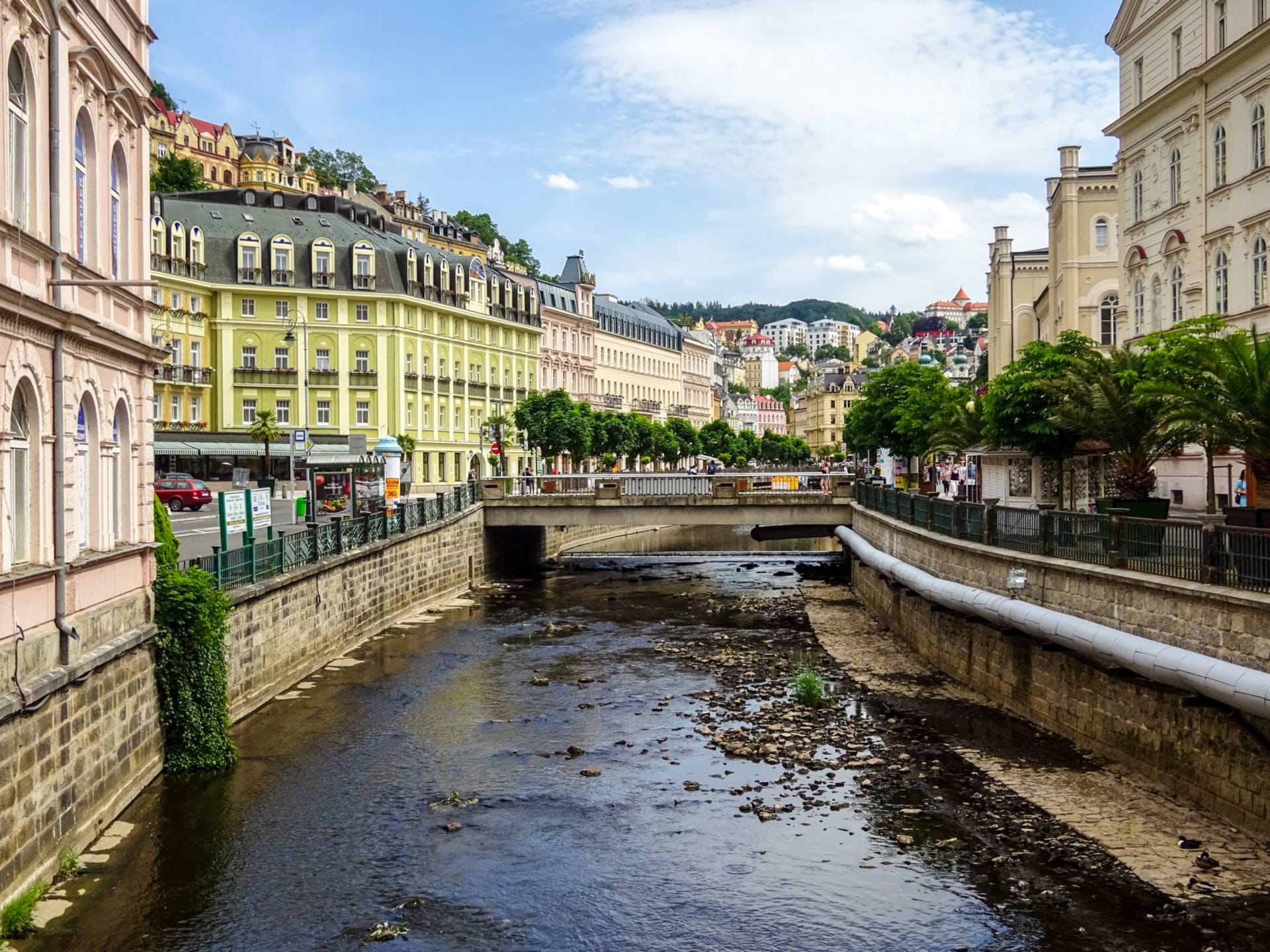
The springs smell before you see them. Walking down into the gorge of the Teplá River, following the sound of a string quartet from one of the colonnades, there is a moment where the air changes — a faint mineral sharpness, vaguely sulphurous, not unpleasant. Then the colonnade opens up: a long neoclassical arcade running the length of the riverbank, and at intervals along it, little brass spigots from which steaming water pours into the hands of guests clutching their drinking cups. I watched this for a while before I understood what I was looking at. It is a ritual as precise and codified as a tea ceremony, and Karlovy Vary has been doing it, in various architectural incarnations, since the fourteenth century.
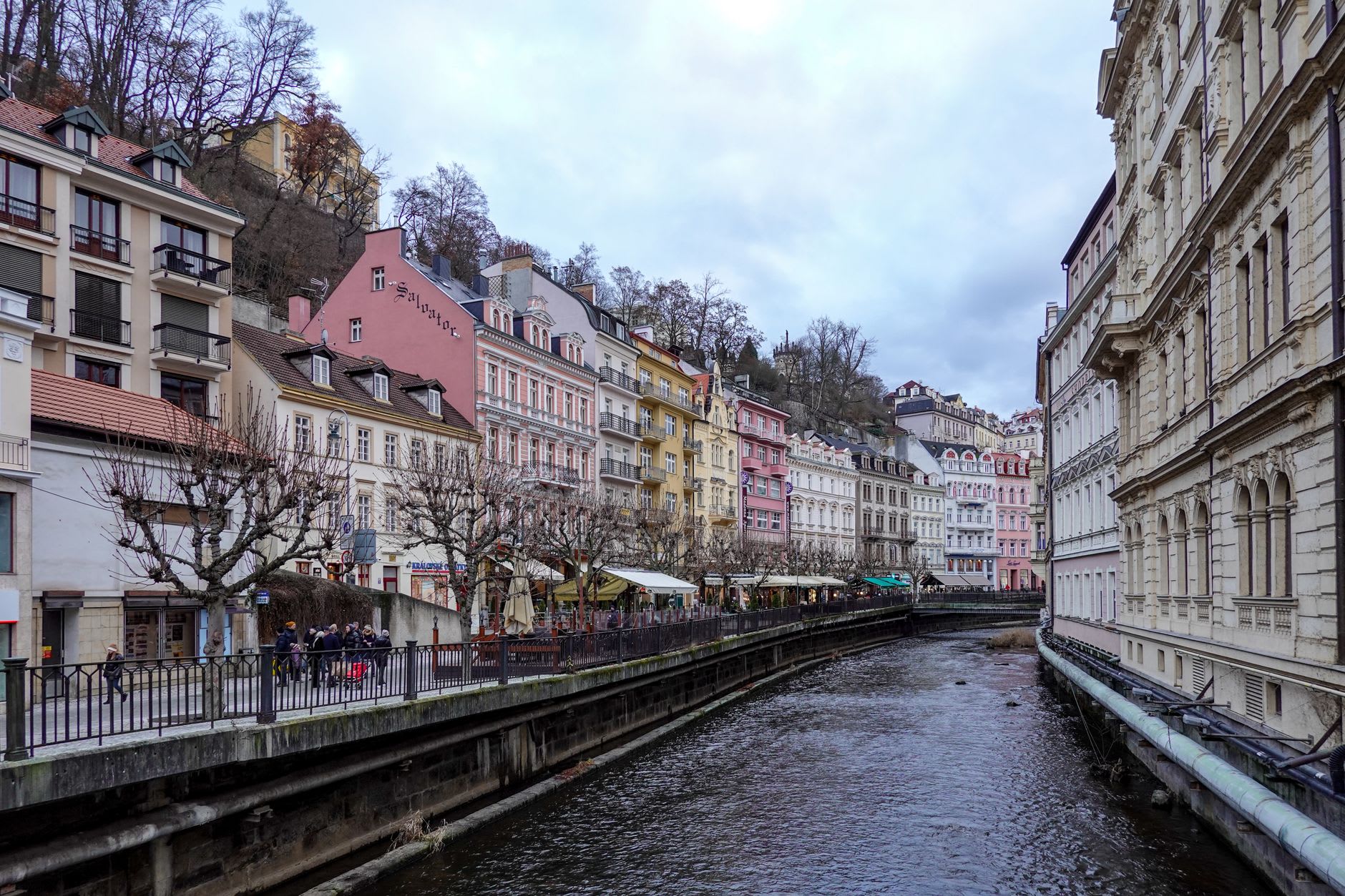
The town is built in a narrow valley, the architecture stacked up the steep sides in layers — neoclassical hotels and sanatoriums painted in shades of cream and pale yellow, their ornate facades rising above the colonnades like a stage backdrop that never loses its effect. The Grandhotel Pupp sits at the southern end of the main promenade, enormous and slightly faded in the best way, a building that has hosted Goethe and Schiller and Beethoven and Chopin and doesn’t need to announce it. I sat in the café terrace long enough to order two coffees and one of the Kolonáda wafers — those thin, chalky, slightly sweet discs that the shops sell everywhere in Karlovy Vary, made to accompany the spring water ritual, and which I ate six of over three days because they grow on you.
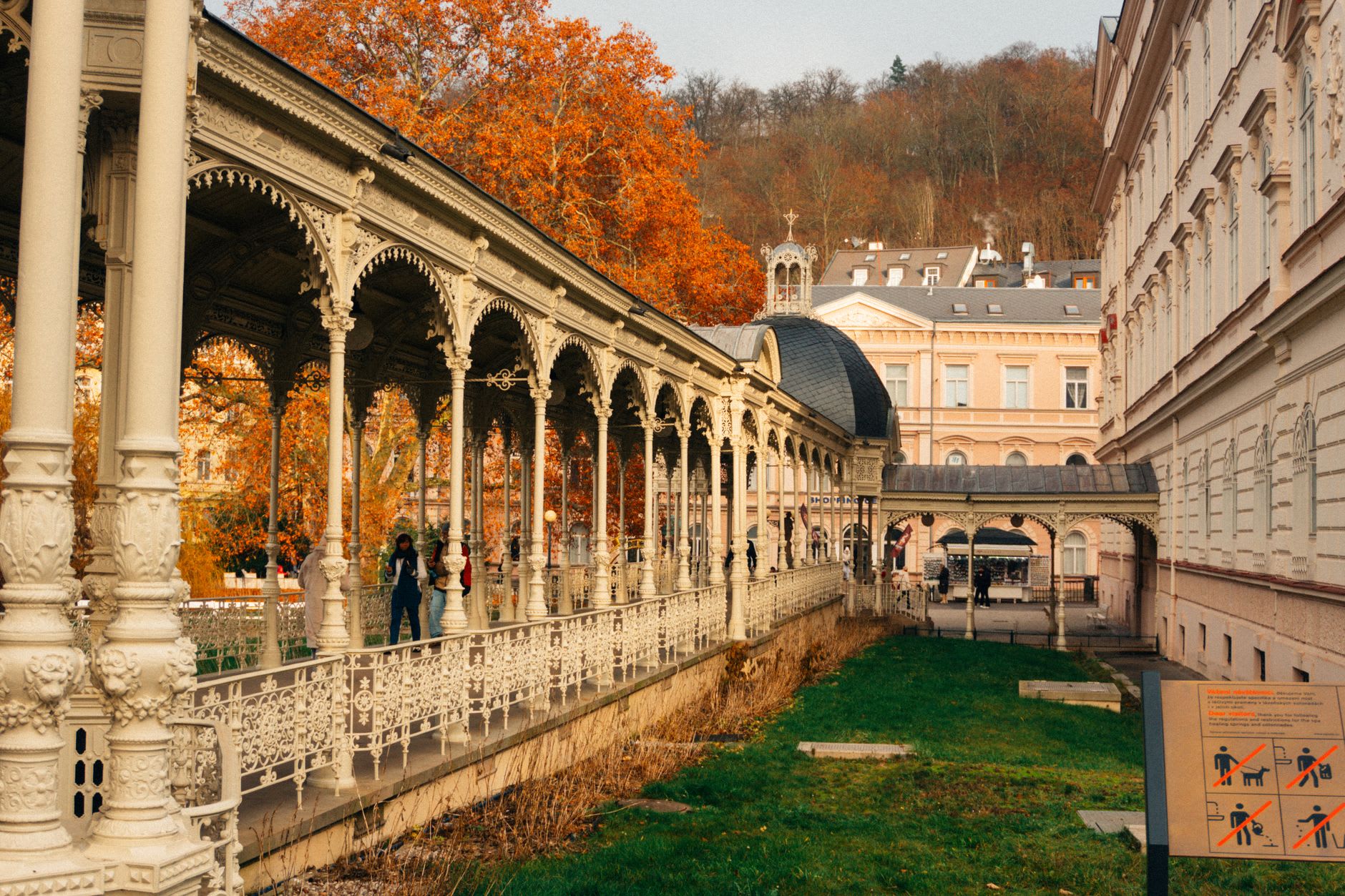
The spring water itself: I had been told it was an acquired taste, which was accurate. There are thirteen springs in Karlovy Vary, each with slightly different mineral content and temperature. The Vřídlo, the hottest at seventy-two degrees, shoots a column of water twelve metres into the air inside a modernist pavilion on the riverbank — dramatic, slightly alien, worth watching for several minutes. The cooler springs are actually drinkable without burning your mouth if you’re patient about temperature. I worked through six of them over two days, carrying my little white and blue porcelain spouted cup between colonnades like everyone else. The water tastes of iron and something ancient, and it does something to the lining of your stomach that the Czech literature describes as medicinal and which I would describe simply as noticeable.
In the evenings, the town empties of day visitors and reveals a quieter character. The hillside above the Grandhotel Pupp has a funicular that deposits you at a viewpoint where the whole valley opens up below — the church spires, the colonnades, the pale hotel facades, the narrow silver thread of the Teplá. I stood there as the light faded. The Russian Orthodox Church of Saints Peter and Paul, all onion domes and crimson brick, glowed against the dark hillside. This town has always attracted Russians — Tsar Peter the Great came; Dostoevsky spent unhappy time here. The Russian presence in the gift shops and restaurants remains conspicuous, though the political atmosphere has shifted the demographics in recent years.
The Karlovy Vary International Film Festival in July transforms the town into something barely recognizable — red carpets and camera fleets and the gentle surrealism of celebrities drinking mineral water from porcelain cups. I have never been during the festival and I am not certain I want to be. The Karlovy Vary I prefer is the off-season version, when the sanatoriums are still running their cures and the guests are there for weeks rather than hours, and the colonnades at nine in the morning have the quality of a very slow, very particular kind of theatre.
When to go: April through June and September through October are ideal — warm enough for the riverside promenade, quiet enough to hear the string quartet clearly. The Film Festival in late June and July brings energy but also prices and crowds. Winter has its own atmosphere: the steam from the springs is more visible in cold air, and the colonnades take on a slightly spectral quality that I imagine would suit the town’s history perfectly.