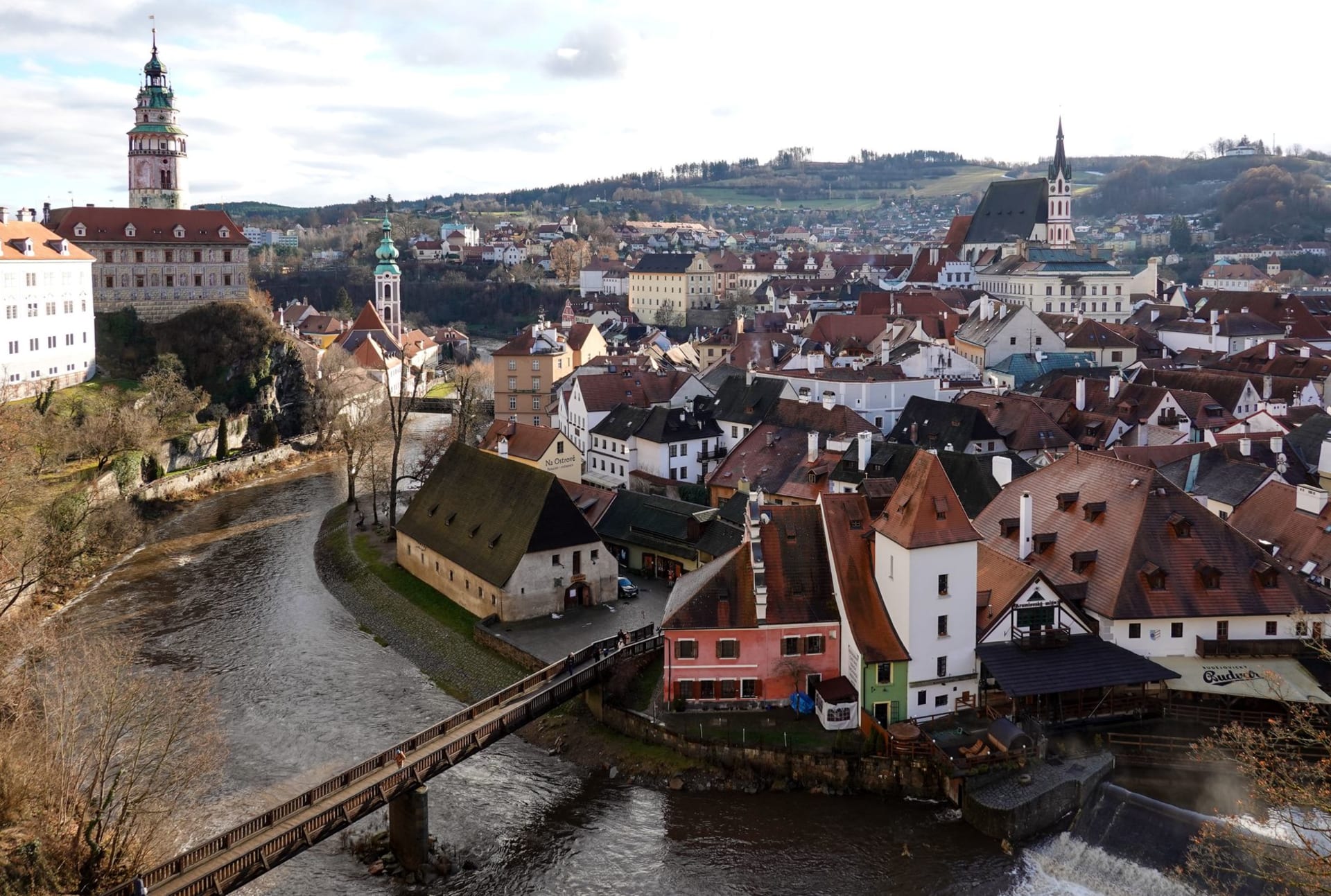
Český Krumlov
"Český Krumlov is the kind of place that makes you feel like you arrived one century late and nothing was left for you to discover — and then you discover it anyway."
I came in by the back route, on foot from the bus stop on the edge of town, and the castle appeared through a gap in the trees before I expected it. A round tower striped with trompe-l’oeil painting, rising above the rooftops in the amber light of late afternoon. I stopped walking. The woman behind me on the path said something in Czech I didn’t understand, but her tone was clear: yes, it’s always like this. Get used to it.
Český Krumlov sits in a loop of the Vltava River in southern Bohemia — the river nearly encircling the old town before releasing it northward toward Prague. The castle complex, second largest in the Czech Republic after Prague, climbs the rock above the town in five interconnected courtyards. I walked them slowly, twice, in different light. The first time in afternoon gold, the second just after eight in the morning when the tour groups hadn’t arrived and the only sounds were jackdaws and my own footsteps on the cobblestones. The morning walk was better.

The town below the castle is compact enough to feel like a stage set — a single main square, a web of narrow lanes, hospody tucked into cellars, a handful of breweries serving Eggenberg beer that tastes different here than anywhere I’ve had it since. I sat at a wooden table in a vaulted room on Latrán Street and ordered svíčková without looking at the menu, because it was the only right thing to do. The bread dumplings arrived in thick slices, pale and slightly steamed, and the cream sauce was pale gold with enough sweetness from the root vegetables to make the beef’s richness make sense. I ate slowly. The woman at the next table was doing the same. We nodded at each other without speaking.
The castle gardens above the third courtyard are worth the climb when the roses are out in June. The baroque theatre inside the castle — one of the best preserved in Europe, with its original wooden machinery and hand-painted sets — runs occasional performances that feel genuinely transported from another era rather than curated for tourists. I didn’t catch a show, but I stood in the auditorium for ten minutes feeling the particular quality of silence that very old stages hold. The smell of old paint and dusty velvet is its own kind of narrative.

In the evenings, the day-trippers leave and the town shifts. The restaurants on the main square empty, the souvenir shops shutter, and the streets are left to the people who live here and the guests at the smaller pensions. The light on the castle tower turns rose-coloured for about twenty minutes before it goes dark. I stood on the Lazebnický Bridge each of the three nights I was there to watch this happen. It never stopped being worth it.
When to go: May and September are the sweet spots — enough warmth to sit outside, long evenings, and crowds that are manageable. Late October brings mist off the river and golden forest colour; the town feels almost melancholy in the best way. Avoid August weekends if you have any interest in solitude: the old town becomes genuinely difficult to move through.