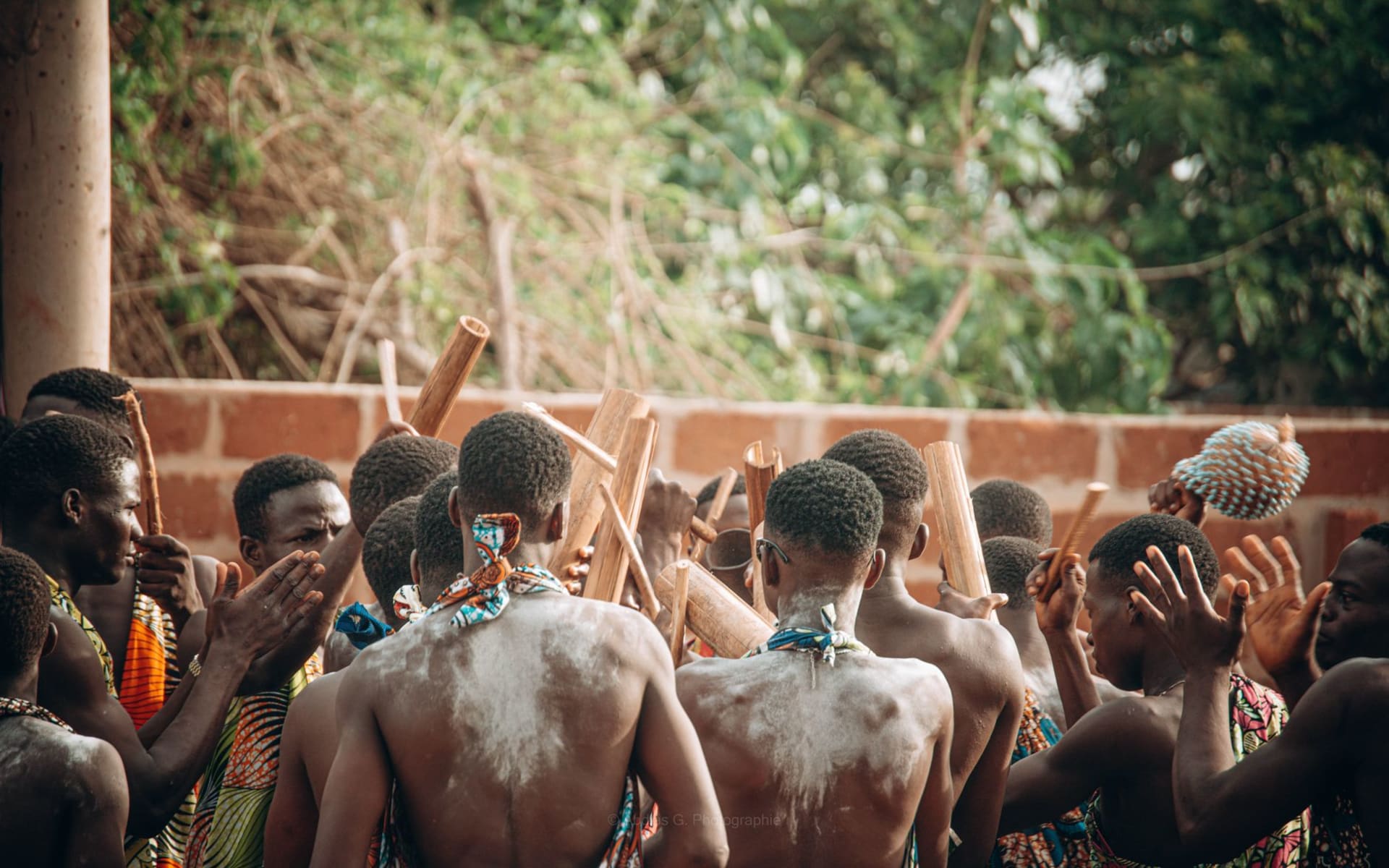
Porto-Novo
"Porto-Novo is the kind of capital that seems surprised by its own status — quieter than it should be, and better for it."
I took a bush taxi from Cotonou to Porto-Novo on a Tuesday morning and arrived to find the streets around the central market almost leisurely — a quality so different from what I’d left behind that for a moment I wondered if I’d somehow taken a wrong turn. Porto-Novo is the official capital of Benin, the seat of the National Assembly, the city that appears on all the formal documents, and yet it moves at a completely different register than the economic metropolis sixty kilometers west. This is not a sleepy place — the market at Ouando is large and genuinely local — but it has a pace that allows you to actually see the architecture rather than simply avoid being hit by it.
The Grande Mosquée near the center is the thing that stops every visitor in their tracks: a building that looks emphatically Brazilian, with a pink and white baroque facade, minarets that more closely resemble Portuguese church towers than anything from the Islamic architectural tradition. This is the physical record of the Afro-Brazilians who returned from South America in the nineteenth century — freed slaves and their descendants who brought back Portuguese names, Catholic-inflected sensibilities, and a taste for a certain kind of ornate facade work that grafted itself onto everything, including their mosques. Walking through neighborhoods like Missérété or around the royal palace quarter, you keep encountering this layering: a Yoruba compound wall next to a building with Luso-Brazilian tile work, next to a mid-century French administrative block, all existing without apparent friction.
The Musée Ethnographique is housed in a former colonial palace and contains one of the more serious collections of Vodou objects and Fon royal regalia in the country. The lighting is dim and the labels are only in French, but the objects themselves — wooden thrones, iron staffs, protective charms assembled from materials that Western taxonomy would struggle to categorize — carry enough presence to compensate for the interpretive gaps. I spent two hours there and felt I’d only opened the first layer.
The food in Porto-Novo has a slightly different inflection than Cotonou — the Yoruba presence here is stronger, and you find dishes that feel closer to what you’d eat in Ogun State across the border in Nigeria: egusi soup thickened with ground melon seeds, fried plantain served with a peanut-heavy sauce, the particular sweetness of palm wine bought from a jerrycan at roadside stands. I ate most of my meals at a maquis near the market run by a woman who cooked on three enormous pots simultaneously and served everything with a palm oil drizzle that I still think about.
When to go: Porto-Novo works year-round as a half-day or full-day trip from Cotonou. November through February is most comfortable climatically. Market days are busiest mid-week. The city is quieter on weekends — good for walking the heritage neighborhoods without crowds, less good if you want the market in full swing.