Africa
Benin
"I didn't expect to arrive somewhere and feel history still alive under my feet."
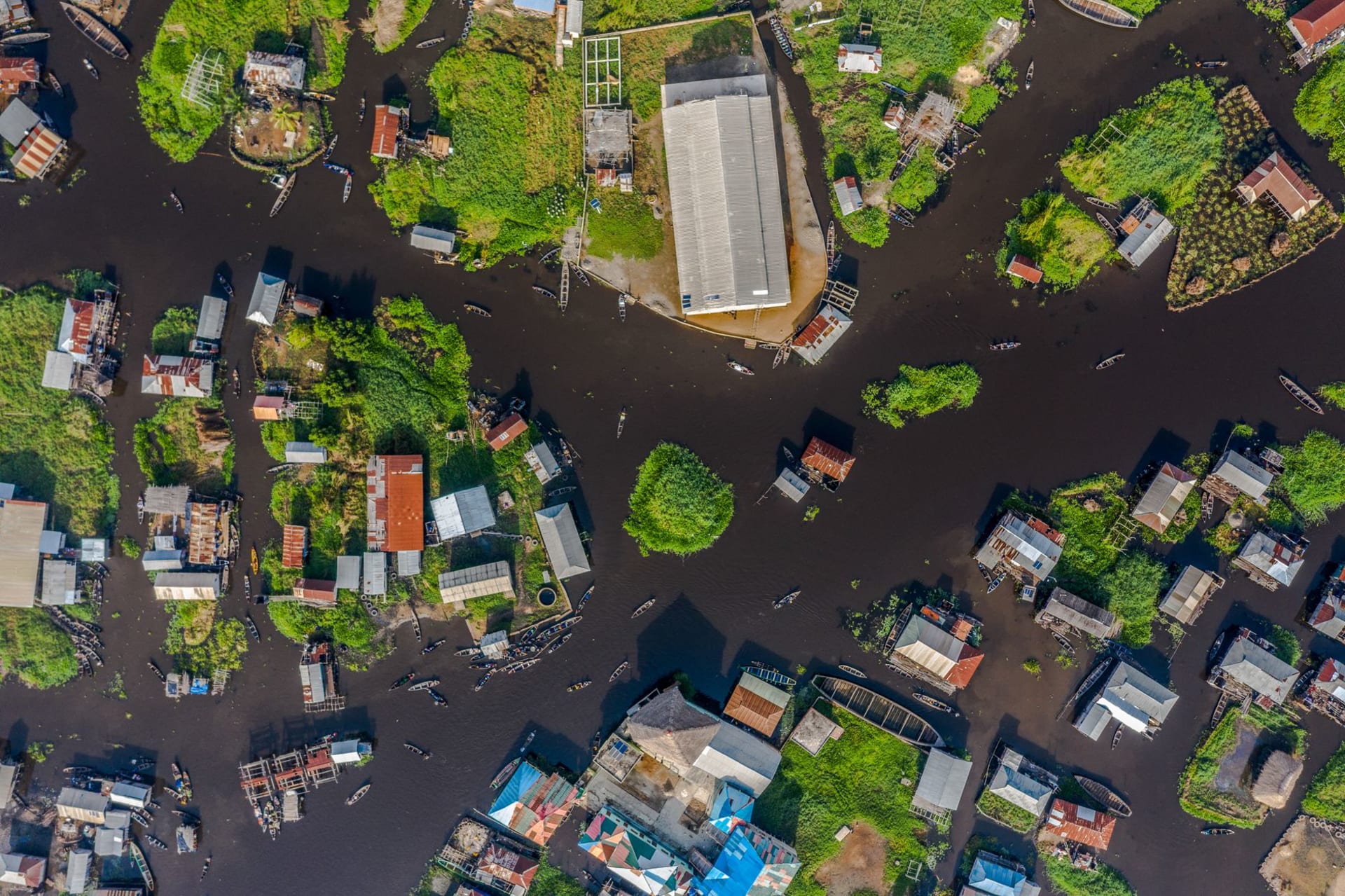
The pirogue pushed off from the shore at Abomey-Calavi just after sunrise, the boatman standing at the stern with a long pole, threading us through reed beds that smelled of mud and fish smoke. Ganvié appeared slowly — first the church steeple, then the market stalls floating on wooden platforms, then the whole impossible village of maybe thirty thousand people who have been living on Lake Nokoué for four centuries. Nobody in my travel circle had mentioned this place. I’d found it almost by accident, on the second day of a trip I’d barely planned. That careless approach turned out to be exactly right for Benin.
Cotonou, the economic capital where most flights land, is not a beautiful city, and I won’t pretend otherwise. It’s chaotic in the way that makes you grip your bag tighter — zemidjans, the motorcycle taxis, swarm every intersection, and the market of Dantokpa is the kind of sensory assault you need at least three visits to parse. But Cotonou rewards patience. The maquis along the beach road serve grilled tilapia and piment sauce that you’ll think about months later. The neighborhood of Akpakpa has a colonial-era grid that’s almost Portuguese in character, if you squint past the generators and the satellite dishes. And the people have a directness — not unfriendly, just uninterested in performing for visitors — that I find more refreshing than any forced hospitality.
The real reason to come to Benin, though, is what lies inland. Abomey was the capital of the Kingdom of Dahomey, a state that ran from the 1600s to the 1890s and whose palaces are now a UNESCO World Heritage Site. The museum there contains a throne said to be mounted on the skulls of defeated kings. The historical plaques are matter-of-fact about atrocities. It is not comfortable history, and that discomfort is the point. Benin doesn’t romanticize its past — not the slave trade that made Dahomey wealthy, not the warrior women called Agojie who protected the king, not the religious practices that European colonizers tried to erase and that survived anyway, traveling across the Atlantic to become what we now call Vodou. In Ouidah, the Route des Esclaves ends at the Door of No Return, a monument on the beach. The sea beyond it was, for hundreds of thousands of people, the last thing they ever saw of this continent. Standing there in the late afternoon, with fishing boats in the shallows and children playing in the surf, is one of the harder and more necessary things I’ve done as a traveler.
When to go: November to March, the dry season, is the most comfortable for travel — lower humidity, manageable heat, and roads that stay passable. April to June brings the first rains and turns the Pendjari region in the north into better wildlife-watching territory. Avoid July and August if you’re sensitive to heat and humidity; the roads to Ganvié become more interesting, the rest less so.
What most guides get wrong: They mention Benin as a footnote to Ghana or Togo — a quick day trip, a border crossing, a footnote. That framing misses everything. Benin deserves a week minimum, split between the south (Cotonou, Ouidah, Ganvié, Abomey) and at least a day or two in the north near Natitingou, where the Somba people build their tata-somba fortified houses as if each one were a small castle. This is one of the least-visited countries in West Africa precisely because it doesn’t sell itself. That’s the reason to go.