Abomey
"The plaques were matter-of-fact about atrocities. Abomey doesn't romanticize anything, and that's what made it essential."
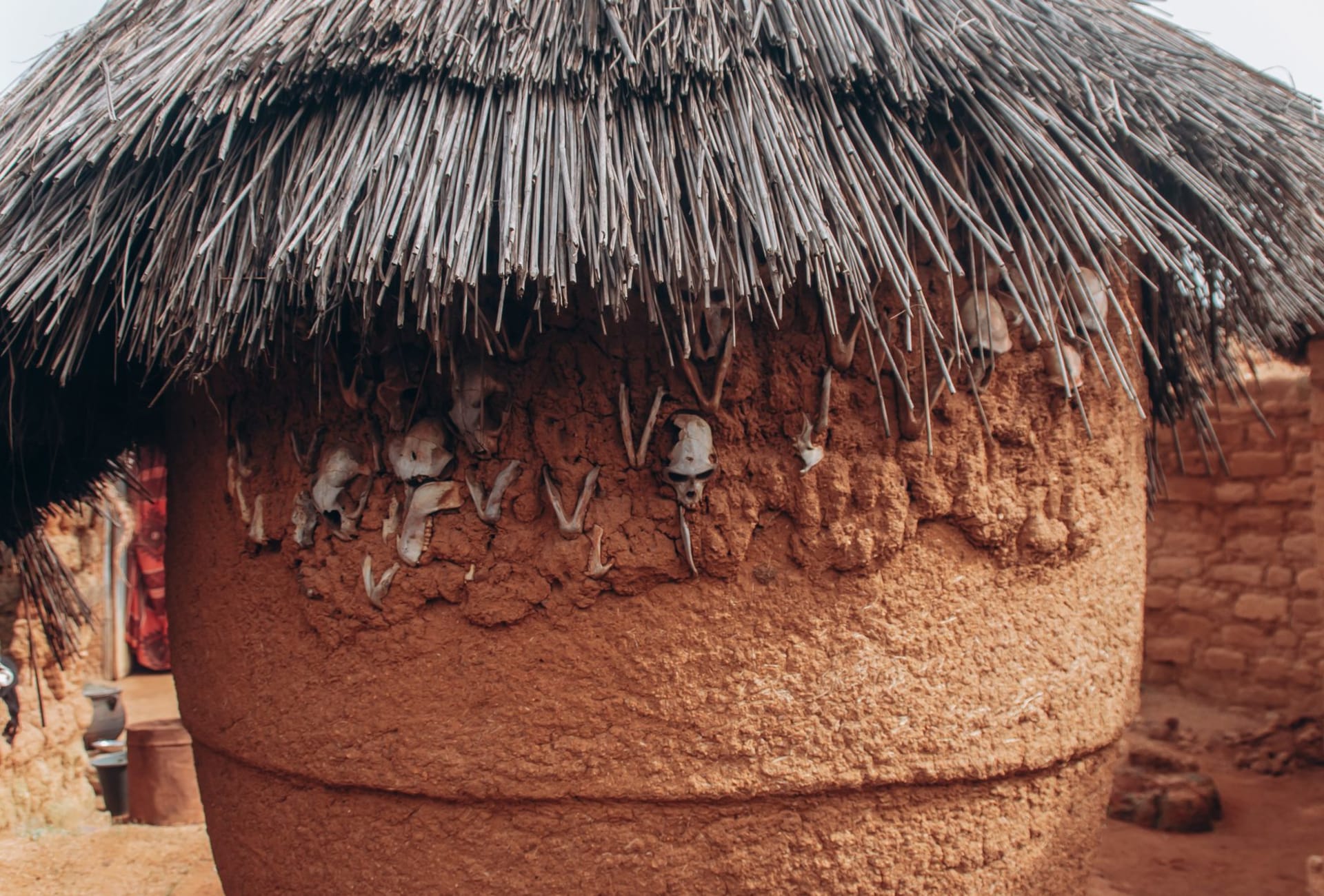
There is a throne in the Abomey palace museum said to be supported by the skulls of four conquered kings. The museum guide explained this without particular drama, the way you might explain a chair’s leg style, and I stood in front of it for a longer time than made sense given that it’s a dark room and the object itself is not large. What held me there was the matter-of-factness — the plaques throughout the museum describe forced labor, human sacrifice, military conquest, and the slave trade with the same calm register they use to describe architectural innovations in mud-brick construction. There is no attempt here to make history palatable. That honesty hit harder than any dramatic presentation would have.

Abomey was the capital of the Kingdom of Dahomey from the early seventeenth century until French colonization in 1894, and the twelve royal palaces — most now in various states of ruin, two restored — are a UNESCO World Heritage Site. The complex covers nearly forty-four hectares at its core, ringed by walls that the last king tried to burn down rather than let fall into French hands. You can see the char marks still, in certain sections where the reconstruction stopped and the original exposed surface remains. Walking through the palace grounds in the early morning, when the tour buses haven’t arrived yet and it’s just me and a couple of local students, felt like occupying an architecture that still contains its original weight.
The Agojie — the female warrior corps that protected the Dahomey throne — have become internationally known since the film adaptation of their history. In Abomey you encounter their reality more complexly: yes, fierce and legendary, but also deeply embedded in a system that generated enormous wealth partly through the sale of captives to European traders. The museum doesn’t let you hold just the heroic version. I appreciated that.

The town around the palace is a working city of around hundred thousand people. The central market sells appliqué tapestries — the Fon textile tradition, vivid geometric shapes on indigo and red cloth — and you can watch artisans stitching them in workshops off the main square. I bought a small panel showing a lion and a shark, two of the royal symbols, and the woman who sold it to me told me in French that her grandfather had made the same patterns for the palace itself. Probably everyone says that. I chose to believe her.
When to go: November through March in the dry season, when the roads from Cotonou (around 130 km) are reliable and the heat is manageable. The palace is open daily but the morning hours, before ten, are best for photography and for quiet. Combine with a night in Abomey proper rather than treating it as a day trip from Cotonou.