Mountain Pine Ridge
"The air changed before the trees did. Cooler, drier, with something in it that smelled like home and not at all like the tropics."
The Unexpected Highlands
Nobody tells you about the pine trees. Belize announces itself in Caribbean terms — reef, jungle, heat, the flat coastal plain — and then Mountain Pine Ridge Forest Reserve arrives like a different country. The drive up from San Ignacio takes about forty-five minutes on unpaved roads that wind through the Cayo foothills, and somewhere around 1,800 feet the vegetation shifts. The broadleaf jungle gives way to open pine forest, granite outcroppings, meadows. The temperature drops noticeably. The light becomes dry and angled rather than diffuse.
I had been in Belize for a week when I drove up, and the change in atmosphere was almost disorienting. I had acclimatized to the lowland heat, to the density of the vegetation, to the way sound carries differently in humid air. Mountain Pine Ridge felt clarifying in the way that altitude sometimes does — like something unnecessary had been removed.
Rio On Pools
The Rio On Pools are a series of granite-lined swimming holes where the river has carved channels and basins through grey stone. In the dry season the water is perfectly clear and cold in the way that moving water at elevation tends to be — not hypothermic, but enough of a shock that you gasp at entry and then don’t want to leave.
I slid down a natural granite chute into a pool about the size of a small room and floated there looking at the canopy overhead. It was early morning. There was a toucan in the upper branches doing something with its beak that looked effortful. The water was cold enough that I could feel my heartbeat in my feet.
The pools are accessible off the main Pine Ridge road and get busy by midday, so arriving by eight or nine in the morning makes a meaningful difference. Late afternoon is also good — the tour groups from San Ignacio have cycled back by then.
Hidden Valley Falls and the Long Views
Hidden Valley Falls — sometimes called Thousand Foot Falls, though it’s closer to 1,600 feet — is one of the highest waterfalls in Central America. The viewing platform sits at a distance from the falls themselves; you see the whole curtain of water from across a valley, framed by forest. It’s a landscape-scale image rather than an intimate one.
I stood at the viewpoint for longer than I expected to. There’s something about a waterfall you can see in full that’s different from the kind you’re standing under — you get to see what water does when it has a long fall and all the time in the world. The mist was just visible from the viewpoint, a permanent cloud at the base.
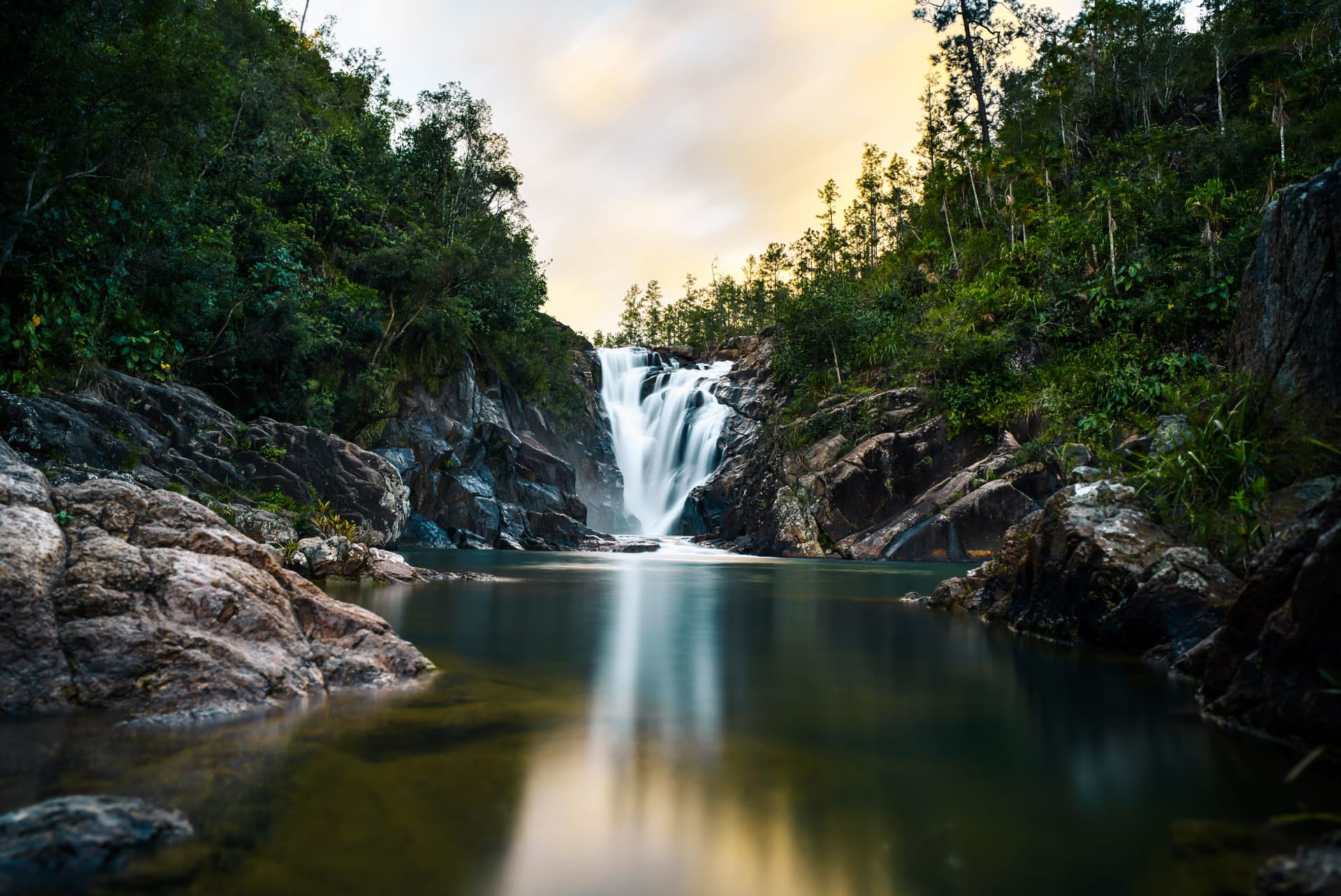
Big Rock Falls is more accessible and more immersive: a shelf of water tumbling into a jungle pool where you can actually swim. Lia and I spent an hour there on a weekday afternoon with no other visitors. The sound was enormous and close and the rock was slippery and the whole place felt ancient in the way that granite feels ancient.
Overnight in the Ridge
A handful of jungle lodges operate in the reserve, most of them reached by four-wheel drive roads that require genuine attention after rain. The lodges tend toward the rustic-luxury model — stone cottages, outdoor showers, candlelight — and they are not cheap. But waking up in the Pine Ridge at dawn, with the cool air and the birds and the smell of pine, is worth whatever accounting it requires.
The Caracol Maya ruins are accessible from Mountain Pine Ridge, about an hour’s drive through jungle on a rough road. It’s a significant site — larger than Tikal by some measures — and because of the access difficulty, it receives a fraction of the visitors.
When to go: March through May is dry season in the Ridge and the best time for swimming holes and waterfall access. The roads become challenging in wet season (June through November), though the forest is greener and the waterfalls fuller. January and February can be cold at night — genuinely cold, bring a layer — but days are usually clear and fine.