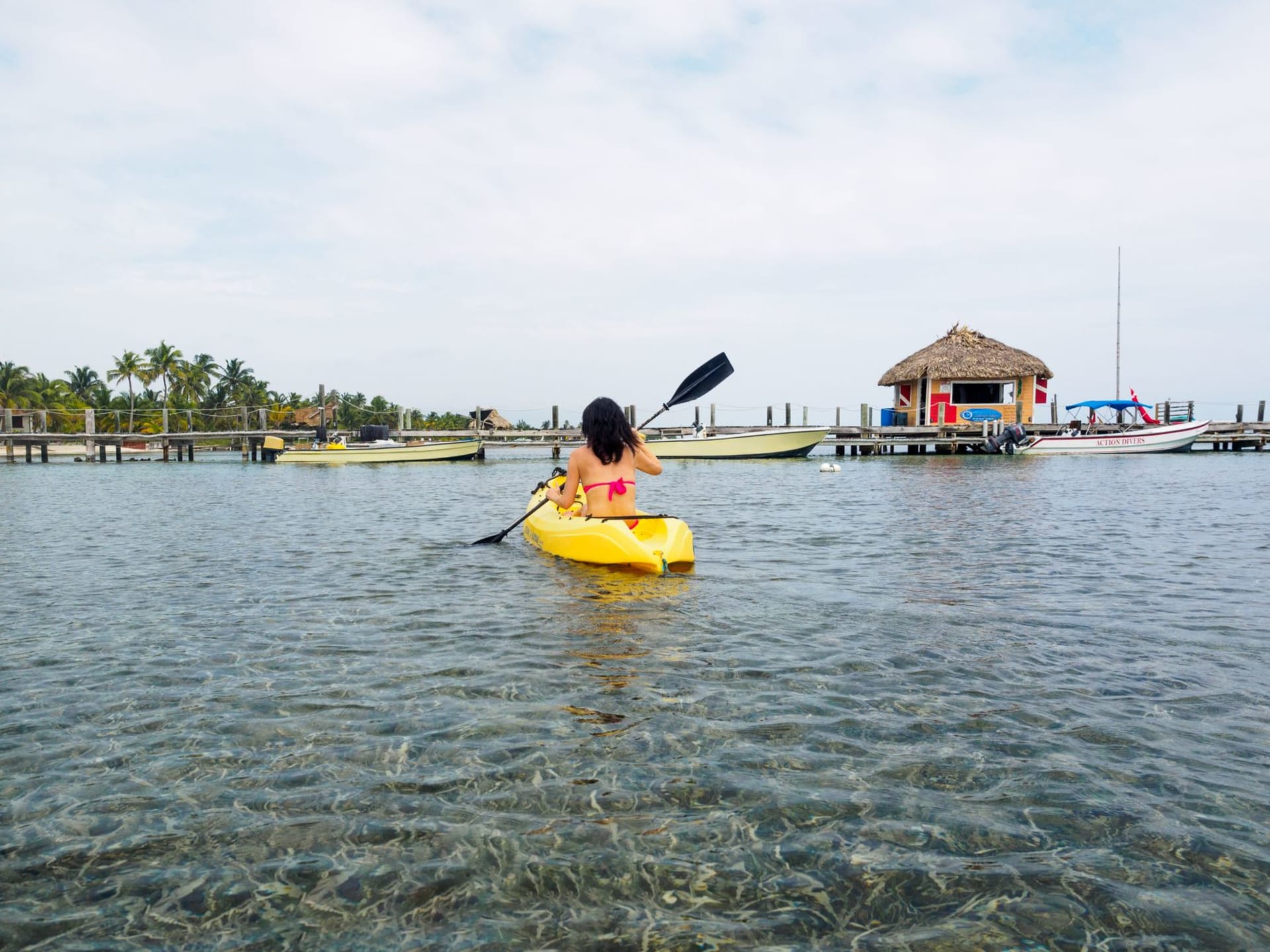
Ambergris Caye
"Nobody drives a car here. They drive golf carts, badly, and the worst driver always seems to be the one with a beer."
Town on a sandbar
Ambergris Caye is the biggest of Belize’s islands, though biggest is relative — it is essentially a long thin spit of sand and mangrove running parallel to the coast, with the town of San Pedro huddled at its southern end. I came in on the little plane from Belize City, the kind where you can see the pilot’s instruments, and the island unspooled below as a green thread laid on impossibly blue water, the barrier reef drawing a dark line offshore the whole length of it. That reef is the reason anyone comes, and you understand its presence from the air before you ever get in the water.
San Pedro itself is cheerful and slightly ramshackle, three sandy main streets running the length of town, everyone moving around on golf carts because the island never really committed to cars. The traffic is a low-speed comedy. Lia rented one for a day and we puttered north up the island past the bigger resorts to where the development thins out and the mangrove takes back over, stopping wherever a dock and a bar suggested themselves. The Belikin beer is cold and unremarkable and exactly right in that heat.

The reef does the talking
The water is the point, and it delivers. The barrier reef sits a short boat ride offshore — close enough that the lagoon between island and reef stays flat and clear and shallow — and the snorkeling and diving here are among the best in the Caribbean. The famous stop is Hol Chan Marine Reserve and the adjacent Shark Ray Alley, where I lowered myself off the boat into water thick with nurse sharks and southern stingrays cruising around like they owned the place, which they do. I am not a naturally calm person around large animals in the water, and even I relaxed once it became clear the sharks regarded me as scenery.
Serious divers go further, out to the atolls — Turneffe and Lighthouse Reef, the latter holding the Great Blue Hole, that perfect dark circle in the sea that you have seen from above without quite believing. It is a long day trip and the dive itself is more about the experience than the marine life, but some boxes get ticked for their own sake. Closer in, I had my best afternoon just drifting over a coral garden off the island with a mask and a snorkel, watching parrotfish crunch at the reef, no boat schedule, no plan.

Eating and slowing down
San Pedro eats well for its size. The thing to find is the lobster when it is in season, grilled simply at a beachfront place with your feet in the sand, and the daily catch fried whole. There is a good Saturday tradition of barbecue smoke drifting down the streets in the late afternoon, and ceviche made with conch that arrived that morning. Caye Caulker, the smaller and more backpacker island next door, gets the reputation for slowness, but Ambergris has its own quieter pockets if you walk away from the center.
When to go: Late November to April is the dry season, with reliable sun, calm seas and the best visibility for diving — also the busiest and priciest. Whale shark sightings near the atolls peak around the full moons of March to June. The wet season from June to November is hotter and quieter, with afternoon storms and a real, if low, hurricane risk in September and October.