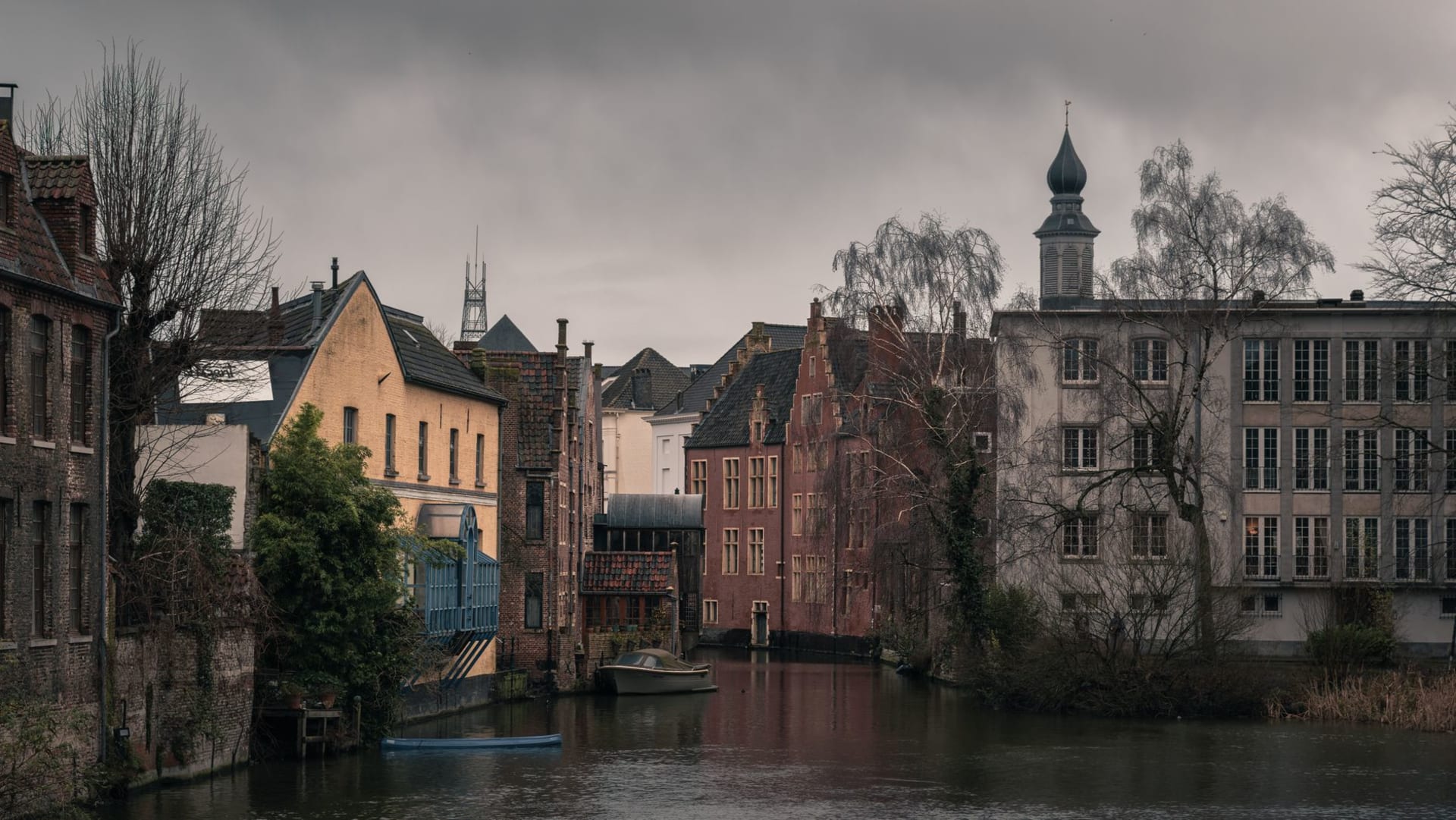
I came to Mons because of Van Gogh, which is not the obvious reason to visit a city. But between 1878 and 1880, he lived in the mining villages just south of here — the Borinage — trying to be a preacher among the coal workers, drawing their bent figures in black chalk, slowly becoming the painter he would be. That context changed how I walked the city. Mons is compact, built on a hill, entirely manageable on foot, and almost entirely ignored by the tourist flows that clog Bruges and Brussels. I found this restful in ways I hadn’t expected.
The Belfry and the View from the Hill
The belfry stands above the Grand-Place at a slight remove, UNESCO-listed and slightly warped with age, its stone gone the color of old cream. I climbed it on a clear afternoon. From the top, the landscape flattened out in every direction — the industrial past of the Borinage was visible in the distance as flat spoil tips softened by decades of grass, the sort of landscape that accumulates meaning slowly. Inside the belfry itself there’s a carillon of dozens of bells; on the hour, the mechanism cranks into life with a sound somewhere between music and construction work. I liked it.
BAM: A Museum That Earns Attention
The Musée des Beaux-Arts et Numérique in Mons sits quietly at the edge of the old center and contains rooms that would cause a sensation if they were in Paris. The Symbolist and Art Nouveau collection is deep and strange — Fernand Khnopff paintings with that unsettling stillness, sphinxes and silence and Belgian fog rendered in oils. Van Gogh’s drawings from the Borinage period are here too: miners’ wives hunched against cold, a man shoveling coal, studies of exhaustion so precise they still feel urgent. I spent nearly two hours inside without meaning to. The museum is small enough to hold in your head, which is a quality I value.
The Doudou and the Dragon
Every year, on Trinity Sunday, the people of Mons gather for the Doudou — a festival of processions and a ritual combat between Saint George and a dragon effigy called the Lumeçon. It’s UNESCO-listed intangible heritage, which is the kind of designation that sounds dry until you’re standing in a crowd watching a papier-mâché dragon battle play out with complete civic seriousness. I wasn’t there for it, but I asked about it everywhere and people talked about it the way people talk about something that actually matters to them, not something they perform for visitors. The dragon’s tail, apparently, brings luck if you can grab it. The crowd attempts this en masse.
Eating and the Café Life
The Grand-Place in Mons is a proper square — cobbled, terraced, ringed by brasseries where people sit outside in good weather and inside with coffee on grey ones. I ate a carbonnade flamande, the Wallonian beef stew braised in dark ale, at a place with checked tablecloths and no English menu. The sweetness of the beer cooked down into the sauce, the meat collapsed against the fork. With a half-liter of a local amber and bread to mop the plate, it was one of the better meals I ate in Belgium and it cost almost nothing. Mons, on the whole, costs almost nothing. This too is a virtue.
When to go: Trinity Sunday (late May or early June depending on the year) for the Doudou festival — book accommodation well ahead, the whole region fills up. The rest of May and September are ideal for walking the city without crowds. Mons is a practical day trip from Brussels (under an hour by train), but it rewards an overnight stay; the city changes character after the day-trippers leave.