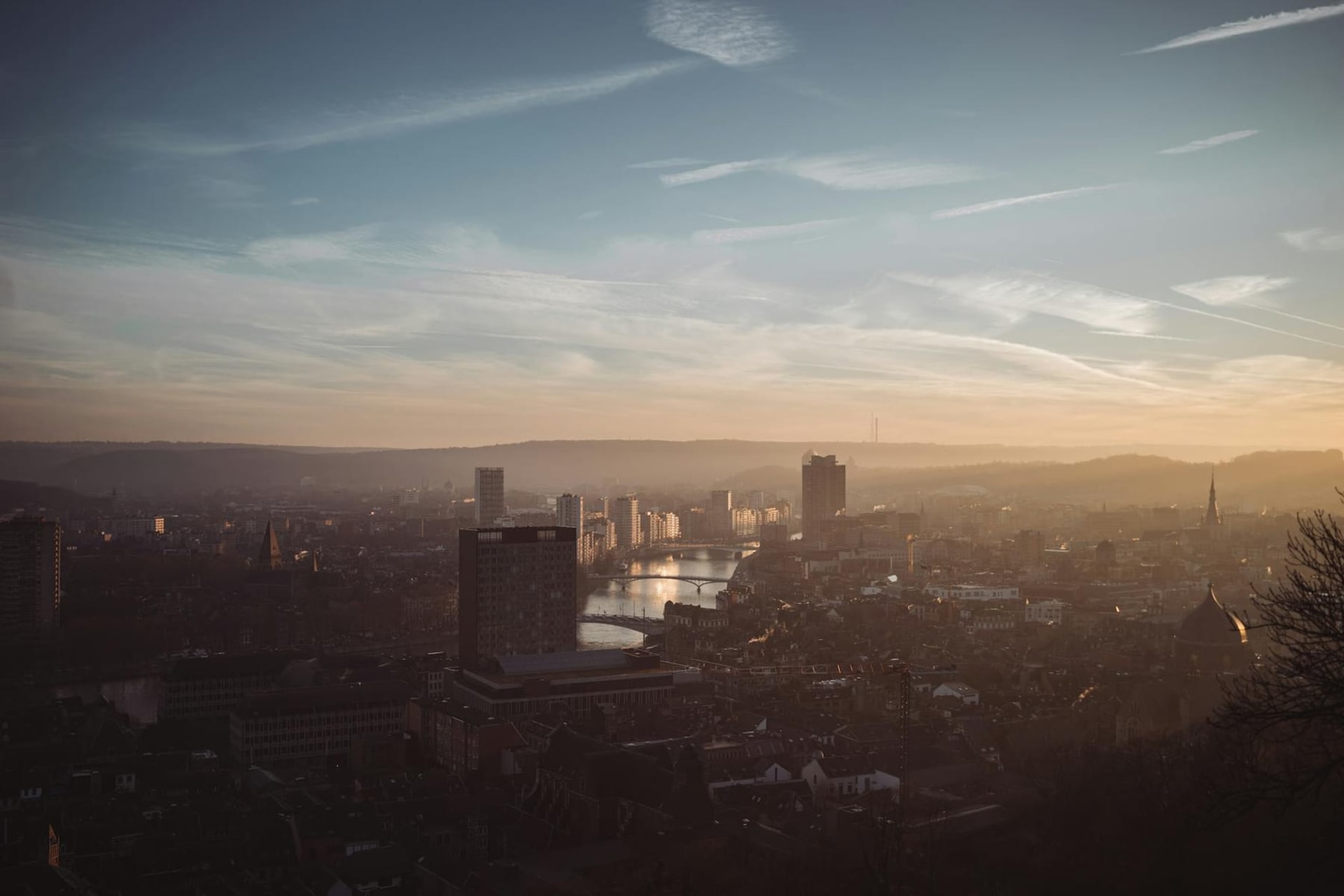
Liège
"Liège tastes like waffles dusted in powdered sugar eaten while standing in the rain — and it's perfect."
A fierce, working-class Walloon city where the waffles are lighter, the beer is stronger, and the spirit is unbreakable.
There is a particular kind of city that does not try to charm you. It does not arrange itself for photographs or soften its edges for visitors. Liège is that kind of city — Walloon to the bone, built on coal and iron and a centuries-old conviction that nobody is going to hand you anything.
I arrived on a Thursday morning in November, stepping off the train into the cavernous Gare de Liège-Guillemins — Calatrava’s cathedral of glass and white steel, a building so absurdly beautiful it feels like a joke the city is playing on you before revealing its true, gritty face. Outside, the Meuse moved slow and grey under low cloud, and the smell was cold stone and something faintly metallic, the ghost of industry.
The Market, the Waffle, the Rain
La Batte, the Sunday market, stretches along the Quai de la Batte for over two kilometres of noise and colour. I went on a Sunday, collar up against the drizzle, and found Lia already deep in a haggle over a box of old postcards. Around us: vegetables piled in pyramids, bolts of fabric, live rabbits in cages, a man selling herbs from a wheelbarrow. Someone was frying waffles in a fold-out stand — the Liège waffle, not the Brussels kind, dense with pearl sugar that caramelises against the iron and shatters between your teeth. I ate one standing at the edge of the quai, powdered sugar disappearing in the rain before I could wipe it off my jacket. It was perfect in the way that only slightly uncomfortable things can be.
Across the River
I crossed the Pont des Arches on a whim one afternoon and found the Outremeuse neighbourhood — technically an island between two branches of the Meuse — where the dialect is thicker, the estaminets older, and the beer pours run longer. In a café on Rue Roture I drank a Curtius blonde at two in the afternoon surrounded by men who seemed to have been there since morning. On the wall: a portrait of Georges Simenon, Liège’s most famous son, the man who gave the world Maigret. He left for Paris the first chance he got. The city does not hold this against him.
The Unexpected Thing
What I did not expect was the Montagne de Bueren — 374 steps cut directly into the hillside above the old city, climbing past tiny terraced houses with window boxes and cats on sills. At the top: a sudden silence, a view over the whole basin, and a bench where a very old woman was eating soup from a thermos. She nodded at me as though I had done something correct by making the climb. Maybe I had.
When to go: September and October bring mild weather and the city’s festive calendar alive before winter sets in. Avoid July and August if you can — Liège in summer loses some of the particular gravity that makes it worth coming for.