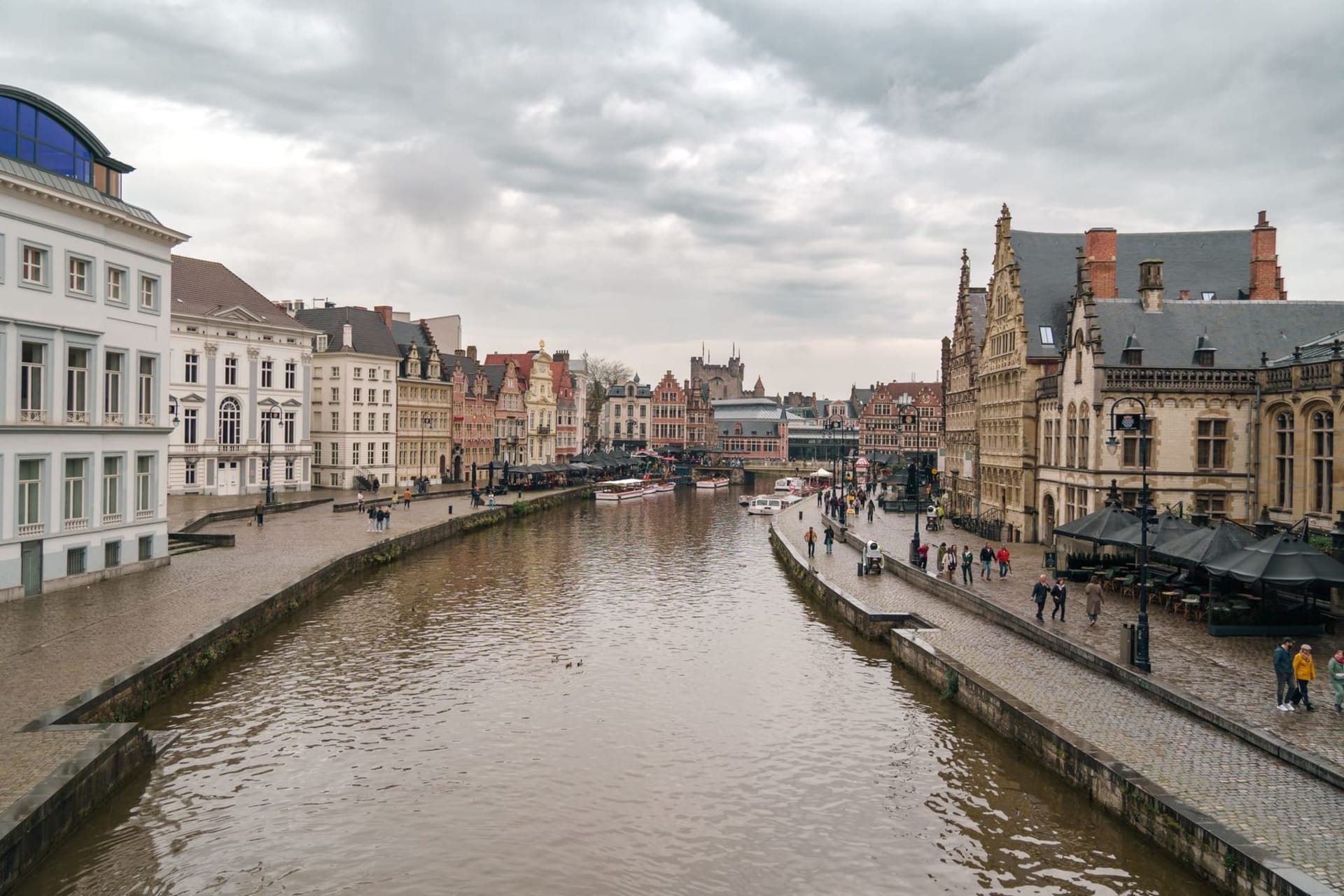
Belgium's best-kept secret: a university city alive with street art, craft beer, and a medieval skyline that refuses to be tamed.
I almost skipped Ghent entirely. We had a few days between Amsterdam and Brussels, and every travel forum pointed us toward Bruges — quieter, they said, more polished. We went to Ghent instead, and I have not stopped thinking about it since.
The City That Refuses to Sleep
We arrived on a Thursday evening and walked straight into a street festival neither of us had planned for. Somewhere near the Vrijdagmarkt, a brass band was playing under bare bulbs strung between the facades, and students were spilling out of brown cafes onto the cobblestones with glasses of Gruut — a local beer brewed without hops, flavored instead with a blend of herbs that dates back to before the guild wars. It tasted of something between flowers and bark. Lia took one sip, made a face, then finished the glass.
That is Ghent in a sentence: stranger than expected, and better for it.
The medieval skyline is real — the Belfry, Sint-Niklaaskathedraal, and Sint-Baafskathedraal rising in a loose triangle above the rooftops, close enough that you can see all three from a single spot on the Korenlei without turning your head. But unlike Bruges, Ghent has not been preserved so much as it has kept living. The streets behind the tourist waterfront are full of murals, bicycle lanes, and record shops. The Sleepstraat and Walpoortstraat stretch through a neighborhood that feels less like Belgium and more like it is still deciding what it wants to be.
What Surprised Me on Sint-Veerleplein
The unexpected moment came on a quiet Sunday morning. We found ourselves at Sint-Veerleplein, the old fish market square, earlier than the crowds, light still low and gray off the water. A man was selling waterzooi — Ghent’s signature chicken stew, thick with cream and root vegetables — from a small stand at the edge of the square. I ate it standing up, out of a paper bowl, watching barges move under the Gravensteen bridge. It was the most ordinary and extraordinary meal of the whole trip.
I had read about waterzooi in every guide. None of them had mentioned eating it at nine in the morning by a castle.
Navigating the Old Town
The city center is small enough to cover on foot, but the best parts reveal themselves when you stop trying to find them. Cross the Grasbrug early, before noon. Turn into Patershol, the medieval tangle of alleys just north of Gravensteen, and follow whichever street smells like coffee. There will be a restaurant open. There will be something worth ordering.
When to go: Late spring through early October is ideal — long evenings, the Ghent Festival in July if you want the city at full volume, or September for quieter streets and the same golden light on the canal water.