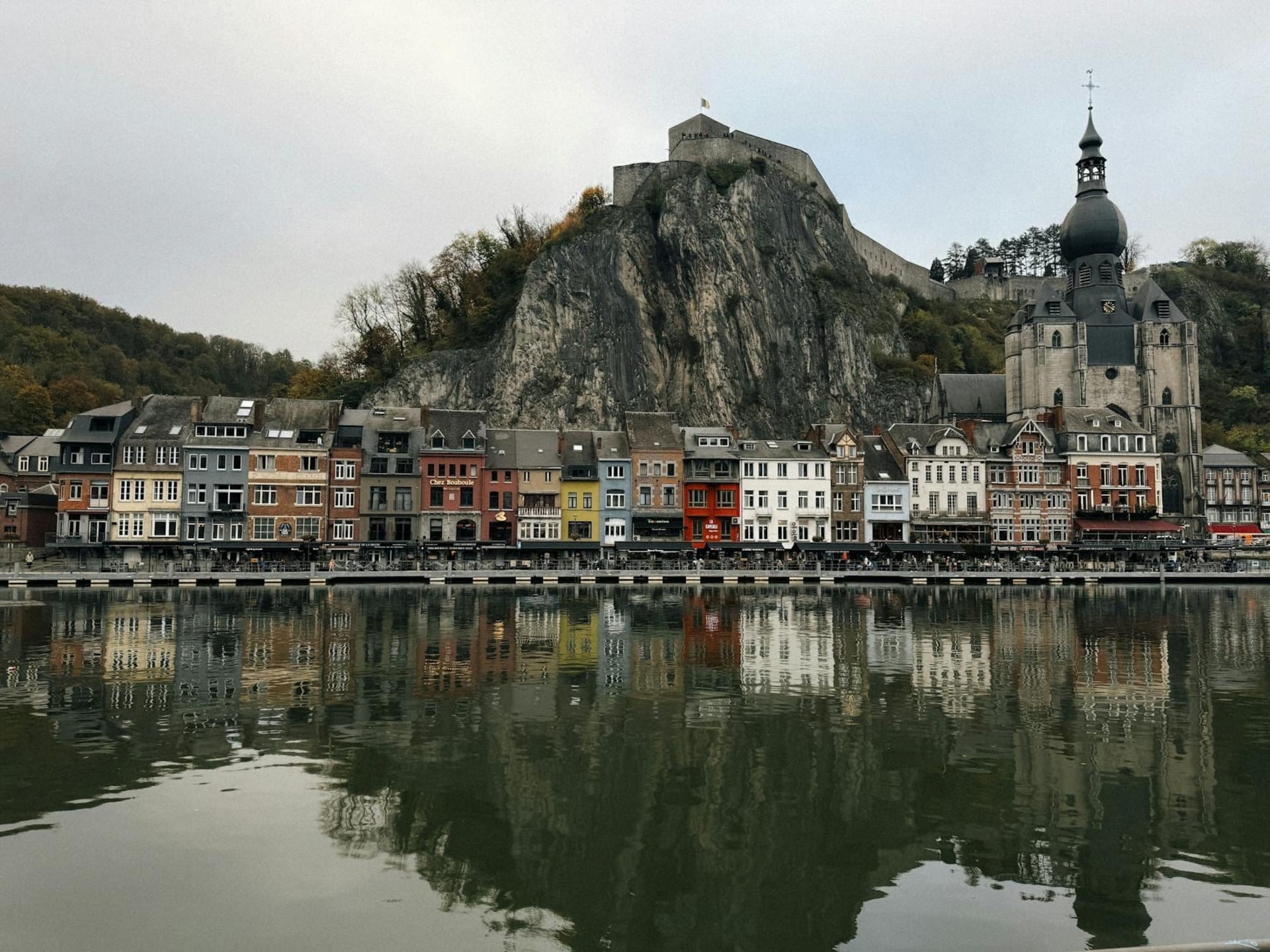
A dramatic cliffside citadel looms over this Meuse valley gem, birthplace of the saxophone and village of impossible beauty.
I had been warned that Dinant was small. What I had not been warned about was the way the cliff simply refuses to let you look anywhere else. You come around a bend on the N97 and the whole town is there — flattened between rock and river, the collegiate church dome a pale onion pressed against limestone that goes straight up, and the citadel balanced on the edge of it all like something a child placed there and never moved.
Between the Rock and the Water
We parked along the Quai de Meuse on a Thursday morning in October, when the tourist boats had thinned out and the light was hitting the opposite bank with a particular grey-gold quality I associate with northern rivers. The Meuse here is wide and slow. It reflects the cliff rather than the sky. Lia stood at the railing with her coffee and said, simply, “It looks painted,” which was the right thing to say.
The old town is essentially one street — the Rue Grande — running parallel to the river, with lanes cutting upward toward the rock. The boulangeries still do flamiche, the leek tart you find all through this part of Wallonia, and I had a slice standing at a zinc counter somewhere near the Place Reine Astrid that tasted of butter and something faintly ferrous, mineral, as though the cliff had worked its way into the dough. The couques de Dinant — those bone-hard honey biscuits pressed into copper molds — were everywhere in the shop windows, shaped like Adolphe Sax’s face or small saxophones, a town marketing its most famous son with cheerful relentlessness.
The Cable Car and the Surprise
The citadel can be reached by cable car or by 408 steps cut directly into the cliff face. We took the steps up and the cable car down, which was the right order. Halfway up, through a narrow slit in the rock, I looked out over the river and understood something about why fortress builders chose this place — from up there the valley is entirely readable, every approaching curve of the Meuse visible for kilometers.
What genuinely surprised me was the room inside the citadel dedicated to torture instruments. Not the instruments themselves — any medieval fortress has those — but the casual matter-of-factness of Belgian schoolchildren filing past iron maidens while eating sandwiches from wax paper. History processed through packed lunches. I found it oddly reassuring.
The Hour Before Dinner
The best hour in Dinant is the one just before the restaurants open, when the day-trippers have gone and the quay belongs to locals walking dogs along the river. The cliff turns the last light amber. The church dome catches it and holds it a few seconds longer than seems fair.
When to go: Late spring (May–June) or early autumn (September–October) offers the best light on the limestone and avoids the summer crowds that pack the cable car queues; the river valley turns extraordinary colors in October.