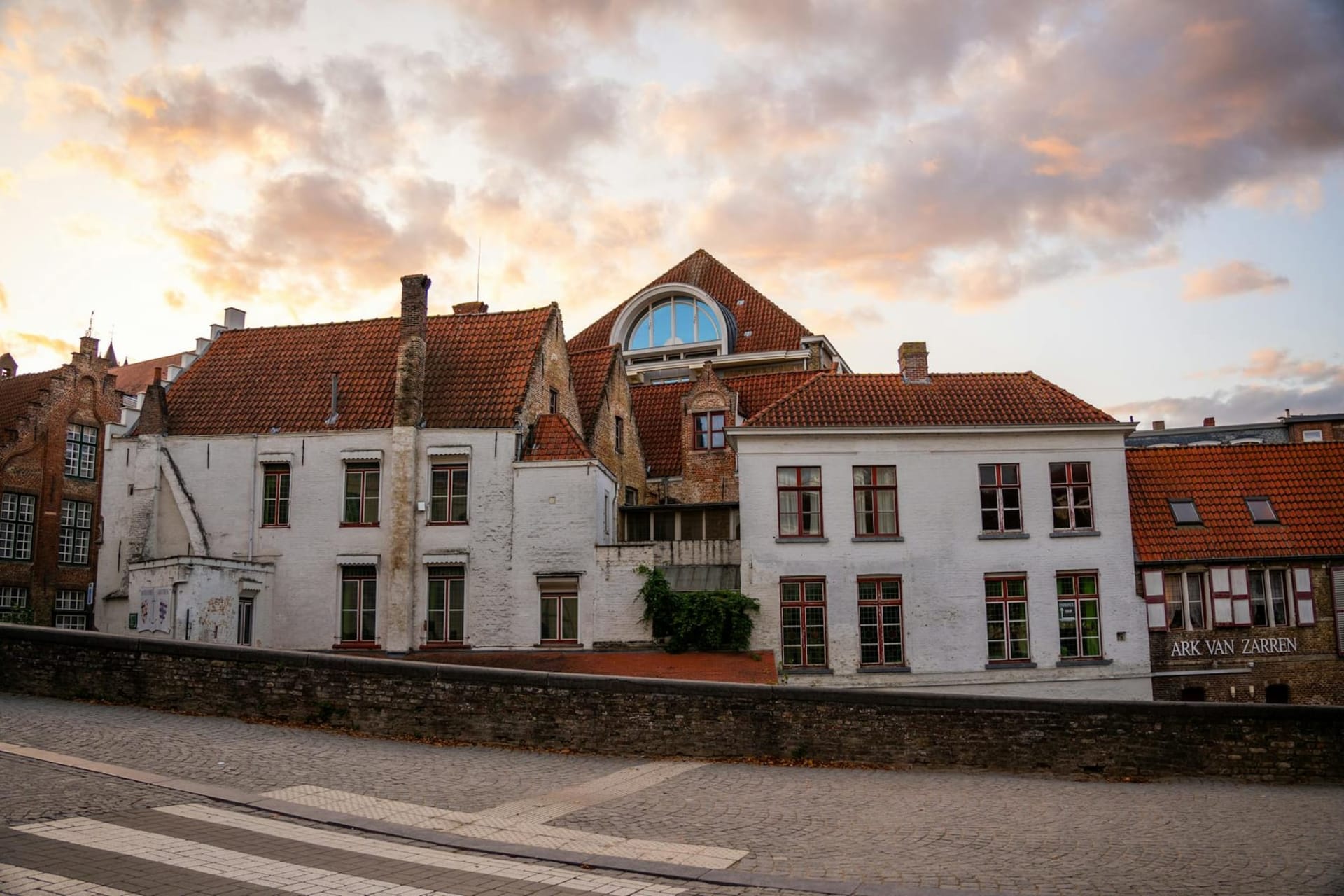
A fairy-tale city of medieval spires, lace-lined streets, and mirror-still canals that earned it the name 'Venice of the North.'
I arrived in Bruges on a Tuesday in November, which is probably the best thing that ever happened to me as a traveler. No crowds on the Markt, no queues snaking around the Groeningemuseum, no boats full of day-trippers jostling for position on the Rozenhoedkaai. Just fog sitting low over the water, the smell of waffles drifting from somewhere near Sint-Amandsstraat, and the particular silence of a medieval city that has decided to keep its own time.
The Weight of Stone and Water
The canals here are nothing like Venice. Venice is performance — the canals are stages, the palazzos are sets. Bruges is something more interior, more self-contained. The water along Groenerei barely moves. It holds the reflections of the stepped gabled houses so perfectly that for a disorienting moment I wasn’t sure which direction was up. Lia stood at the railing of one of the small bridges and said nothing for a long time, which is her way of telling me a place has reached her.
The streets in the old center are paved in a rough cobblestone that makes every footstep deliberate. Steenstraat, Wollestraat, the narrow passage of Blinde-Ezelstraat — the alley of the Blind Donkey — running between the old civil registry and the canal. You don’t walk quickly here. The stones won’t allow it.
What I Didn’t Expect
What surprised me was the food. I’d braced myself for tourist menus and overpriced chocolate, and yes, there is plenty of that. But I stumbled into a small estaminet on Huidenvettersplein — one of those brown-walled Belgian taverns with mismatched chairs and a handwritten chalkboard — and ordered waterzooi. Not the more common chicken version but the original: fish, in a broth of leeks and cream so delicate it felt apologetic for being so good. I ate it slowly, watching the square outside fill and empty in the pale afternoon light that Belgium does better than almost anywhere — a grey-white light that makes everything look slightly illuminated from within.
Later, on the climb up the 366 steps of the Belfort, I realized the carillon bells were playing. Not on the hour — just playing, someone up there at the keyboard, and the sound fell down over the city like something from another century.
Getting the Timing Right
When to go: Late October through early March rewards the patient traveler — the light turns cinematic, the streets belong to you, and the city reveals a quieter self that summer buries completely. If crowds are unavoidable, aim for early morning before ten; the Markt before the tour buses arrive is a different city entirely.