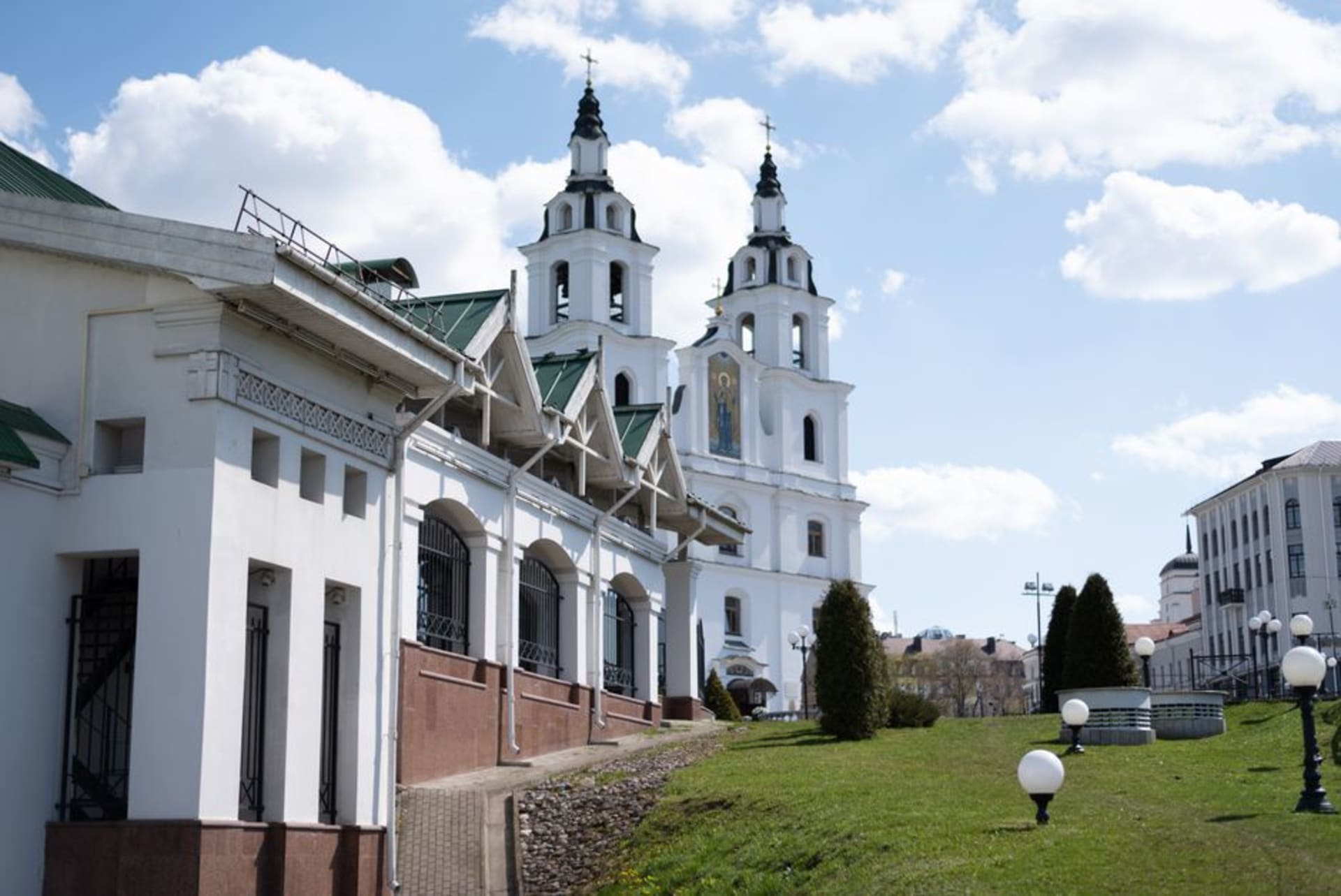
Khatyn Memorial
"I came expecting a monument. I left carrying a name I will never stop saying: Khatyn."
A field of bronze chimneys north of Minsk where bells toll for a village that no longer exists.
Lia and I hired a driver in Minsk for the morning, mostly because I’d read that the bus connections to Khatyn were unreliable and I didn’t want to be the reason we missed the last one back. It’s about 50 kilometers north of the city, maybe forty-five minutes through birch forest and flat farmland, and neither of us said much on the way. I’d read the story the night before in our hotel room — how on 22 March 1943 a Nazi Schutzmannschaft battalion rounded up every resident of the village, all 149 of them, 75 of them children, locked them into a wooden barn, and set it on fire. People who broke through the walls and ran were shot in the field. I kept rereading the number 75 like it would eventually stop meaning what it meant.
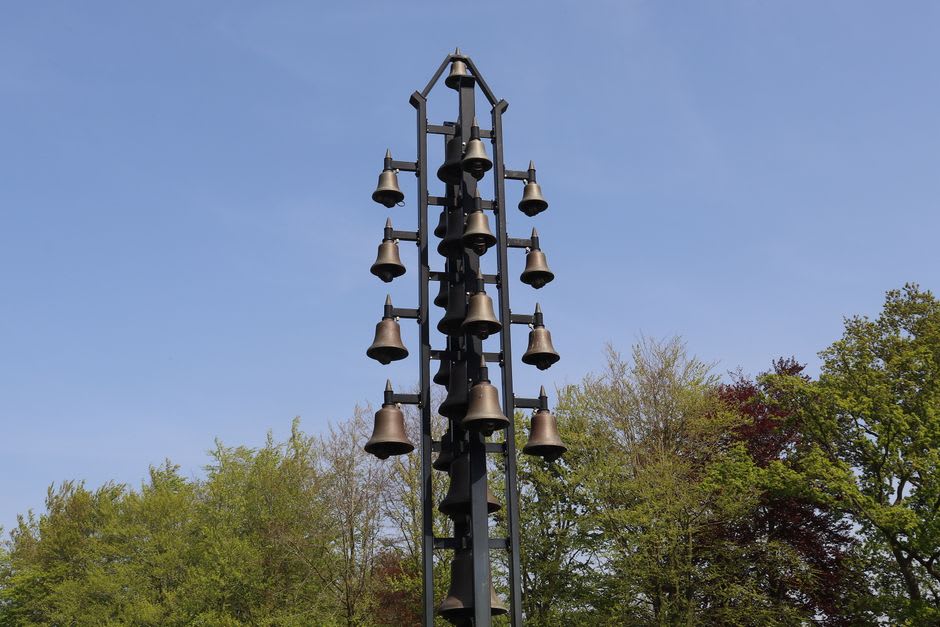
What struck me walking onto the grounds wasn’t a wall of names or a single statue — it was the chimneys. Twenty-six of them, spaced out where the actual houses of the village once stood, each one topped with a bell. Every so often, on some interval I never quite figured out, one would ring. Lia grabbed my arm the first time it happened, because there’s no way to prepare for a bell going off across an empty field where you know a family’s kitchen used to be. We walked the perimeter slowly, reading the small plaques marking where each household had stood, and I found myself doing the math on ages and realizing how many of those 75 children were younger than my nephew back in Lyon.
The bronze statue is the image I keep coming back to, though — “The Unconquered Man,” showing village elder Iosif Kaminsky carrying his dying son. Kaminsky was the only adult who survived the fire; he pulled his boy Adam from the flames, but Adam died in his arms minutes later. Standing in front of that statue, Lia asked me quietly why this particular village became the national memorial when the guide had mentioned, almost in passing, that over 600 Belarusian villages were destroyed the same way during the occupation. I didn’t have a good answer beyond what I’d read: after the war, Khatyn was chosen to stand in for all of them, so that no one place would be forgotten by being one of hundreds.
One thing I’ll flag because it tripped me up before the trip: Khatyn is not Katyn. I’d conflated the two in my head for years — Katyn, in Russia, is where thousands of Polish officers were massacred by the Soviets in 1940, a completely different atrocity, different country, different perpetrators. The name overlap is a coincidence, but it’s a common enough mix-up that our driver mentioned it before I’d even asked.
When to go: We went in early June and the open memorial grounds were easy walking with long daylight to sit with it all; I’d stick to spring through autumn, roughly May to September, since it’s an outdoor site with a lot of ground to cover on foot, and it makes for a natural, if heavy, half-day trip out of Minsk.