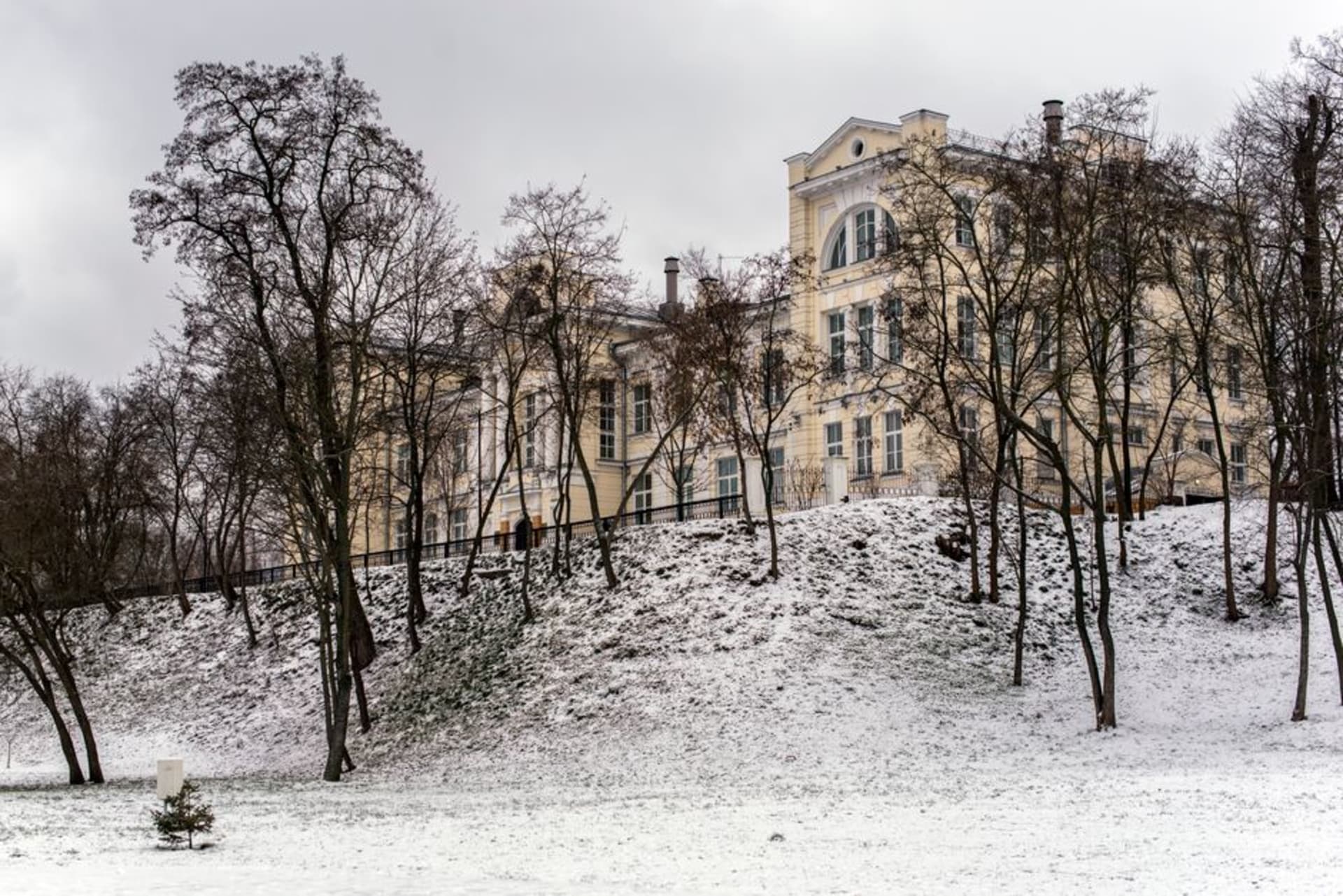
Belarus's second city on the Sozh River, where a princely palace and its English-style park make for an unexpectedly graceful afternoon.
I’ll admit I almost skipped Gomel. Everyone we’d met in Minsk talked about it as a footnote — Belarus’s second city, closer to the Russian and Ukrainian borders than to anywhere touristy. But Lia had read about the Rumyantsev-Paskevich Palace and wouldn’t let it go, so we took the train southeast, and within an hour of arriving I was glad she’d insisted. The city sits on the Sozh River, and it’s been there in one form or another since at least 1142, when it first shows up in the old chronicles. You feel that kind of quiet, layered age in Gomel in a way that’s different from the postcard old towns further west — nobody’s polished it for you.
The palace itself is the reason to come. Field Marshal Pyotr Rumyantsev started building it in 1777, and Prince Ivan Paskevich expanded it in the 19th century into the sprawling, honey-colored estate that’s still standing — one of the best-preserved noble residences left in the country, now a regional museum. We spent a good two hours inside, and I remember standing in front of a case of old military medals thinking about how much history had simply passed through this one building. Lia was more taken with the furniture rooms, running her hand just above the surface of a writing desk like she wanted to sit down and use it.
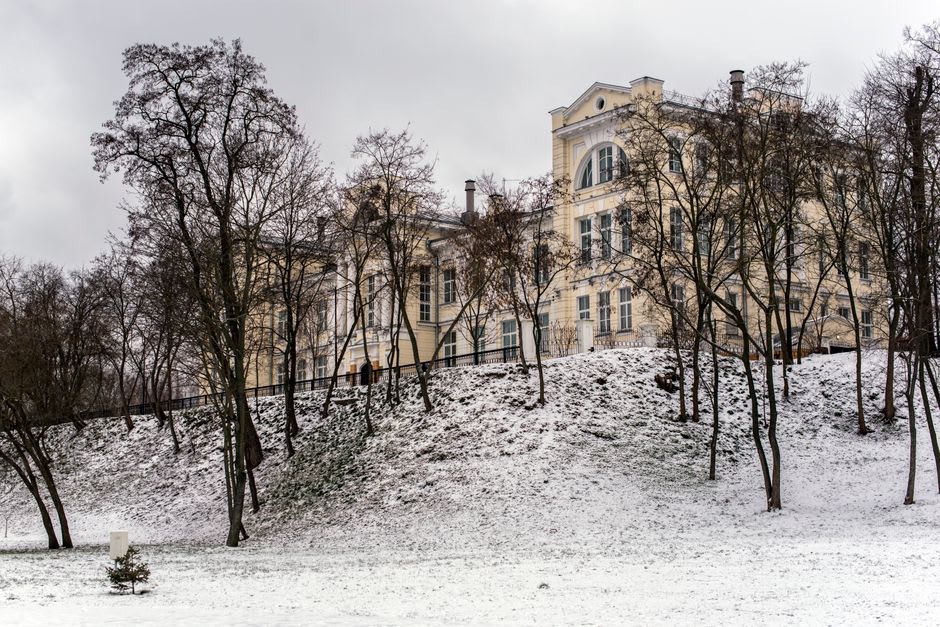
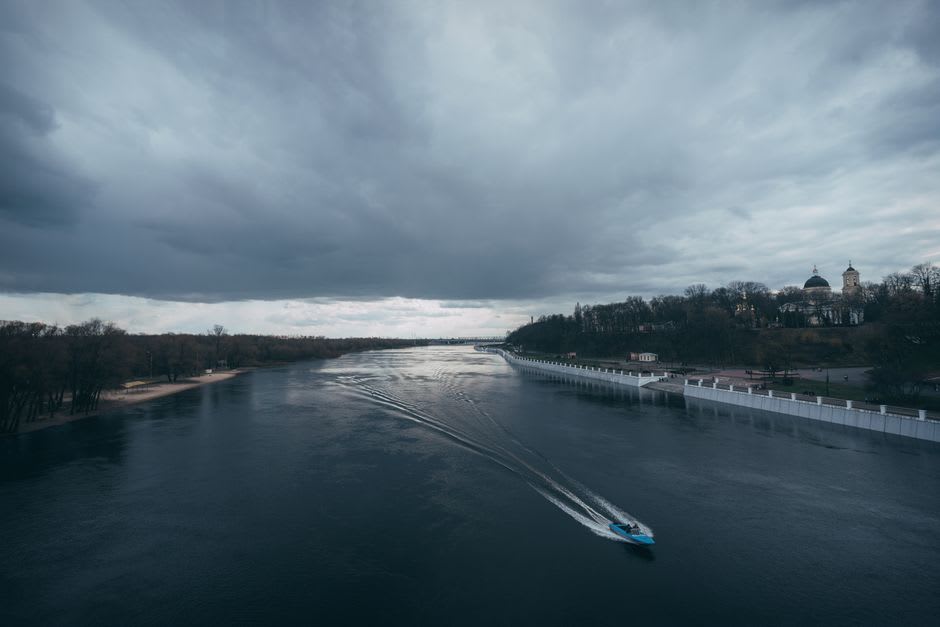
What I didn’t expect was the park. It stretches along the riverbank in that loose, deliberately unstructured English style — winding paths, old oaks, benches angled toward the water — and it completely changes the mood of the visit. We walked down toward the domed Peter-and-Paul Cathedral, built between 1809 and 1824, and sat on the grass nearby eating pirozhki we’d bought from a woman with a cart near the entrance. Boats drifted past on the Sozh. It was one of those unplanned, unphotogenic-sounding moments — just bread and river and Lia laughing at something on her phone — that ends up being the one I remember best from Belarus.
I should say, too, that Gomel sits within the broader region still affected by the 1986 Chernobyl disaster, and parts of the surrounding countryside remain under environmental monitoring. It’s not something that touches the city center in any way you’d notice day to day, but it’s part of why this part of Belarus carries a different weight than the rest of the country, and I found myself thinking about it more than once as we walked back toward the train station that evening.
When to go: Aim for late spring through early autumn, from May to September, when the palace park is in full leaf and the riverside promenade is at its best for a slow afternoon walk.