Braslav Lakes
"I spent three days paddling between lakes and I still don't entirely believe it was Belarus."
The first morning I woke up in the cabin by Lake Drivyaty, I couldn’t identify the sound for a moment. Then I understood: silence, interrupted only by water birds. On the shore below, the lake was so still it looked painted — the birch trees reflected perfectly in the water, the sky exactly the kind of pale Baltic blue that in a painting would seem like artistic license. I had driven four hours north from Minsk, past fields and forests and villages where geese walked in the road, and arrived at something that felt completely out of keeping with any image I had carried of Belarus.
The Braslav Lakes National Park — Braslauskiya Azery — is a chain of over thirty lakes linked by rivers and marshes in the far north of the country, close to the Lithuanian and Latvian borders. The landscape is glacial: the lakes occupy depressions left by retreating ice sheets, and the terrain between them rolls in long drumlins thick with birch, pine, and spruce. In high summer, the water temperature in the larger lakes reaches twenty-two or twenty-three degrees, and the Belarusians who discovered this place long before any tourist board did come here in their thousands for exactly what it offers — boats, sun, pine-needle paths, berries picked from the forest floor, and a quality of rest that is different from the rest you get in a hotel room.

The town of Braslav itself, on the hill above the lakes, is small and relaxed — an ice cream stand, a Soviet-era hotel that has been mildly updated, a hilltop view over Lake Drivyaty that made me understand why someone built a settlement here in the first place. The national park office rents kayaks and canoes, and the recommended route — paddling between lakes through the river connections, camping or staying in small guesthouses along the way — is one of the better outdoor experiences in the country. I did two days of it with a map the park ranger had hand-annotated with places to stop, and I stopped worrying about whether I was seeing Belarus properly and started seeing this particular corner of water and forest for what it actually was.
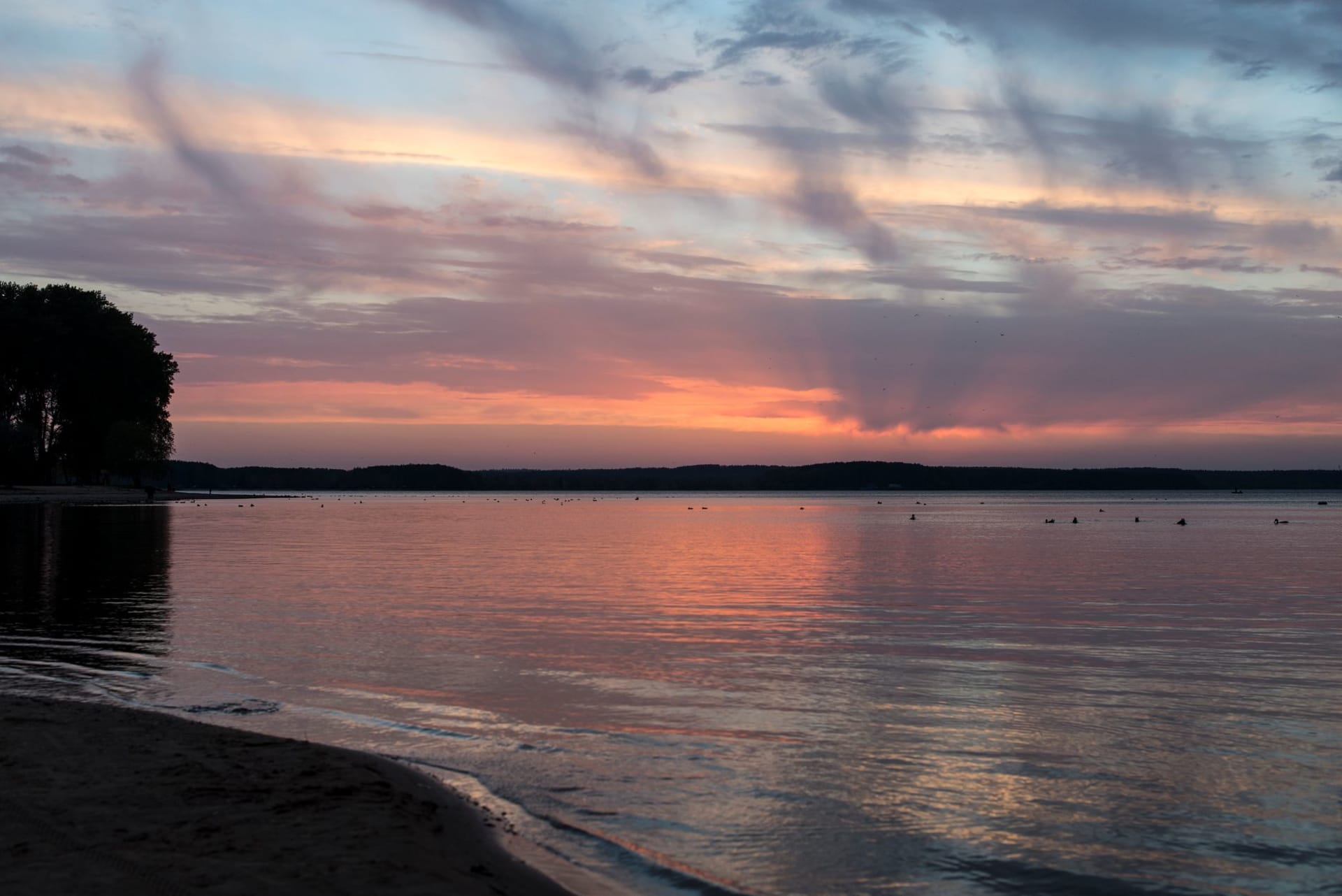
The fishing is taken seriously here, and the local speciality reflects that: draniki topped with local smoked fish from the lakes — perch, pike, freshwater bream — and the combination is heavier and more satisfying than it sounds. I ate it at a wooden table outside a café that seemed to operate according to its own schedule, watching a heron work the shallows below. The evening light in the north goes low and golden for a long time in midsummer, and there is a specific melancholy-that-is-not-quite-melancholy to sitting on a lake shore in Belarus at nine in the evening when it is still light and you haven’t worked out whether you want to go to bed or stay and watch the colour change for another hour.

When to go: June through August is the lake-swimming and paddling season, with long days and warm water. September is quieter and the forest begins to turn — mushroom season is serious business in these woods, and if you go in early autumn you will share the forest paths with locals armed with baskets and the particular focused expression of people who know exactly where to look.