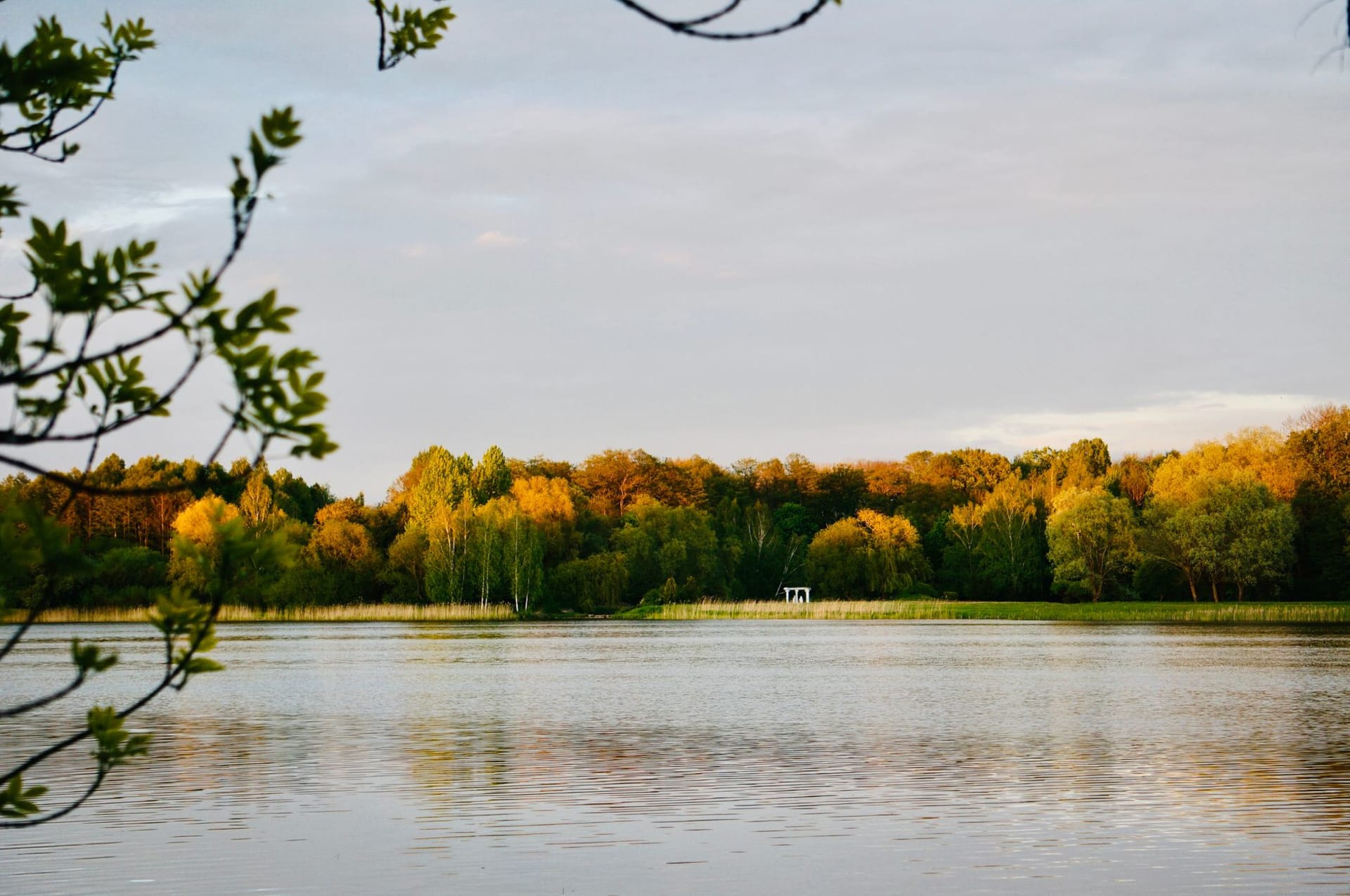
Belavezhskaya Pushcha
"The silence here is not the absence of sound. It is something the forest actively produces."
The guide at the park entrance explained to me, in careful English, that the bison usually came out at dusk. He said this with the measured certainty of a man who had worked in the forest for twenty years and had learned not to promise wildlife but to state facts. Then he handed me a map and pointed toward a track that disappeared into the trees. The forest closed around me within fifty metres. The oaks on either side were enormous — three, four hundred years old, their trunks broader than I could have reached around, their canopies so dense they turned the afternoon light into something greenish and cathedral-like. I understood within minutes why people reach for religious vocabulary when describing Belavezhskaya Pushcha.
This is one of the last fragments of the primeval forest that once covered most of Europe. Most of that forest was cleared over centuries for agriculture, for fuel, for timber. Belavezhskaya Pushcha survived — partly because it was a royal hunting ground, reserved for Polish kings and Russian tsars who wanted somewhere to shoot aurochs and elk, and partly because of the particular stubbornness of ecosystems that have been in place for ten thousand years. The trees here have never been logged. They live and die according to their own schedules, and when they fall, they rot where they lie, and the seedlings that grow from the debris are still the same species that were here at the end of the last ice age.
The bison appeared at the hour the guide had predicted, moving through the treeline at the forest edge in that slow, prehistoric way that makes them look like something that wandered out of a cave painting. There were four of them — a male whose shoulder height was startling up close, and three younger animals that moved behind him through the tall grass with the easy authority of creatures that have no natural predators. I stood very still. The male turned his head and looked at me for a long moment before moving on, and I had the feeling of being assessed and found adequately harmless. The species nearly went extinct in the early twentieth century — by 1927, only fifty-four remained in captivity. The animals in this forest today are all descended from that captive population. Looking at them in the blue dusk light of a Belarusian evening, that fact felt simultaneously terrible and extraordinary.
The park has a network of cycling trails and walking paths, ranging from gentle loops around the visitor centre to multi-day routes that go deep into the reserve. The village of Kamyanyuki at the forest’s edge is small but has guesthouses and a couple of decent places to eat — hearty soups, smoked meats, bread that someone baked that morning. In winter, the forest is even more dramatic: snow on the deadfall, the tracks of bison and wolves visible in fresh powder, everything contracted into silence and cold.

The forest straddles the border between Belarus and Poland, and the Polish side — Białowieża National Park — is more visited and more accessible. But the Belarusian side is larger and, because Belarus sees fewer international visitors, often quieter. The sense of having a primeval forest more or less to yourself is something you will not find on the Polish side in summer.
When to go: Late April through June for woodland flowers and birdsong; September and October for autumn colour and bison rutting season. Winter (December–February) is stark and beautiful if you can handle the cold, and wildlife tracks in fresh snow are a particular kind of reward.