Deir el-Ahmar
"The monastery is old and the village is older and the afternoon quiet here is something you feel in your chest."
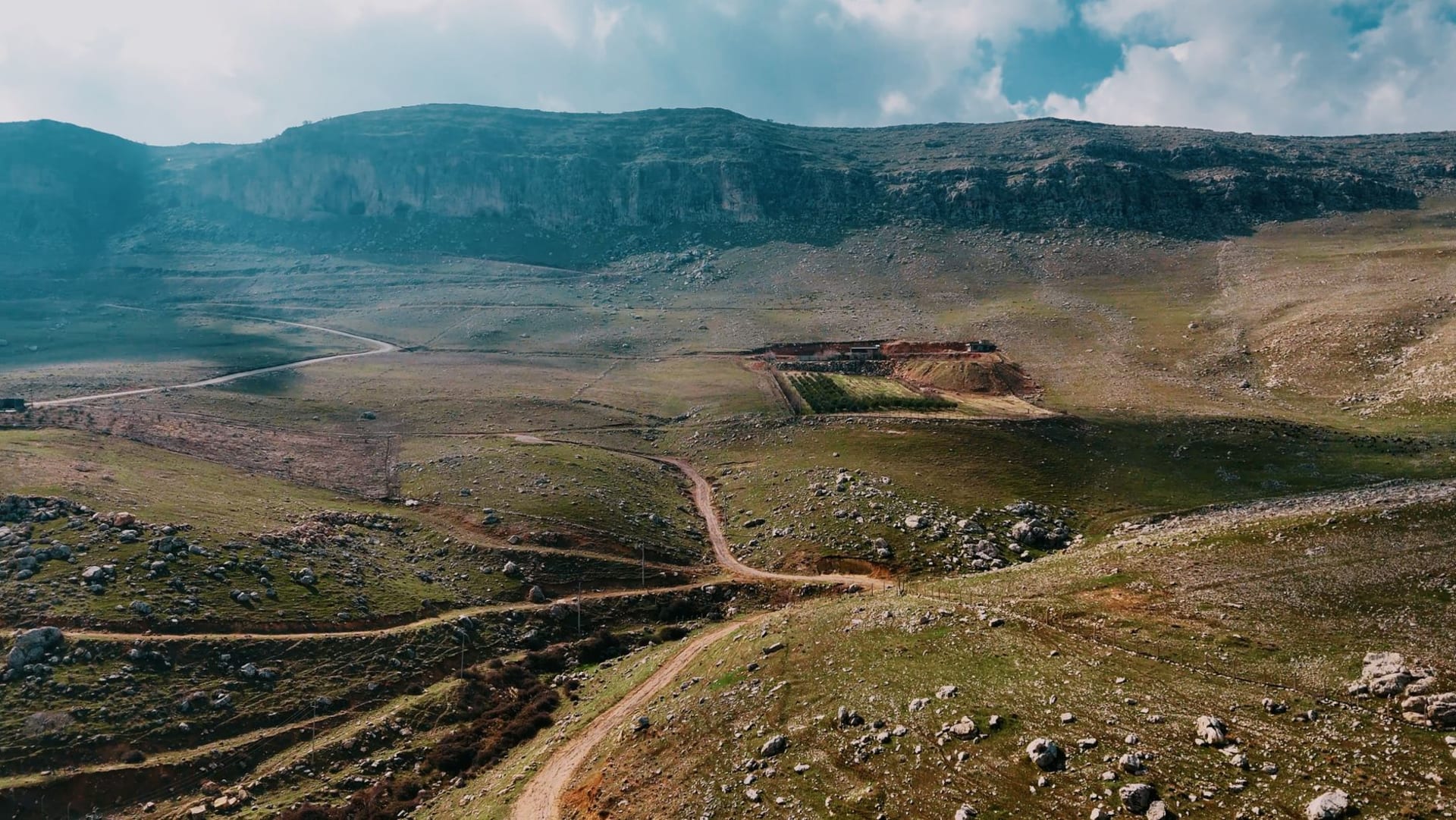
Deir el-Ahmar means the Red Monastery — a name given for the color of the local limestone that the buildings are made from, a warm terracotta red that catches the late afternoon light and glows. The village sits on a slope between the Bekaa plain and the Lebanese mountain range northeast of Baalbek, high enough to look down on the valley floor, low enough to still feel connected to it. I came here by accident, taking a wrong turn on the way back from Yammouneh, and found a place so comprehensively untroubled by tourism that I stayed two hours and ate lunch without having planned to do either.
The monastery that gives the town its name — Mar Elias — is a working Maronite Christian institution perched above the village houses. The current building is from the Ottoman period, but the site is older — archaeological remains on the grounds suggest continuous religious use going back to Byzantine times, and possibly earlier. The monks, or the lay caretaker who was present on my visit, keep the church simple: whitewashed walls, old icons, candles burning in front of painted saints whose expressions carry that particular Byzantine severity that requires time to stop reading as harshness and start reading as intensity.

The village below is architecturally coherent in a way that Lebanese villages rarely are anymore. The old houses here are built in the local red stone, with arched doorways and small courtyards, and while the inevitable concrete block additions exist on the periphery, the core of the village still reads as a single material culture with a consistent logic. Women were hanging laundry in a courtyard. A dog slept across a threshold. A man on a moped stopped to ask where I was going, and when I said I was just walking around, nodded with the satisfaction of someone whose hometown has been recognized for what it is.
The food I had here was unexpected: a restaurant — more accurately a family home with a few extra tables — was serving maqlouba, the rice-and-vegetable dish cooked inverted in the pot and turned out onto the serving dish in a tower. The woman who ran it had been making it since early morning, she said, starting with the chickpeas. It arrived at the table still steaming, served with ayran and a plate of raw vegetables and flatbread. It was the kind of meal that belongs entirely to its place and would be impossible to replicate anywhere else.

The road through Deir el-Ahmar continues up into the mountains toward the Akkar region — Lebanon’s least visited north — and the village functions as a last outpost of relative accessibility before the terrain becomes genuinely remote. That edge-of-the-accessible quality is part of what makes it feel the way it does.
When to go: Spring is Deir el-Ahmar at its most striking — the red stone against new green vegetation, wildflowers across the slopes, and the Bekaa still carrying winter moisture in the air. Autumn is equally good. Summer brings Lebanese families up from the valley for the cooler air. The monastery is open to visitors most days but hours are informal; come before noon for the most reliable access.