Middle East
Bekaa Valley
"The valley where Rome built its most extravagant temples and no one talks about it."
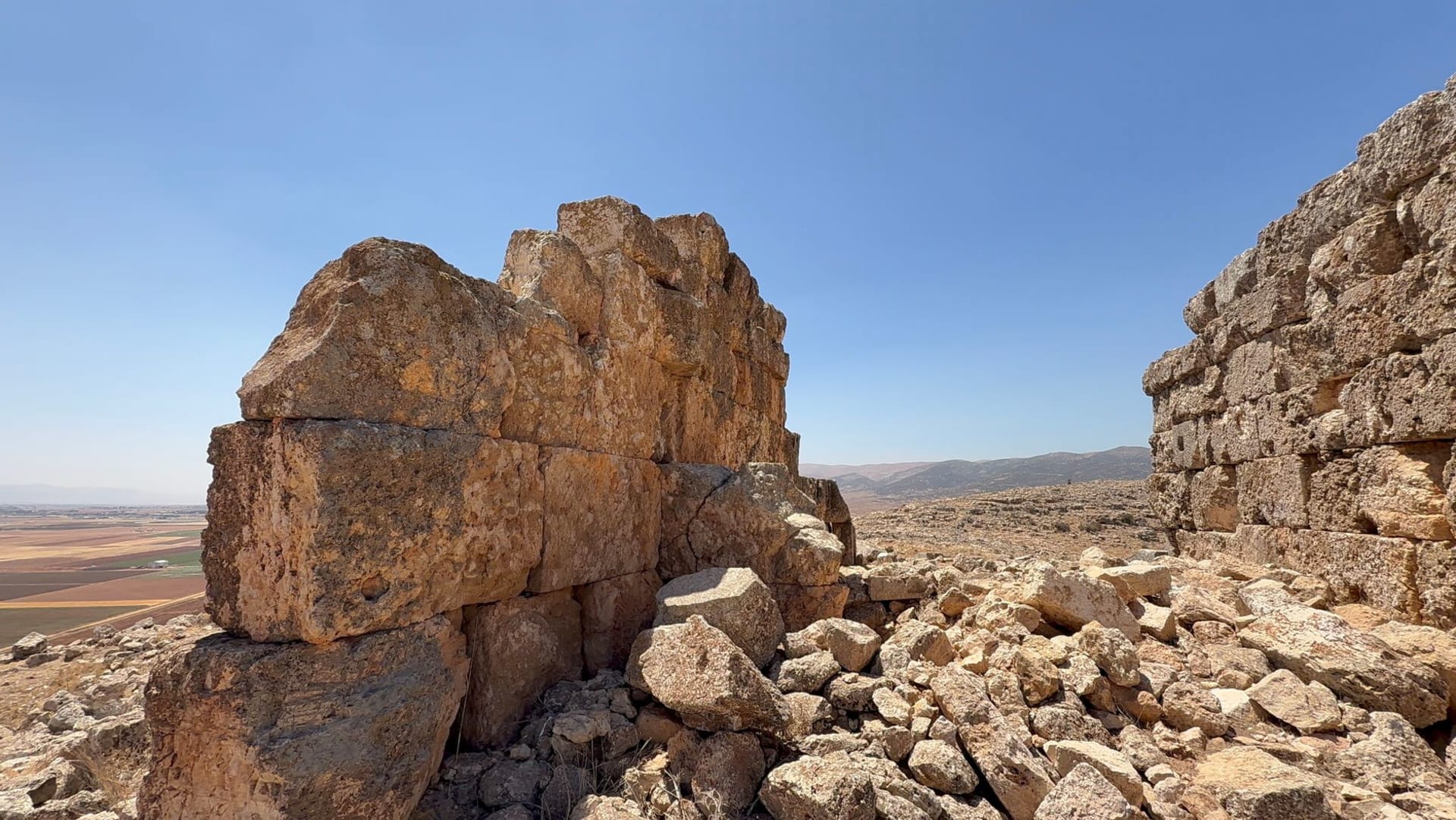
You come over the Anti-Lebanon mountains from Damascus — or from Beirut through the Dahr el-Baidar pass — and the Bekaa opens in front of you like someone pulled back a curtain. A flat plain a thousand meters above sea level, framed on both sides by snow-capped ridges, vineyards running in straight lines under the October sun, and on the northern edge, impossible to mistake even from thirty kilometers away, the columns of Baalbek. Six of them still standing, each twenty meters high, from a temple to Jupiter that was the largest in the Roman Empire. I stood there trying to calibrate the scale and kept failing. The stones in the foundation are so large — three of them together called the Trilithon, each weighing over eight hundred tonnes — that no one has fully agreed on how they got there. Baalbek is not a ruin. It is an argument about what humans are capable of when they decide something matters enough.
The valley itself does not live up to its reputation for danger. Zahle, the regional capital, is a Christian city built along a river gorge, famous throughout Lebanon for its arak and its mezze restaurants stacked up the hillsides over the Bardaouni stream. I ate kibbeh nayeh and grilled halloumi and flatbread from a clay oven, drank three glasses of arak cut with water and ice, and paid almost nothing. The vineyards here — Chateau Ksara, Massaya, Chateau Kefraya — produce wines that won’t embarrass a table anywhere in the world. Ksara has cellars dug by Roman soldiers, two kilometers of tunnel carved into the rock, and the 2018 Blanc de Blancs I had there would have held its own in Burgundy. The Bekaa has been making wine for two thousand years. It shows.
When to go: Late September through early November is ideal — harvest season, golden light, cooler temperatures after the summer heat, and the vineyards at their most photogenic. Spring (April to May) works well too, with wildflowers across the valley floor and comfortable hiking conditions in the surrounding hills. Avoid July and August when the heat on the plateau is punishing.
What most guides get wrong: They treat Baalbek as a day trip from Beirut and nothing else. The Bekaa deserves at least two nights — one to visit Baalbek at the end of the afternoon when the tour buses leave and the light goes gold on the columns, and one based in Zahle to drink arak by the river and drive the wine route the following morning. The temples at Anjar, an Umayyad palace city from the eighth century that most visitors skip entirely, are thirty minutes south and give you a completely different layer of history in an hour. The Bekaa is not a detour. It is a destination.