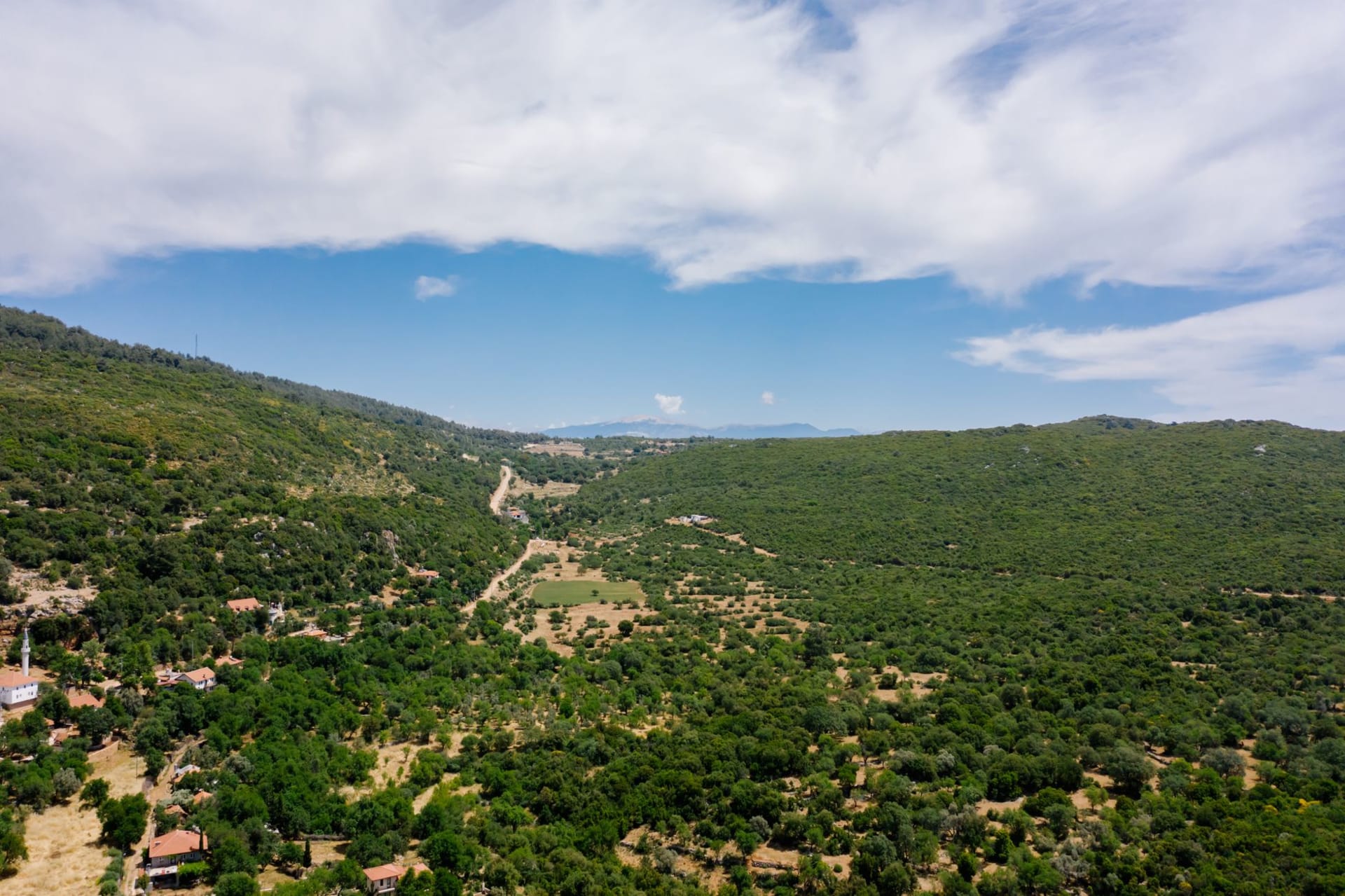
Chtaura
"Everyone passes through Chtaura. Most don't stop long enough to understand that stopping is the point."
You pass through Chtaura whether you mean to or not. Every road into the Bekaa from Beirut converges here at the junction where the highway splits — left for Zahle, right for Baalbek, straight on for Damascus. The town grew up around this crossroads with the pragmatic logic of a place that understood its own geography early. It is not beautiful in the way that Zahle is beautiful. It is useful, dense, alive in the specific way of market towns that serve a region rather than a single community.
The pastry shops are the reason to stop. Chtaura is famous across Lebanon for its sweets — not in the abstract way that a place can be famous for something few people have actually tasted, but in the way that Beirutis make deliberate detours here on the road home from the mountains. The knafeh at the better establishments is made with fresh Bekaa cheese, still slightly salty and warm, soaked in orange blossom syrup and topped with crushed pistachios. I had it standing at a counter at nine in the morning with a small coffee and watched a steady stream of people doing exactly the same thing.

The cheese itself is an industry here. The Bekaa produces some of Lebanon’s best dairy — the high altitude grazing, the cold nights — and Chtaura is one of the main commercial points for it. Akkawi, halloumi, labneh, fresh sheep’s milk yogurt — the dairy shops along the main road sell it by the kilo and in quantities that suggest people are not buying for a weekend but for a season. I bought a container of labneh rolled in zaatar and dried sumac berries, and a wedge of halloumi wrapped in grape leaves, and ate both over the next two days with bread from a bakery I had found in Zahle.
The vegetable market that runs along the side streets is where the valley’s agricultural abundance actually lands. In October, this means tomatoes of several varieties, fat peppers, the last of the summer corn, quinces just coming in from the orchards above the valley, pomegranates being split and juiced at a stand in the middle of the market. The prices are half what you pay in Beirut and the quality is better. People from across the valley come to sell here; the farmers’ pickups are backed up to makeshift stalls, and the transaction is direct — no intermediary, no aesthetic packaging.

Chtaura keeps its own hours, more or less. The morning market builds between seven and ten, quiets at noon, recovers in the late afternoon as people stop on their way back through the junction from Zahle or Baalbek. The pastry shops are the last to close, still lit and open late into the evening, the smell of warm sugar and rosewater drifting out onto the main street.
When to go: Chtaura works year-round as a stop, but autumn and winter bring the valley’s preserved foods and stored cheeses — jars of pickled vegetables, aged akkawi, pressed grape products — that make the market particularly worth exploring. Friday and Saturday mornings see the fullest market activity. Plan to stop for at least an hour, preferably on an empty stomach.