Baalbek
"I kept trying to find the scale of it and kept failing. The stones do not allow you to win that argument."
I came over the pass from Beirut in the late afternoon, the kind of October light that makes things glow amber at the edges. The valley opened flat and enormous, and the columns appeared on the horizon before I expected them — six pale fingers reaching up from the plain, absolutely still, absolutely certain of themselves. From thirty kilometers away I could tell they were large. It was only standing beneath them, craning my neck until it ached, that the word large stopped being useful.
The Temple of Jupiter at Baalbek was the largest in the Roman Empire. I knew this fact before I arrived; I had even tried to picture it. What I had not been able to picture was the Trilithon — three stones in the foundation wall, each one weighing over eight hundred tonnes, placed with a precision that makes modern engineers uncomfortable. There is a fourth stone, the Stone of the Pregnant Woman, still in its ancient quarry six hundred meters away, never moved, nearly a thousand tonnes of limestone abandoned in the earth like a thought someone never finished. No one has fully agreed on how the others got there.

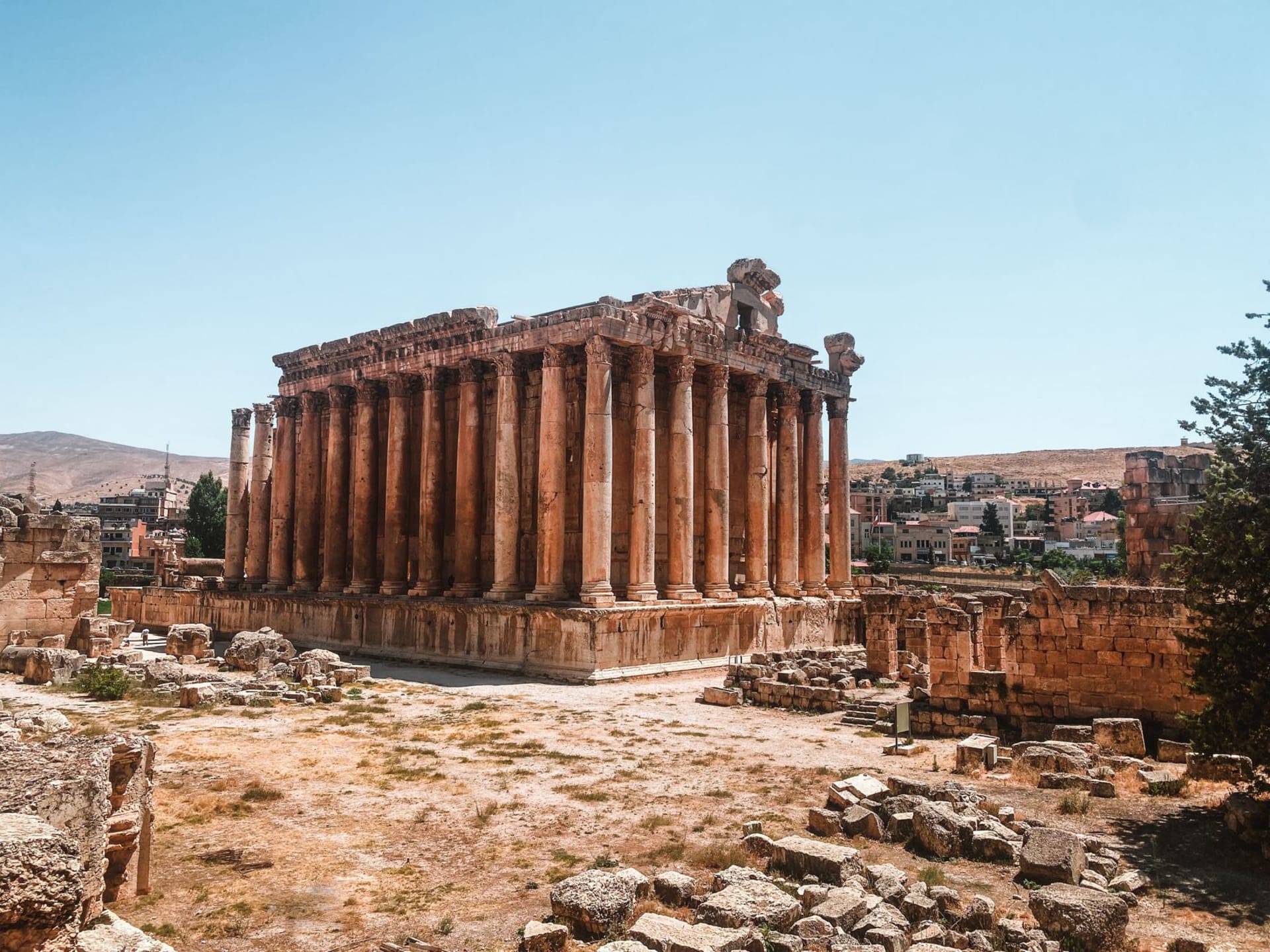
The Temple of Bacchus, standing just beside Jupiter’s vast ruin, is the best preserved large Roman temple in the world. Not the most famous — that crown goes elsewhere — but the most intact, its cella walls still rising to their full height, carved with vine tendrils and figures in a state of divine revelry. I walked through it in the golden hour, when the tour buses had gone and the site was almost empty. The carved door frames inside still hold their detail. Grape clusters the size of my fist hang from carved stone vines. The acoustics do something strange when you speak — your voice finds no echo, absorbed by the scale.
Below the temples, the city of Baalbek itself unfolds with an indifference that I found clarifying. There are shawarma stalls along the main road, a market selling plastic shoes and imported socks, a tea house where old men play backgammon in a cloud of nargileh smoke. The Bekaa is not a museum exhibit. People live here, argue here, eat here, largely unbothered by the fact that their neighbor happens to be one of the wonders of the ancient world.

I stayed long enough to watch the sun go down behind the columns. The stone changes color through orange, then a deep pink, then something that has no word attached to it. The columns hold the last light a few minutes after everything around them has gone gray. Then darkness comes up from the valley floor and the columns go dark too, and you understand that two thousand years is, in the end, just a number.
When to go: May and October are ideal — manageable crowds, agreeable temperatures, and the afternoon light at its most theatrical on the stone. Come in the final two hours before the site closes; the tour groups from Beirut are gone and the whole complex is yours. The Baalbek International Festival runs in summer (July–August), when opera and classical concerts are staged against the temple backdrop — remarkable, if you can tolerate the heat.