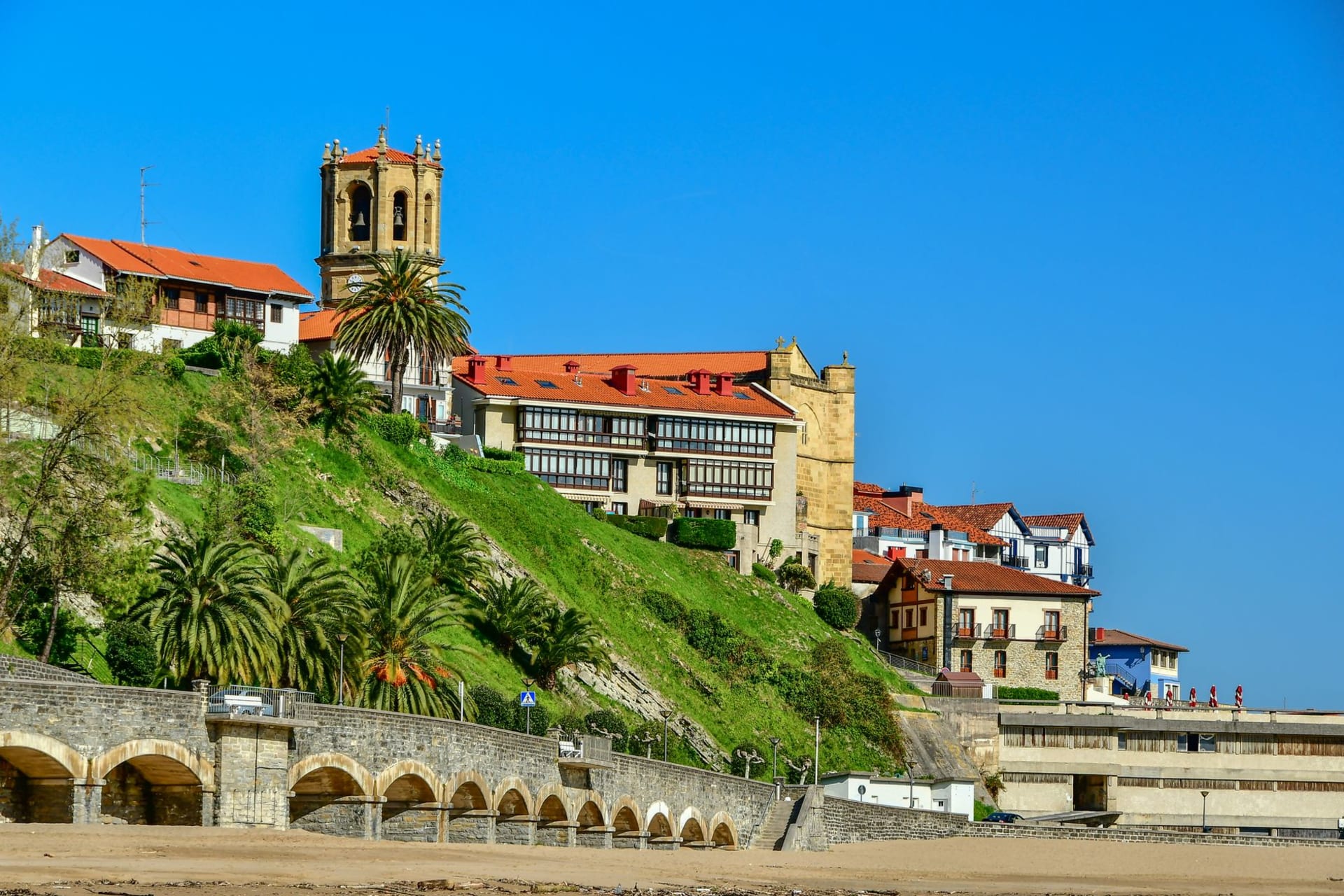
Getaria
"Getaria takes its wine and its fish with the same seriousness, which is to say: absolutely."
The local train from Donostia runs along the coast and the sea appears and disappears between headlands as you rattle west. Getaria announces itself before the station: a small promontory pushing into the Atlantic, a church sitting at the top of it like a hat that doesn’t quite fit, a cluster of stone houses and the smell of charcoal rising from somewhere below. I was there by eleven in the morning and the first thing I did was walk down to the harbor and order a glass of txakoli at a bar where the tables faced the water and the wine was so cold and so dry it felt like something practical rather than indulgent.
The village is compact in the way that medieval fishing settlements are compact — built up against the hillside, the streets running parallel to the coast at various elevations. Above the upper town, the txakoli vineyards start: vines trained on high pergolas over the steep Atlantic terraces, catching the maritime breeze that gives the wine its characteristic spritz. The Getariako Txakolina denomination covers just this stretch of coast, and there is something satisfying about looking up at the source of what you are drinking while you drink it, the vines on the slope above you, the sea behind you, the glass in your hand.

The church of San Salvador is the architectural oddity that everyone mentions and that photographs cannot fully explain. It was built on the highest point of the promontory in the fifteenth century, which means the nave tilts at a noticeable angle to accommodate the slope of the rock. When you walk inside, the floor is level and the walls lean. It produces a mild dizziness that I first attributed to the txakoli. The fishing port below it is still working — small boats, nets laid out to dry, the functional smell of the sea — and the restaurants along the harbor front do one thing almost exclusively: fish grilled over wood charcoal. Turbot. Sea bream. Whole, split, cooked fast over high heat, served with a drizzle of olive oil and nothing else.

A few minutes’ walk from the village center, the Cristóbal Balenciaga Museum sits in formal grounds below the palace where the couturier grew up. Balenciaga was born here in 1895, the son of a seamstress, and left for Paris in 1937 after the Civil War. The museum is excellent — serious about fashion and about the man’s specific genius for volume and structure — and the combination of it with the village and the wine country makes for a day that covers more ground than it has any right to. Small places sometimes contain too much.
When to go: The fish restaurants are busiest in July and August but the kitchen quality holds year-round. September and October are when the txakoli harvest happens and the vineyards are at their most vivid. The coastal path between Getaria and Zumaia in either direction is worth a half-day and is best in the green months of spring.