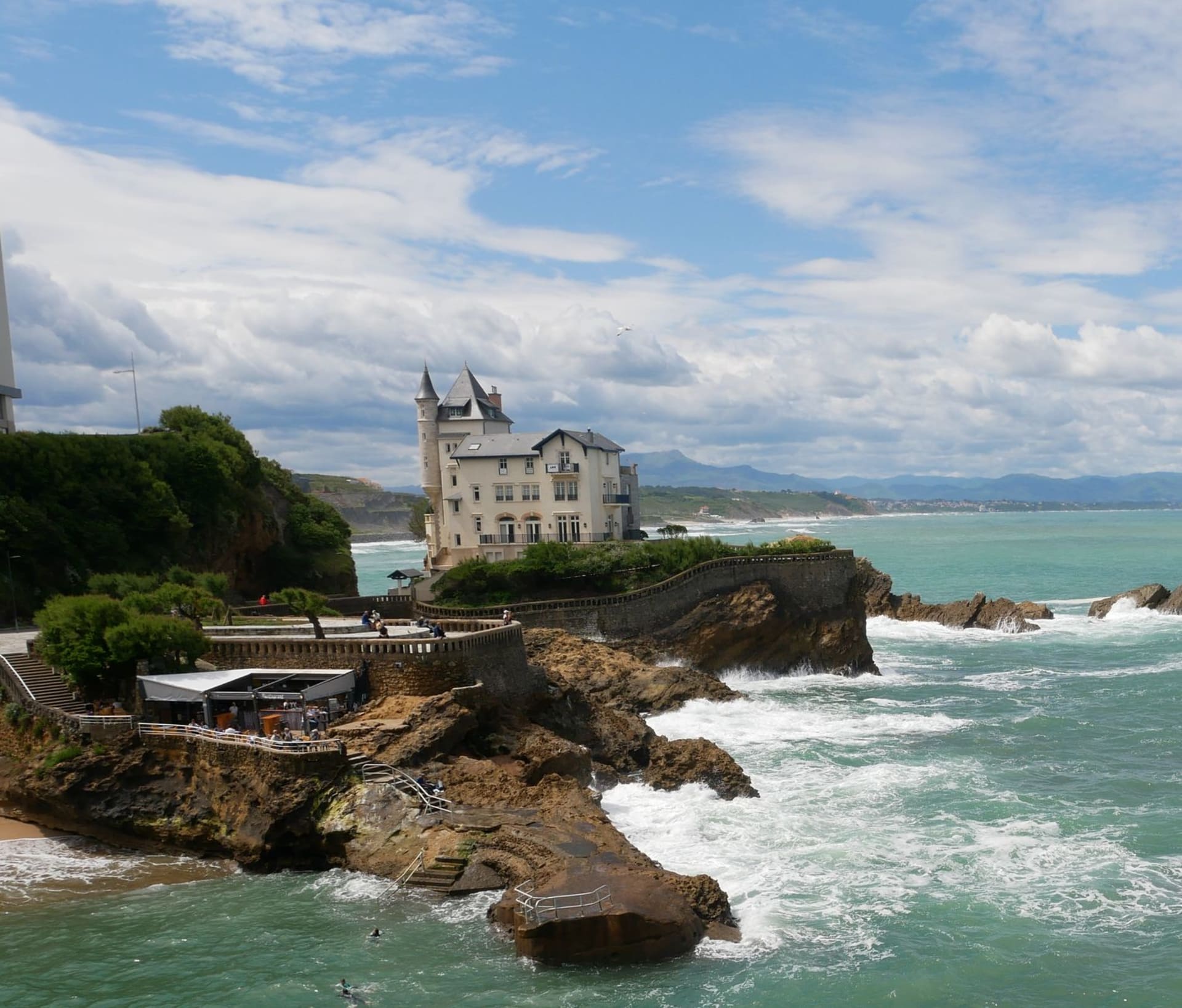
Biarritz
"France and the Basque Country take turns here, and somehow that suits everyone."
The French side of the Basque Country smells different — baguettes and diesel from the autoroute, then, as you get closer to the water, salt and wax and the slightly chemical smell of neoprene drying in the sun. Biarritz is technically in France, administratively and on every map, but the Basque cross appears on flags above the shops and half the town speaks Euskara in the market. I arrived by bus from Bayonne with a wet morning hanging over the cliffs and walked straight to the Côte des Basques, the beach below the old town where a long left-hand wave was running down the sandbar in clean, manageable sets. Three surfers were out. Two of them looked like they had been surfing since before I was born.
The town that grew up around this coast was a nineteenth-century invention of European aristocracy — Napoleon III’s court wintered here, and the casino and the grand hotels and the wide promenade above La Grande Plage still carry that self-conscious elegance. But something happened in the 1950s and 1960s when American servicemen stationed in the region brought their boards, and Basque fishermen’s sons started riding waves, and Biarritz became the birthplace of European surfing. The result is a town that can be simultaneously serving you a perfect entrecôte in a white-tablecloth brasserie and have a surf brand headquarters two doors down. The tension doesn’t resolve. It just persists pleasantly.

Les Halles — the covered market in the centre of town — is where I spent the better part of a morning. Basque products come here in force: Ossau-Iraty sheep’s milk cheese in wheels at a counter run by a man who let me try four varieties before I settled on one; Bayonne ham sliced thin from a whole leg hung above the stall; a jar of Espelette pepper paste that I carried carefully in my bag all the way home. The market runs weekday mornings but Saturday is the main event, the stalls pushing out into the surrounding streets, the noise level climbing as the morning progresses.

The Rocher de la Vierge — a rock stack connected to the cliff by an iron bridge attributed to Gustave Eiffel — offers the best view of the coast in either direction: the Grande Plage curving north toward the Basque lighthouse, the Côte des Basques dropping south toward the Spanish border. At dusk the Atlantic turns pewter and the surfers in the water below become silhouettes moving against the light, and the town behind you fills with the sound of restaurants opening for the evening. It is a genuinely cinematic moment, the kind you feel slightly embarrassed to have been moved by, and then accept.
When to go: June through September for surf and sun, though August brings the full weight of French summer tourism. September is when the surf tends to improve and the crowds thin. The market and the restaurants run year-round, and a grey November afternoon in Biarritz has its own quality — the resort infrastructure standing mostly empty, the sea serious and large, the town finally looking like itself.