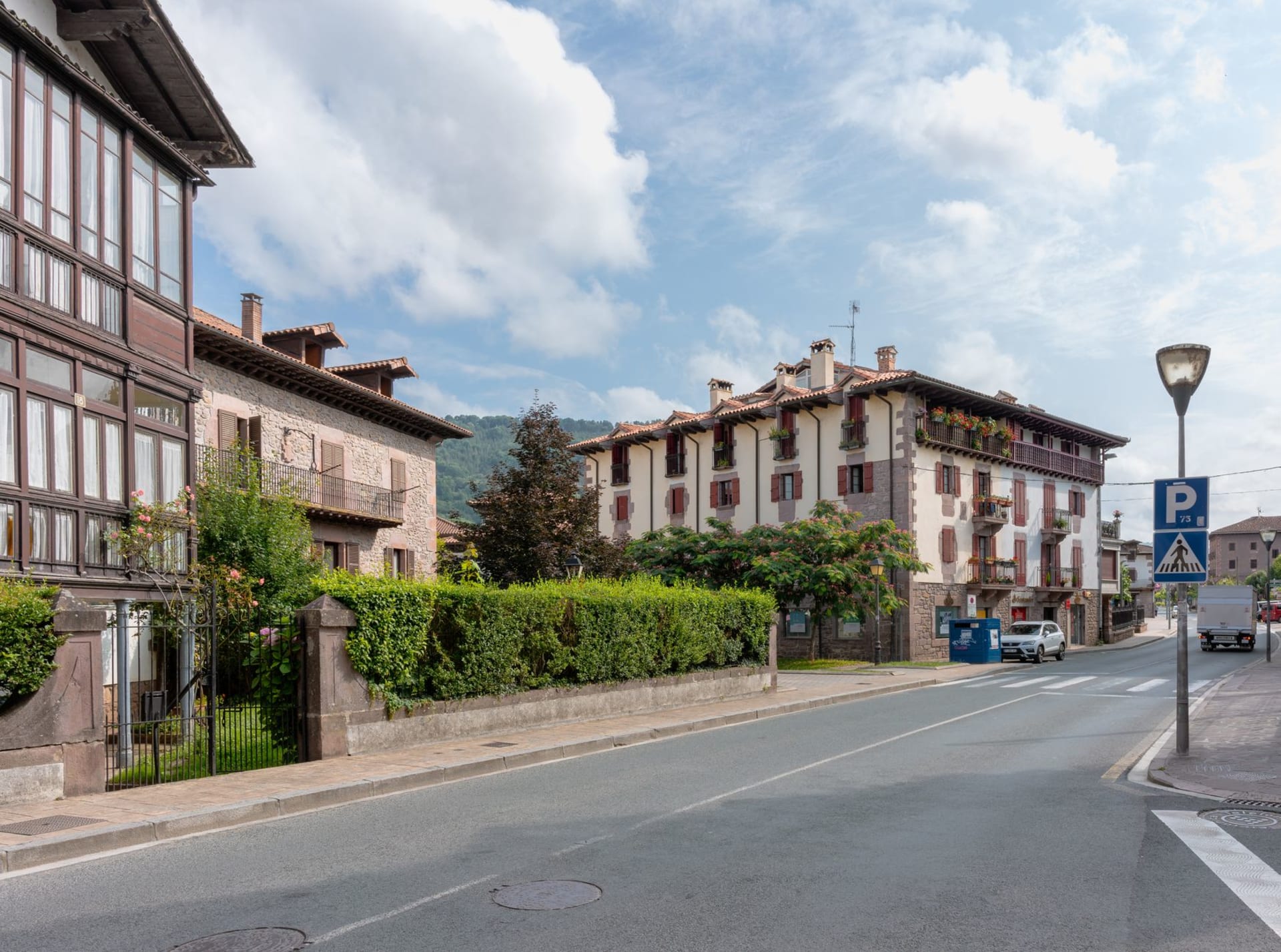
Arantzazu
"Someone put a modernist basilica at the end of a mountain road in the 1950s and it was, inexplicably, the right decision."
The road up to Arantzazu climbs from the town of Oñati through a succession of sharp bends, each one revealing more of the gorge opening beneath. Beech forest covers the cliffs on both sides, and in October when I drove it the leaves were the colour of old copper, the kind of light that makes everything look briefly mythological. I had read about the sanctuary but hadn’t seen photographs, which in retrospect was the right approach. When the basilica appears at the end of the road it produces the specific sensation of seeing something that has no right to be where it is, in the way that the very best architecture produces: not shock, exactly, but a kind of readjustment.
The Sanctuary of Arantzazu is a pilgrimage site that has stood in this gorge for centuries — the story goes that a shepherd found a statue of the Virgin here in 1469, caught in a hawthorn bush, and the sanctuary grew from that discovery. The current basilica was designed in the 1950s by Francisco Javier Sáenz de Oíza, in collaboration with the sculptor Jorge Oteiza and a generation of Basque artists who saw the project as a chance to make something that mattered. The building that resulted — two diamond-studded towers flanking a rough stone facade covered in Oteiza’s sculpted apostles — is simultaneously medieval and brutalist, sacred and confrontational, old and entirely modern.
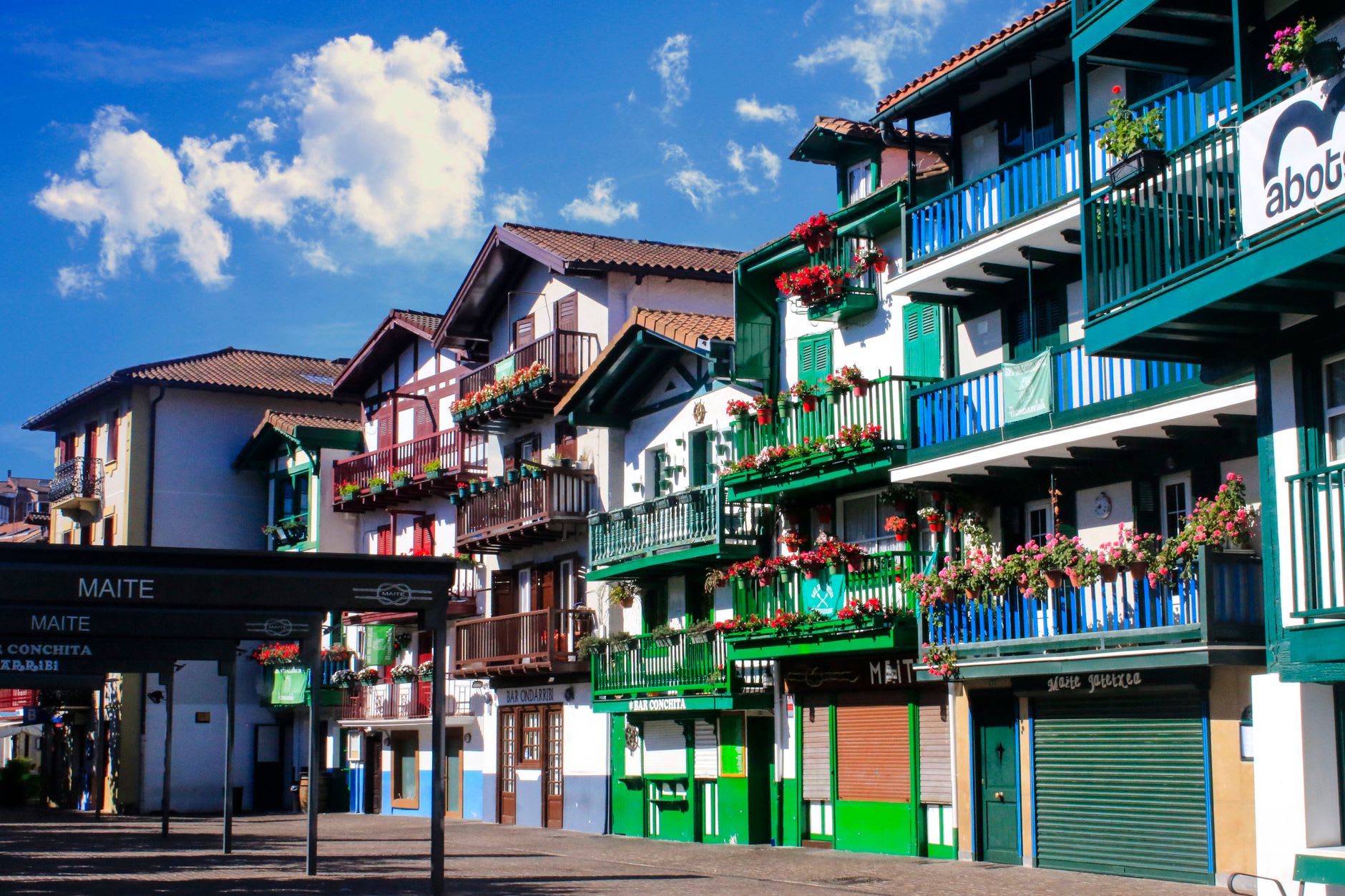
Standing in front of it I spent a long time with the Oteiza figures. Fourteen apostles are arranged across the facade in a way that reads, depending on your mood, as a procession, a judgment, or a crowd waiting for something. They are not sentimental figures — the surfaces are rough, the postures ambiguous, the faces not particularly readable. Oteiza was interested in emptiness as a spiritual concept, in what sculpture could say by removing rather than adding, and the apostles carry that idea even if you arrive without knowing his work. The empty niche above them — where a Virgin was planned and never installed — is, somehow, the most powerful element of the whole composition.

Inside, the nave is dark and long, with stained glass by Néstor Basterretxea throwing colour across the stone floor in patterns that shift as the sun moves. There were perhaps a dozen people in the church when I visited — some praying, some looking, the distinction not always obvious. A monk was arranging something near the altar. Above the sanctuary, a path climbs to the hermitage of the Amabirjina, higher on the cliff face, where the gorge opens below you and the basilica looks small against the forest.
The drive back down to Oñati happens in silence, at least it did for me. Some places ask for that.
When to go: Autumn is when the beech forest turns and the light in the gorge is at its most dramatic — September through November. The sanctuary is an active pilgrimage site and receives organized visits on weekends; weekdays are quieter and the space is more contemplative. The road is passable year-round but can be icy in winter. Oñati below is a handsome small town worth exploring before or after the ascent.