Srimangal
"The seven-layer tea was a trick, and also completely serious — like Bangladesh itself."
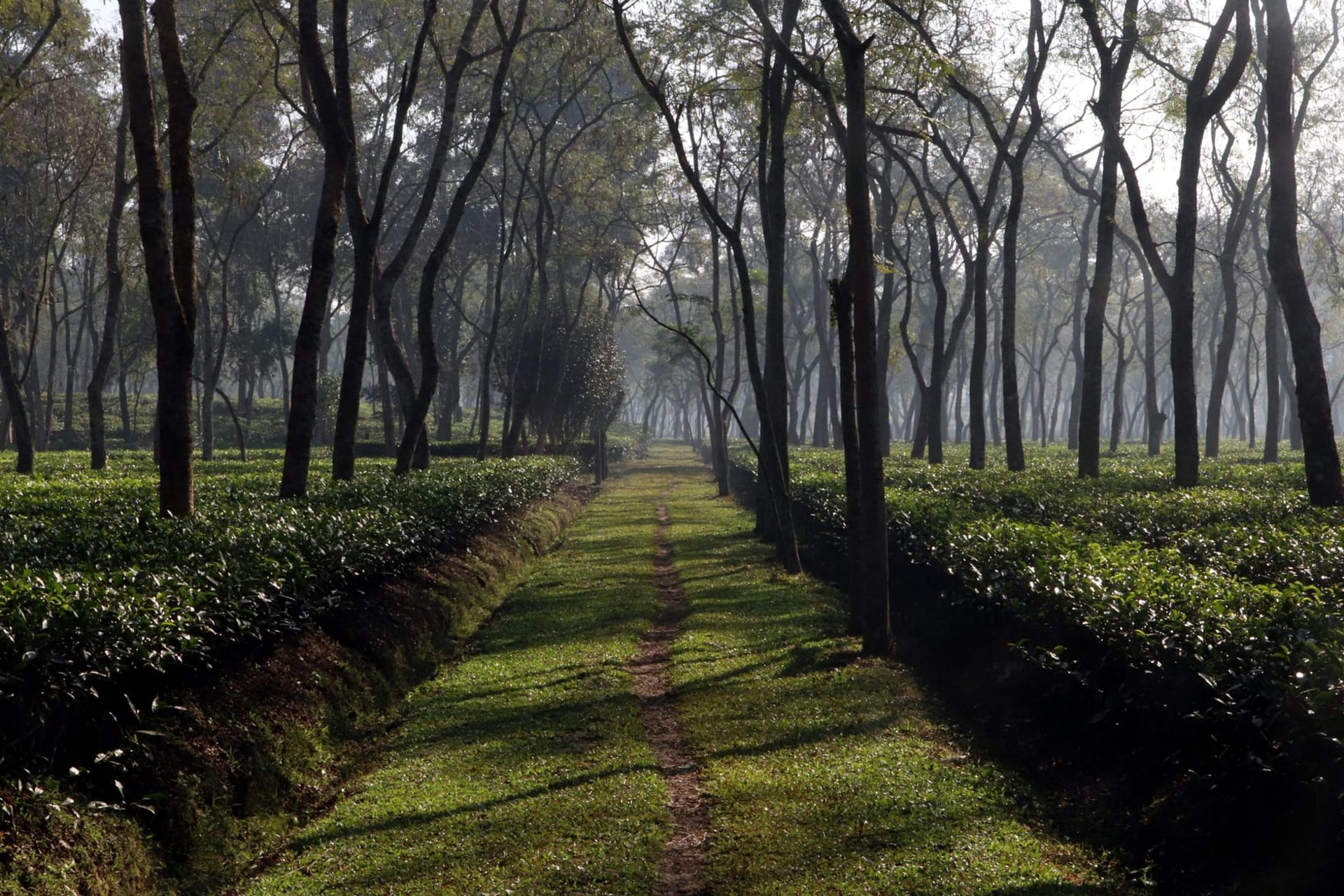
I arrived in Srimangal on the overnight train from Dhaka, stepping out into cool air that smelled like wet soil and something green I couldn’t name immediately. It took me a moment: tea leaves in the early morning, dew still on them. The town itself is small and unremarkable — a market street, a few guesthouses, a lot of CNG auto-rickshaws. But step fifteen minutes out in almost any direction and you’re inside the estates, and then the whole scale of the place makes sense.
Into the Estates
Bangladesh isn’t famous for tea but probably should be. Srimangal sits at the heart of the Sylhet division’s tea belt, and the estates here — some of them owned by the same families since the British planted the first bushes in the 1850s — cover the hills in an unbroken green carpet. I hired a bicycle one morning and spent three hours riding the low roads that cut between the plants. The bushes were pruned to waist height, perfectly even, and the pluckers — almost all women — moved along the rows filling wicker baskets strapped to their foreheads. The sound was almost nothing: occasional laughter in the distance, birds, the soft rhythmic snap of stems.
Visiting a working factory is worth the effort. At the Finlay estate, I watched leaves go from fresh-picked to dried, rolled, fermented, and sorted in a single low shed that smelled powerfully of something between grass and tobacco. The machinery was old and loud and magnificent.
The Seven-Layer Tea
At a small tea stall on the Srimangal road, a man named Romesh Gour has been making seven-layer tea for decades. It arrives in a glass: seven distinct horizontal bands of color, ranging from pale cream at the top to deep amber at the bottom, each layer a different blend brewed to a specific gravity so they don’t mix. You drink through all seven and each one tastes subtly different — sweeter, more bitter, more milky. The trick is density manipulation and a careful pour. Romesh does it with practiced indifference, which is the right way to do anything extraordinary.
Lawachara Forest
A few kilometers outside town, Lawachara National Park is a remnant of the mixed evergreen forest that once covered this whole region. I went in at seven in the morning with a local guide named Sumon who spotted two western hoolock gibbons in the canopy before I’d had time to adjust to the dark. The gibbons are critically endangered in Bangladesh and hearing them call — a long, ascending whoop that echoes between the trees — is one of those sounds that registers somewhere deeper than ears. The forest floor was dark and humid, ferns draping over a narrow path. We also saw a slow loris, which I’ve since read shouldn’t be pointed at with flashlights. I didn’t know that at the time.
When to go: October through March. The tea harvest runs April to December but the growing season peaks October–November, which is also when weather is driest and Lawachara wildlife is most active. Avoid monsoon (June–September) unless you enjoy mud with your tea.