Rangamati
"Rangamati floats above its own reflection on a lake so still that leaving feels like an unnecessary disturbance."
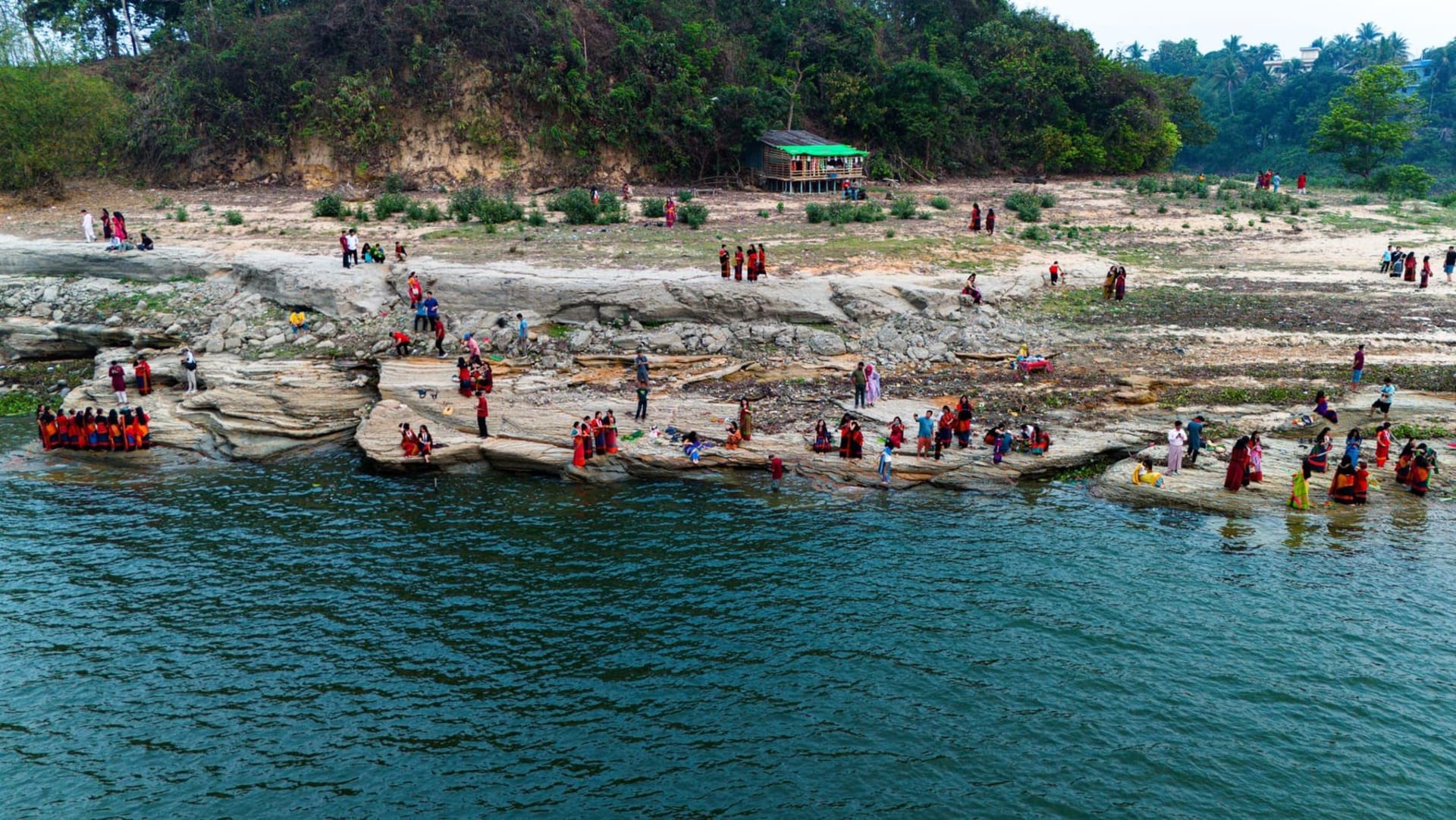
Chakma tribal villages on stilts above the vast Kaptai reservoir, connected only by wooden boat.
There is a particular quality of silence on Kaptai Lake just after sunrise — not the absence of sound exactly, but a compression of it. Water lapping against the hull. A rooster somewhere in the hills. The slow creak of a long-tail boat adjusting its nose against the current. I sat in the bow watching the mist dissolve off the surface, and for a long stretch of time I could not tell where the hills ended and their reflections began.
We had arrived in Rangamati town the evening before, crossing through the Chittagong Hill Tracts on a road that switchbacks through teak and banana groves before dropping suddenly onto the lakeside. The town itself is built on a narrow peninsula — Reserve Bazar on one end, DC Office Road threading through the middle — and at dusk the whole thing turns amber, fishing boats nosing in from the reservoir with their catch and children running across the suspension footbridge that connects the peninsula to the opposite bank.
Out on the Water
The real Rangamati is not the town. It is what lies out across the lake: Chakma villages balanced on bamboo stilts, reachable only by wooden engine boat hired from the Reserve Bazar ghat. Lia and I hired one for a full day and pushed out past the submerged valley — Kaptai Dam flooded it in 1960, and on low-water days you can still see the ghostly outlines of the old road beneath the surface, a pale scar running nowhere. The villages we stopped at had no road connection at all. Women wove on backstrap looms in the shade beneath their houses; children appeared at the edge of the dock to stare and then laugh and then disappear.
The Meal I Did Not Expect
The unexpected thing was lunch. I had anticipated eating at a tea stall, the kind of plain dal-bhat situation that serves you well enough anywhere in South Asia. Instead, the boatman’s cousin — we never fully established the relationship — guided us off a dock and up into a house where his mother produced bamboo shoot curry, smoked fish, and a fermented mustard leaf dish called nappi that hit the back of the palate like something ancient and deliberately difficult. Nothing on any menu. No price discussed until afterward. I ate three helpings and felt obscurely honored.
Rangamati trades in that kind of accidental grace. The Rajbari — the old Chakma raja’s palace — is modest, half-hidden behind bougainvillea on a hillock near the Tribal Cultural Institute. The institute itself is worth an hour: textiles, carved wood, photographs of a valley that no longer exists above water.
When to go: November through February offers the clearest skies and lowest humidity, with the reservoir at a navigable level and the forested hills still green from the monsoon. Avoid the height of the June–September rains, when boat travel becomes unpredictable.