Rajshahi
"I came for the mangoes and stayed for the silk. Both were worth the two-day detour."
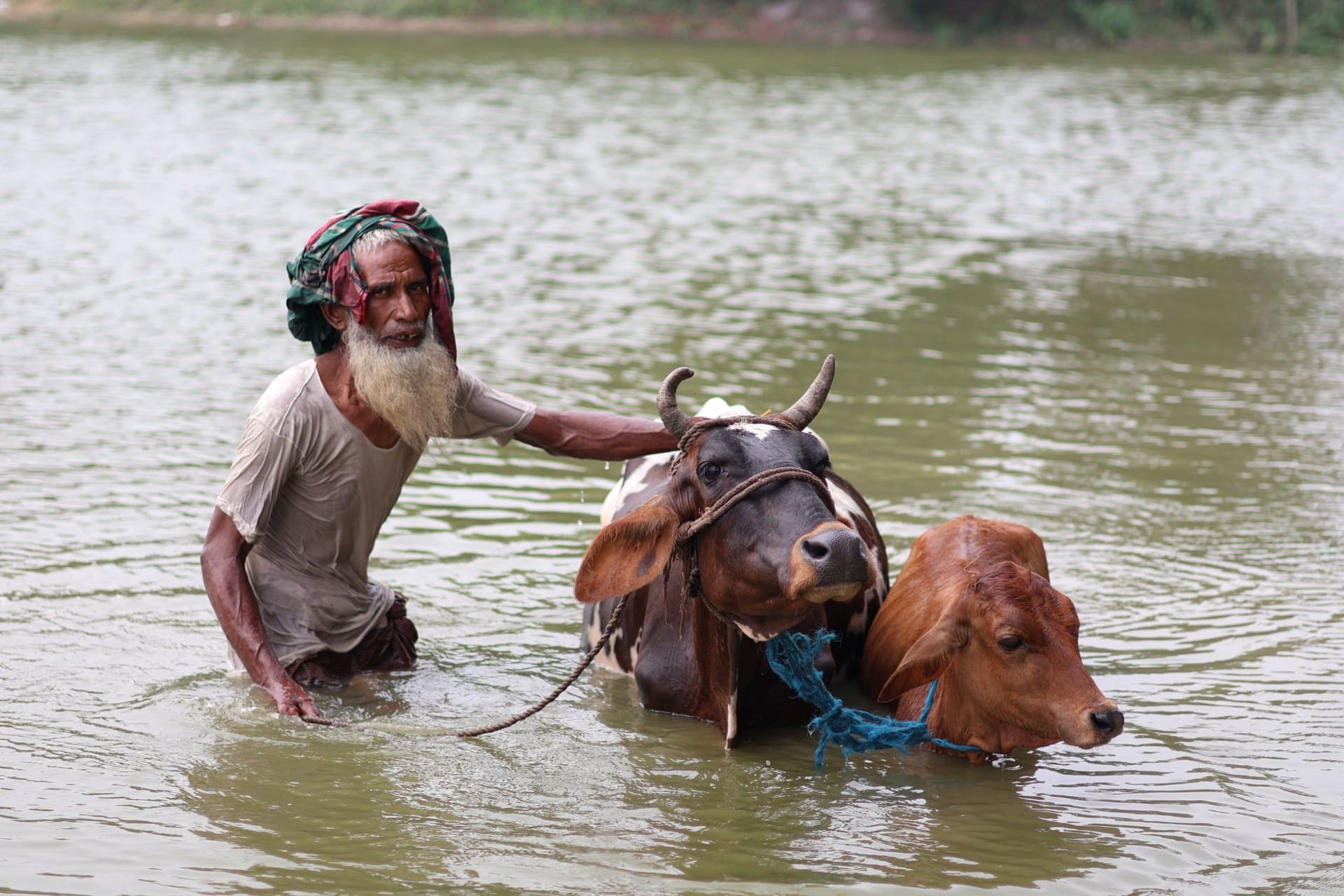
Rajshahi doesn’t try very hard to be visited. The city sits on the south bank of the Padma River, wide and slow here, across from the Indian state of West Bengal, and it goes about its business with a composure that most Bangladeshi cities — chaotic, electric, overwhelming — don’t have time for. It’s a university town, a silk town, a mango town. It smells in June like hot fruit and something floral I never identified. I found it by accident, rerouting around a flooded road, and stayed four days longer than I’d planned.
Puthia Temple Complex
Thirty kilometers east of Rajshahi city, the village of Puthia contains what might be the densest collection of nineteenth-century Hindu temples in Bangladesh — eleven of them clustered around a large square pond, built between 1823 and 1895 by the Puthia Raj estate zamindar family. The largest, the Govinda Temple, is five-tiered, covered in terracotta panels depicting scenes from the Mahabharata and Ramayana, and reflected in the pond’s still water in a way that feels almost staged.
I arrived late afternoon, which was the right time. The low sun turned the white stucco golden, and a handful of local schoolchildren were doing their homework on the temple steps. No entrance fee, no crowds, no tour buses. A caretaker unlocked the main temple for me and pointed out specific panels with a stick — this is Krishna, this is Radha, this is a scene I didn’t recognize and he explained in Bengali I could only partially follow. The detail on the terracotta was astonishing. I took photographs for an hour and still felt I hadn’t covered it.
Silk and the Weavers
Rajshahi silk — rajshahi resham — has been the region’s defining product for centuries. The mulberry trees that feed the silkworms line every village road in the district, and the weaving is done on hand looms in workshops so small they’re essentially rooms in someone’s house. I spent a morning at the Silk Research and Training Institute just outside the city, where a technician walked me through the whole process: silkworms on mulberry leaves, cocoons unwound into raw thread, thread dyed in colors that don’t look like they belong in nature, then woven on looms that clatter and thud with a rhythm you feel in your chest.
The fabric that comes out is lighter than it looks. Lia bought a dupatta in deep ochre and wore it on the train to Dhaka; three people stopped her to ask where she’d gotten it.
Mango Season
Rajshahi and the surrounding Chapai Nawabganj district grow more mangoes than anywhere else in Bangladesh, and during the season — roughly mid-May through July — the whole region smells of them. The market at Kansat, the main wholesale point, handles hundreds of tons a day at peak. Varieties I’d never heard of: Langra, Fazli, Khirsapat, Amrapali, each with a different sweetness-to-acid ratio and a constituency of devoted fans who will argue the rankings with alarming seriousness. I ate five different kinds in a single afternoon sitting under a tree in an orchard outside town and understood, finally, what people mean when they say a mango tastes like a place.
When to go: October through March for pleasant weather and full access. May through July if mango season is the objective — hot and building toward monsoon, but worthwhile. Avoid July through September when the Padma can flood surrounding areas.