Kuakata
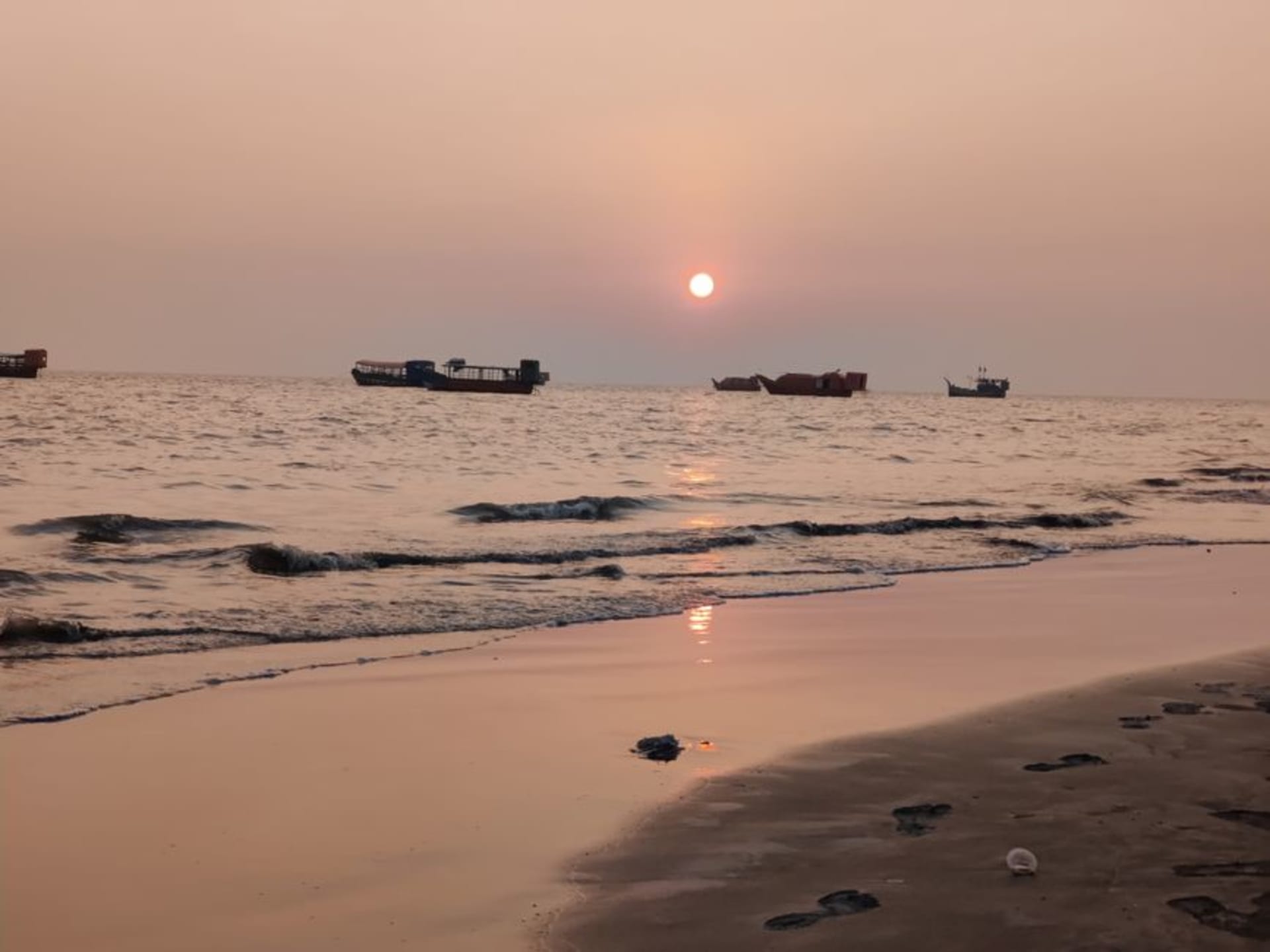
"I've watched the sun come up and go down from the same patch of sand exactly once in my life, and it was here."
A wide, wild beach on the Bay of Bengal where the sun rises and sets over the same water, and Rakhine temple bells drift over the sand.
We got to Kuakata late, after a bus-then-launch-then-tuk-tuk relay from Barisal that left Lia asleep on my shoulder for the last hour. I remember stepping off into the dark and hearing the sea before I saw it — that low, steady roar you only get from open ocean, not a bay. Someone at the guesthouse told us, almost as a throwaway line, that this was Sagar Kannya, the Daughter of the Sea, and that if we walked out at dawn we’d understand why people came from all over the country just for this stretch of coast. I didn’t fully believe it until the next morning, standing on wet sand at 5:40am, watching an orange smear come up out of the Bay of Bengal directly in front of me. Twelve hours later, from the exact same spot, I watched it go back down into the water on the other side. I’ve traveled a lot of coastlines and I had genuinely never done that before — sunrise and sunset, same beach, same footprints practically still there.
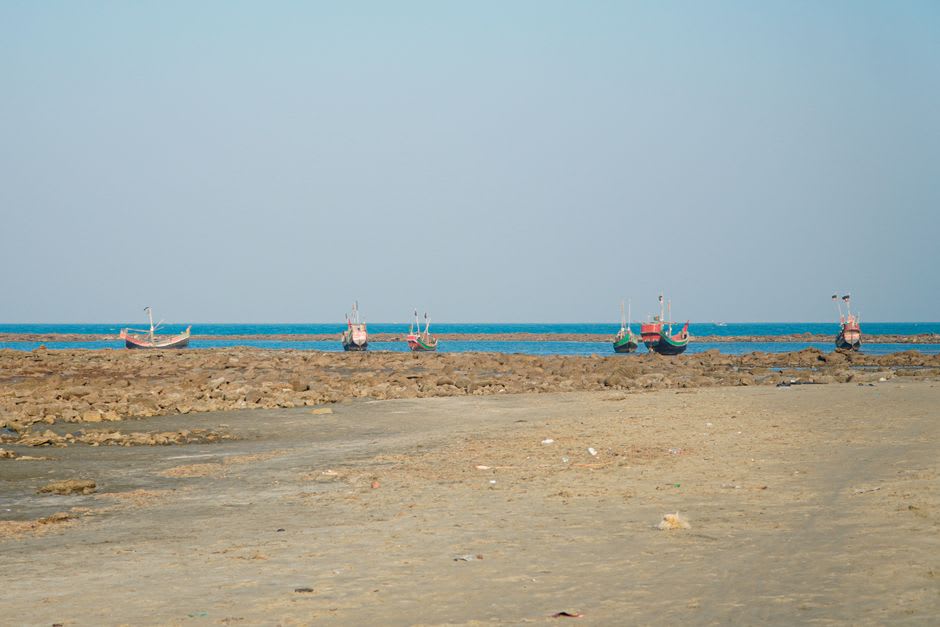
The beach itself is enormous, close to 18 kilometers of nearly flat sand, and what struck me most was how unhurried it felt compared to the coastal towns back home. Fishing boats with painted eyes were pulled up at odd angles, kids herded a couple of buffalo along the tideline, and every so often a horse-cart clattered past piled with tourists from Dhaka on a long weekend. Lia and I just walked for hours, past the point where the crowds thin out, and it started to feel less like a resort and more like a working coast that tourism arrived on top of relatively recently — which, we learned, is more or less exactly what happened once better roads reached Kuakata in the 1990s and turned an isolated fishing community into a place people actually plan trips to.
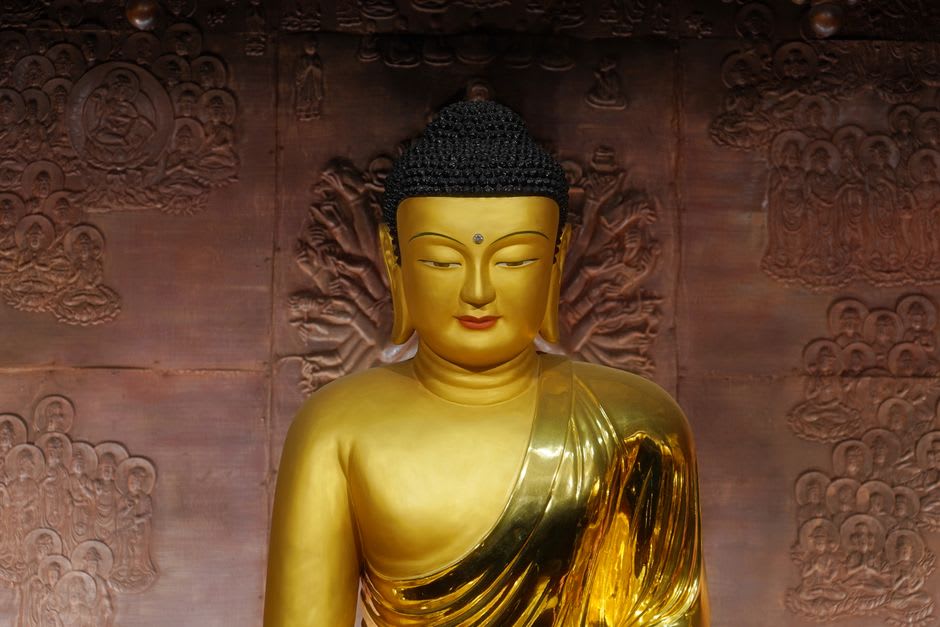
One afternoon we ducked inland to see the Kuakata Kendriya Rakhine Buddhist Bihar, and it’s easily the part of the visit that’s stayed with me longest. The Rakhine community here descends from Magh refugees who fled Arakan in the late 18th century, and their temple holds a large bronze Buddha that’s genuinely striking in person — heavier and more serene-looking than photos suggest. We sat outside for a while listening to a novice monk sweep the courtyard, and an older woman selling incense told Lia, in fragments of English and a lot of gesturing, about the Rakhine New Year celebrations that happen there. It reframed the whole town for me: Kuakata isn’t just a beach with a nice sunrise gimmick, it’s a genuine cultural crossroads that happens to sit on some of the most dramatic sand I’ve walked on in Asia.
On our last morning we hired a small boat to poke along the edge of Fatrar Char, the mangrove forest just outside town that ties into the wider Sundarbans system, and Gangamati forest reserve nearby. It was nothing like the deep mangrove trips further south — quicker, scrappier, more improvised — but there were kingfishers everywhere and it gave me a real sense of how fragile and layered this whole coastline is, forest bleeding into beach bleeding into open ocean. I left Kuakata thinking about how rare it is to find a place that gives you a genuine natural phenomenon, a living minority culture, and an actual functioning fishing economy, all inside an 18-kilometer walk.
When to go: We went in December and had cool, dry mornings that made the sunrise walk actually comfortable rather than sweaty — I’d aim for that November-to-February window again. If you can time it around the full-moon Rush Mela festival in Kartik (October–November), the beach fills with Hindu pilgrims and the whole town takes on a completely different, much more devotional energy.