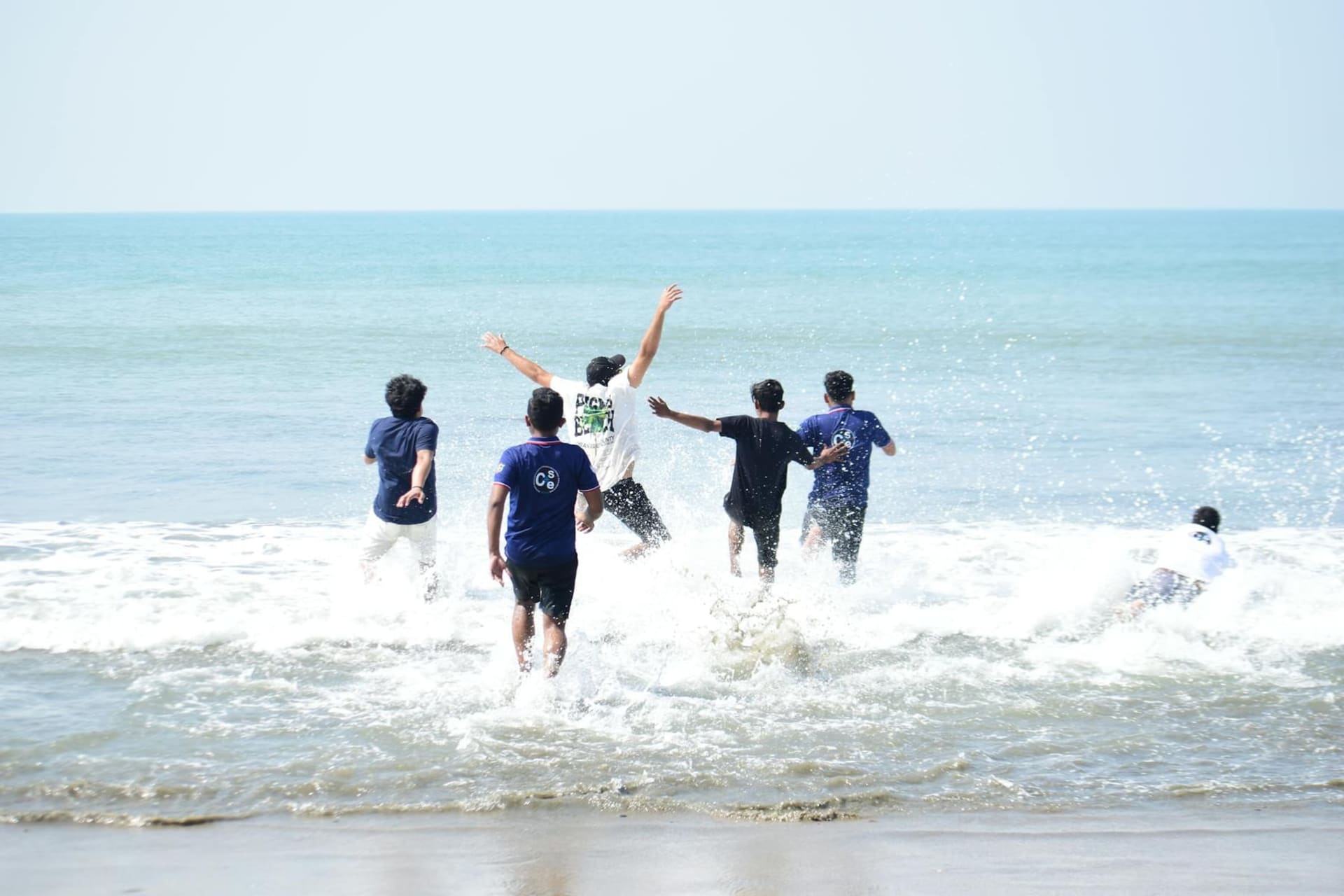
Cox's Bazar
"Cox's Bazar is too long to walk and too wide to ignore — a beach that still belongs entirely to itself."
The world's longest natural sea beach, 120km of unbroken sand where local fishing boats outnumber foreign visitors.
I had been told the beach was long. I had not been told it would feel like a country of its own.
We arrived on a rickshaw from the bus stand on Kolatoli Road, rattling past tea stalls and shops selling dried fish in great open sacks, the smell reaching us before the sea did — salt and smoke and something fermented and faintly sweet that I never managed to name. Then the sand opened up, and everything else disappeared.
A Shore That Doesn’t Know It’s Famous
Cox’s Bazar stretches 120 kilometers without a single break — no headland, no river mouth, just one uninterrupted line of dark sand meeting grey-green water. Most visitors cluster around Laboni Beach near the town center, which meant that twenty minutes walking south, Lia and I had it almost entirely to ourselves. The fishing boats came in around five in the morning, painted bright orange and green, their prows carved into shallow crescents. The fishermen moved fast and didn’t look up. They had things to do.
The light here is particular. The Bay of Bengal sits under a low atmospheric haze for much of the year, and the sun doesn’t so much set as dissolve — bleeding orange into pearl into a grey that holds color longer than it should. I stood there longer than I planned, missing dinner, and didn’t regret it.
Inani and the Quiet End of the Road
The surprise came at Inani Beach, about 32 kilometers south of town. I had expected more of the same. What I found instead was a reef shelf exposed at low tide — flat slabs of dark rock patterned with barnacles, tide pools holding tiny crabs and something purple I couldn’t identify. Local children were jumping between the rocks in sandals. A man was grilling shutki, the fermented dried fish that Bangladeshis eat with mustard and green chili, over a charcoal brazier in the back of a pickup truck. The smoke drifted sideways in the sea wind. I bought a paper plate of it and ate standing up, my eyes watering from the mustard.
What Stays
Cox’s Bazar does not perform for visitors. The beach belongs to the fishing communities who have worked it for generations, to the families from Dhaka who come down on long weekends, to the boys who play cricket on the wet sand at low tide. Foreigners are rare enough to attract mild curiosity, nothing more. That absence of performance is, in the end, what made me want to stay longer than I had planned.
When to go: November through March offers dry, cooler weather and the best sea conditions; the monsoon runs from May to September and brings heavy rain and rough water, though the empty beach has its own austere appeal.