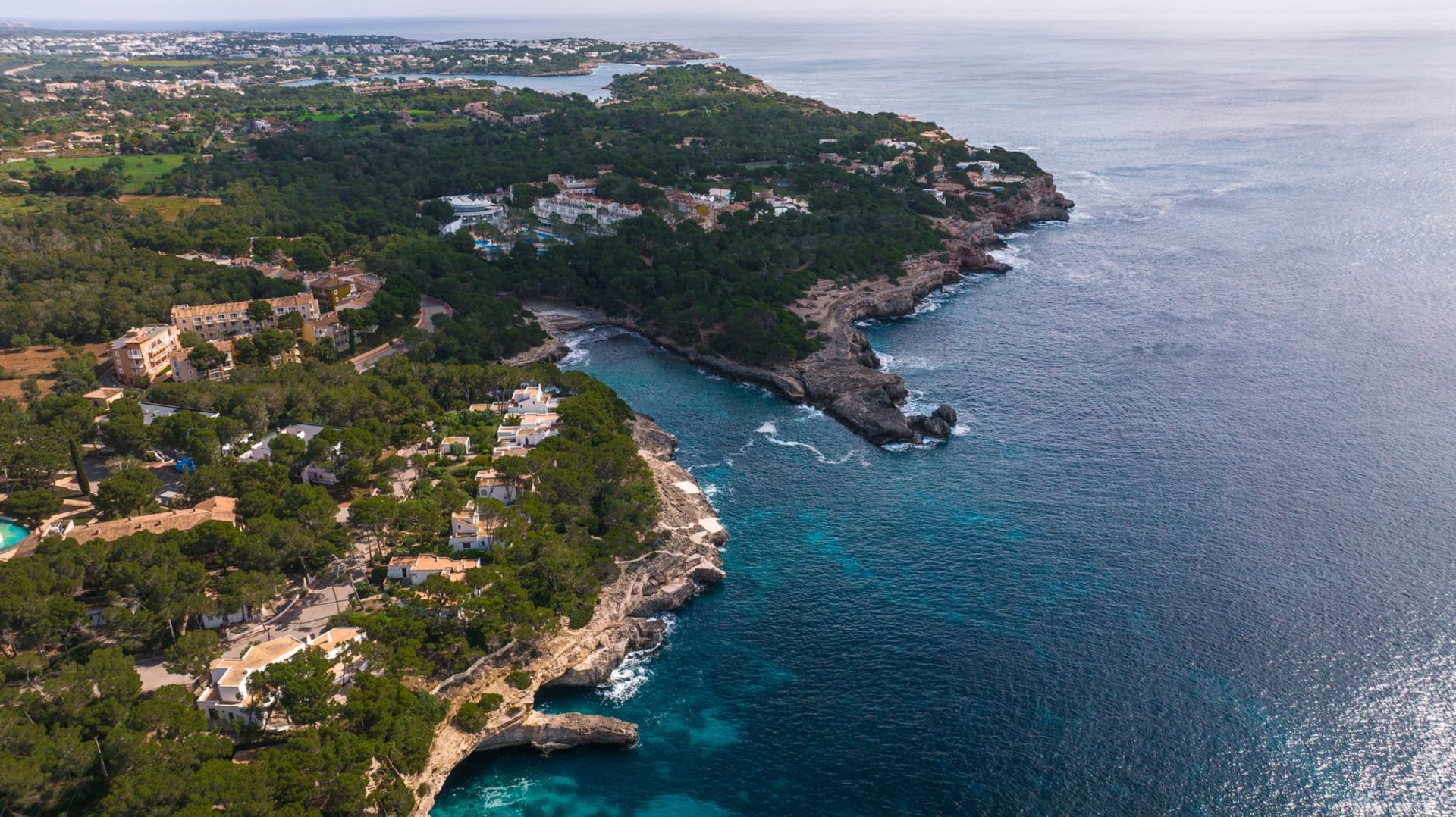
The road from Sóller to Deià winds along a cliff edge with the kind of casual disregard for your nerves that only the Tramuntana can manage. I drove it in early October in a rented Fiat with bald-ish tires, occasionally pulling over not for safety but because the view demanded a full stop — the limestone ridges dropping straight into the sea, the terraces of olive trees carved by hands that worked these slopes for centuries, the light on the water two hundred meters below doing something that shouldn’t be legal. Deià appeared around a curve, plastered to the hillside in honey-colored stone as if it had grown there organically, which in some sense it had.
Robert Graves arrived here in 1929 and stayed, with interruptions, until his death in 1985. His house, Ca n’Alluny, is now a museum you can walk through, and the accumulated weight of forty years of serious work in a small village is palpable in its rooms — the study overlooking the terraced garden, the library with its well-worn spines, the desk where he produced not only the famous novels but also decades of correspondence with what seems like most of the twentieth century. The village had no electricity when he arrived, barely a road. It didn’t matter. The light was here.

After Graves the artists came, then the musicians, then the very wealthy who could afford to buy what the artists made famous. Deià today has a particular social stratification — the old families still tend their terraces, the international creative class fills the scattered restaurants and guesthouses, and a layer of serious money occupies the olive estates quietly converted into villas with pools. You feel all three layers simultaneously, and somehow they coexist without obvious friction. The village is too small and too beautiful to allow much of it.
The cala — the tiny beach reached by a steep path through pines — is a cove of smooth stones, not sand, with water that is cold even in September and so clear you can read the bottom at four meters. There is a beach bar that operates in season with the relaxed authority of a place that doesn’t need to advertise. I went down at seven in the morning, alone, and sat on the rocks for an hour watching the light come across the water and small fish working the shallows. The walk back up takes twenty minutes. I didn’t mind.

The restaurants in Deià tend toward the serious and the expensive, which is either appropriate or irritating depending on your budget. The fish is always good. The olive oil is from the trees you can see from your table. The wine list at the better places takes Mallorcan production with the respect it has recently started to deserve. I ate on a terrace one evening as the light went amber and the church bell rang eight and a bat appeared from somewhere and started working the insects in the olive branches above my table, and I thought: this is what Graves saw every night for fifty years, and it doesn’t seem like something that could wear out.
When to go: May through June and September through October. The village becomes extremely busy in July and August — the parking situation alone is enough reason to reconsider. October is ideal: the tourists have mostly cleared, the terraces are warm enough in the evening, and the sea is still swimmable. Ca n’Alluny museum is open year-round.