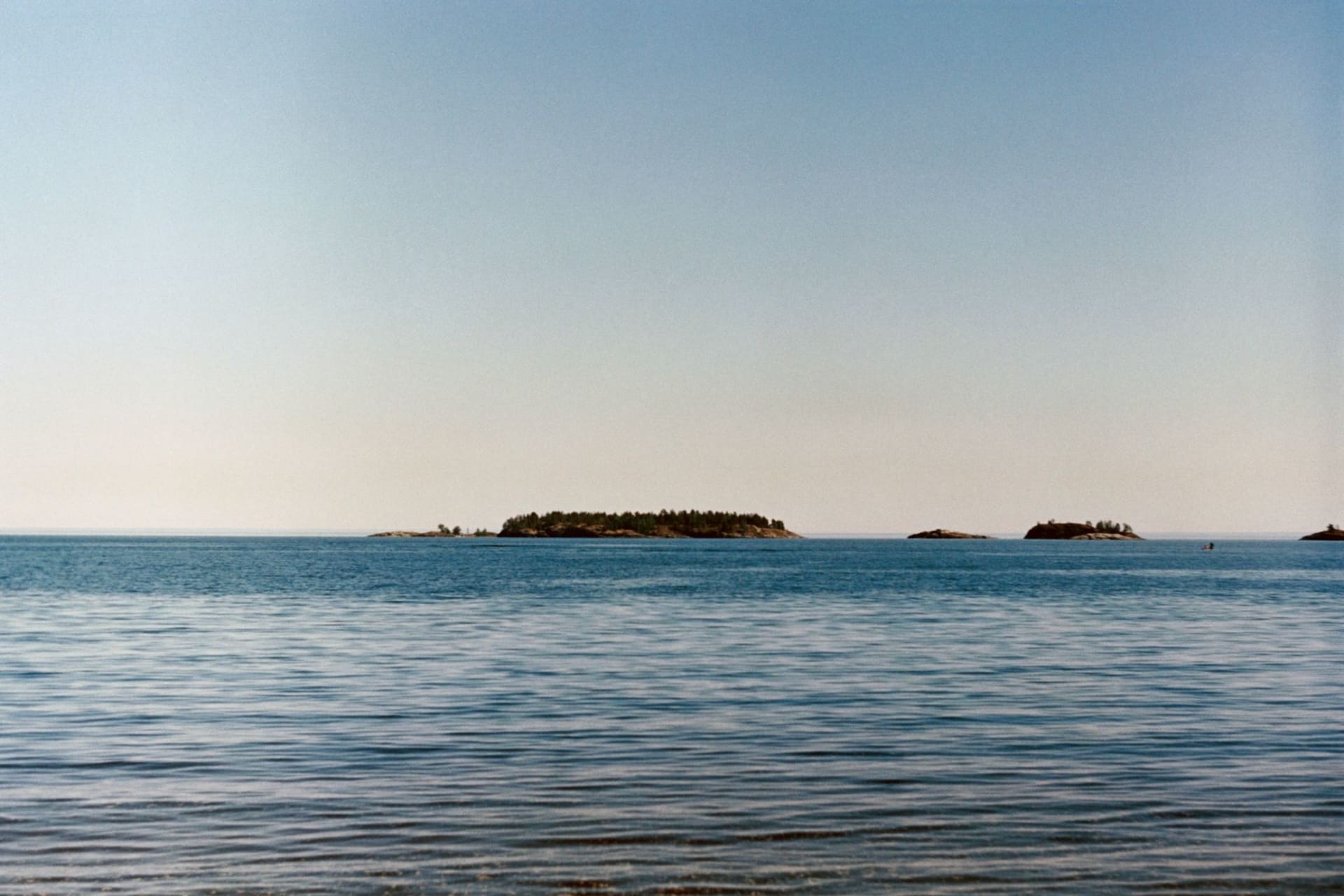
Long Island
"Dean's Blue Hole is just a circle of darker water until you lean over the edge and look down into nothing."
The woman at the car rental in Deadman’s Cay gave me a hand-drawn map and said the road to Dean’s Blue Hole didn’t really end — it just stopped. The track runs east through sea grape and Casuarina pine, past a salt pond where roseate spoonbills stood in the shallows like expensive flamingo prototypes, and deposits you at a small beach where the Atlantic enters a sheltered cove. In the center of the cove, the seafloor drops through a circle of dark water two hundred and two metres deep — the world’s deepest known saltwater blue hole — and the surface of it is perfectly still, held apart from the surrounding sea by the cove’s natural protection. The color in the center is not turquoise. It is not teal or azure or any of the Caribbean’s usual spectrum. It is a deep, specific midnight blue that reads as a different substance from the water surrounding it, the visual record of a depth that registers as absence.
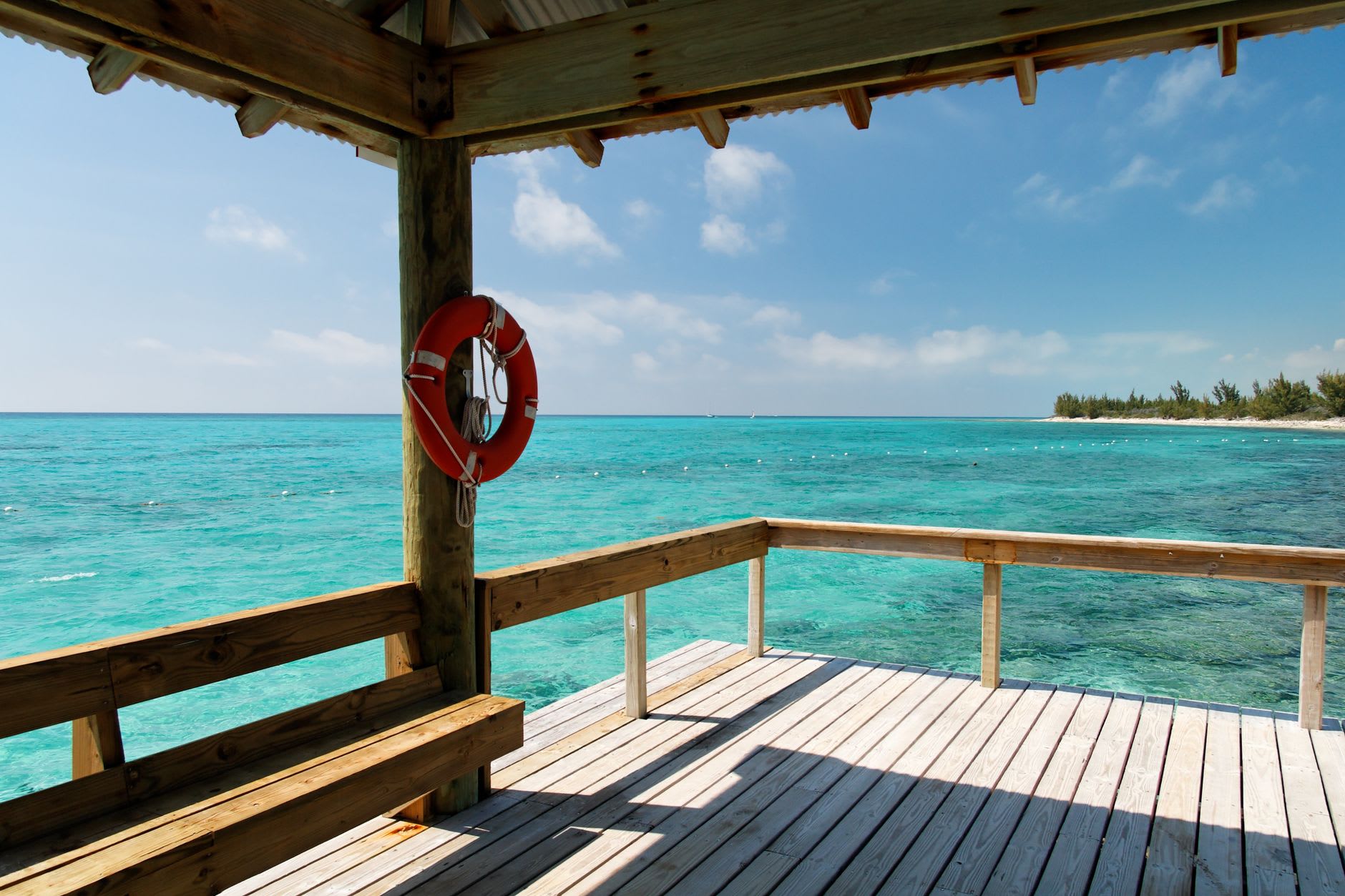
Freedivers come from around the world to Dean’s Blue Hole specifically because the entry is so accessible — you can stand on a shelf two metres down and drop into the column without any surface swim. I watched a young woman do a breath-hold dive from the rim, arms at her sides, and disappear into the dark water until she was invisible. She surfaced ninety seconds later, calm, adjusting her goggles. The local community has organized competitive freediving events here for years, and the records set in this hole have been some of the deepest in the sport. I got in and floated above the edge of it, looking down at the dark, and felt a particular kind of vertigo that has nothing to do with altitude.

Clarence Town, the island’s small capital in the south, has a peculiarity that no other place I have been can match: two hilltop churches built by the same man. Father Jerome Hawes, an English-born architect-turned-Catholic-priest, built St. Paul’s Anglican church in Clarence Town early in his career, then converted to Catholicism and returned to build St. Peter’s on the next hill over. The two churches stand in sight of each other across the town, white against the sky, their architecture nearly identical, the handiwork of the same hands in different theological moments. The interior of St. Peter’s has hand-cut limestone details and the particular smell of a cold stone church in a warm country — incense, old wood, salt air coming through the louvers.
When to go: November through April for the clearest water at Dean’s Blue Hole and the calmest conditions for the drive along Long Island’s rough roads. The World Freediving Depth Competition occasionally takes place here in spring — check dates if you want to watch elite athletes descend into the darkness. Avoid the September hurricane window.