Caribbean
The Bahamas
"The water here broke my ability to describe water."
I arrived into Nassau expecting a kind of Caribbean banality — resort corridors, frozen drinks with umbrellas, the relentless salesmanship of beaches built for package tourists. What I did not expect was to stand on the dock at Potter’s Cay thirty minutes after landing, watching a man pull a conch the size of a fist from a bucket and slice it open with practiced indifference, handing me a plate of cracked conch with scotch bonnet pepper sauce and a cold Kalik while Nassau’s working harbor moved around me in full chaotic bloom. The Bahamas contains multitudes that no Instagram grid prepares you for.
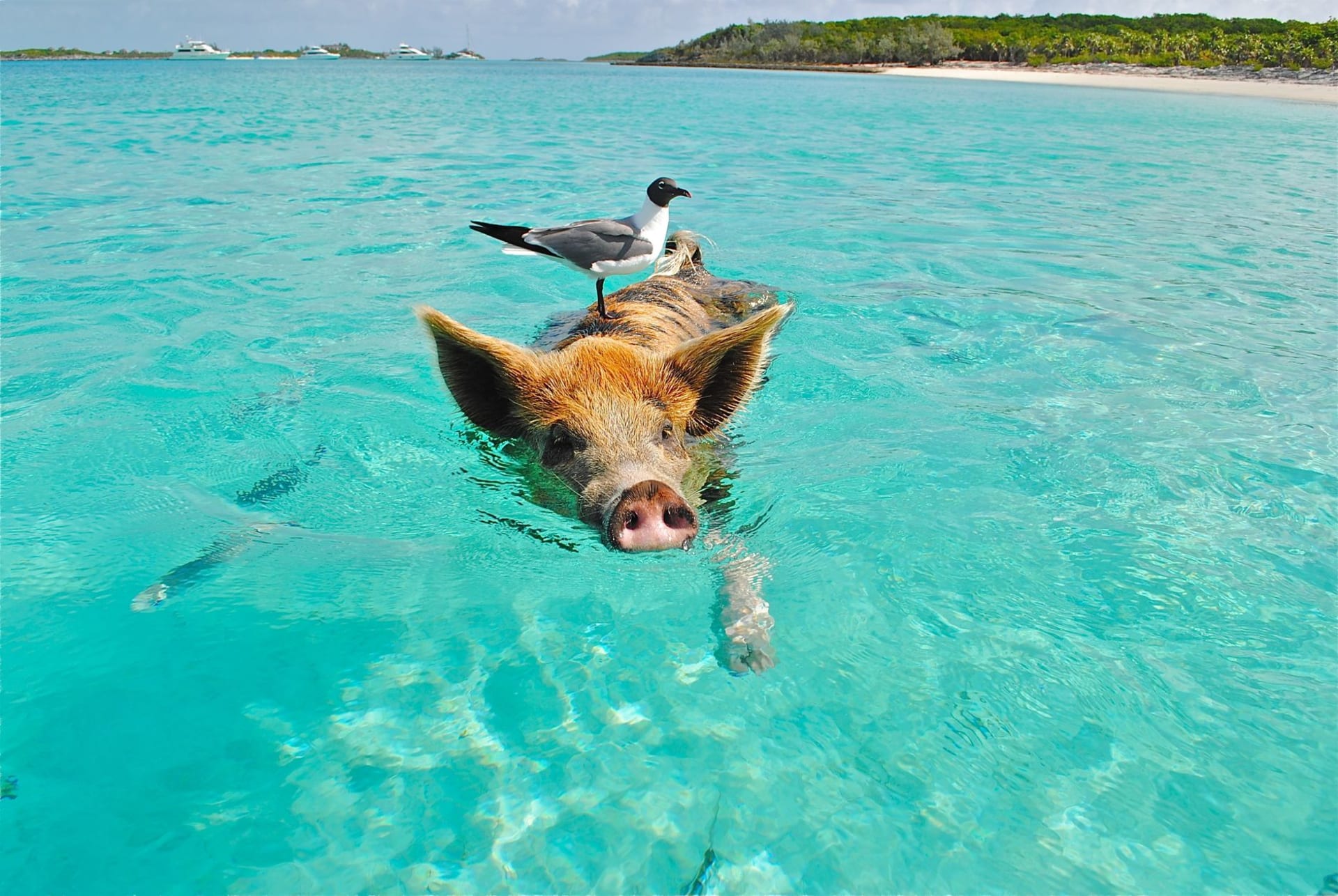
The real archipelago is not Nassau. Nassau is the introduction, and for most visitors it remains the only chapter. But take a small plane or a ferry southeast toward the Exumas and the entire premise shifts. The Exuma Cays stretch for ninety miles in a chain of low limestone islands separated by channels so still and transparent that boats appear to float in midair. The famous swimming pigs of Staniel Cay — yes, they are real, and yes, they will climb into your dinghy looking for food — are actually a minor footnote to a landscape of extraordinary, almost disorienting beauty. Thunderball Grotto, a sea cave James Bond used twice, sits in a bay where the tide pushes warm water through tunnels hung with coral. You snorkel through with nurse sharks navigating around your ankles as if you are the obstacle.
The food chain in Nassau’s Fish Fry at Arawak Cay is where the real Bahamian kitchen lives, not in the resort dining rooms where conch chowder arrives with a garnish and an explanation. Here it comes in a styrofoam bowl, thick with tomato and thyme, with johnnycake on the side — the dense cornmeal bread that is the Bahamas’ quiet genius. Further out in the Family Islands, Exuma’s Chat ‘N’ Chill on Stocking Island serves the best cracked conch I have eaten anywhere: battered thin, fried fast, with a sweetness that only comes from conch that was alive an hour ago. A grouper sandwich, a Sands beer, sand between your toes on a sandbar that disappears at high tide — this is the Bahamas at its most honest and least photogenic, which is to say, its best.
When to go: Mid-December through April is the dry season sweet spot. January and February have the most reliable weather and the clearest water — visibility can exceed thirty metres in the Exumas. Hurricane season runs June through November; September is the highest risk month. Late April and early May offer warm water, fewer crowds, and prices that have not yet peaked for summer.
What most guides get wrong: They treat The Bahamas as a single destination, which is like treating France as Paris. Nassau is functional but it is not the point. The point is the Out Islands — Exuma, Eleuthera, Harbour Island, Long Island — accessible by cheap inter-island flights or ferries, where the pace drops to something close to stillness and the water earns every superlative you have been told to distrust. Harbour Island’s pink sand beach is genuinely pink and genuinely worth the trip, but the reason to go is that it forces you onto a golf cart for transport through a village where the architecture is New England meets Caribbean and the bread pudding at Queen Conch restaurant is absurdly good. Skip Nassau after one night. The rest of this country is waiting.