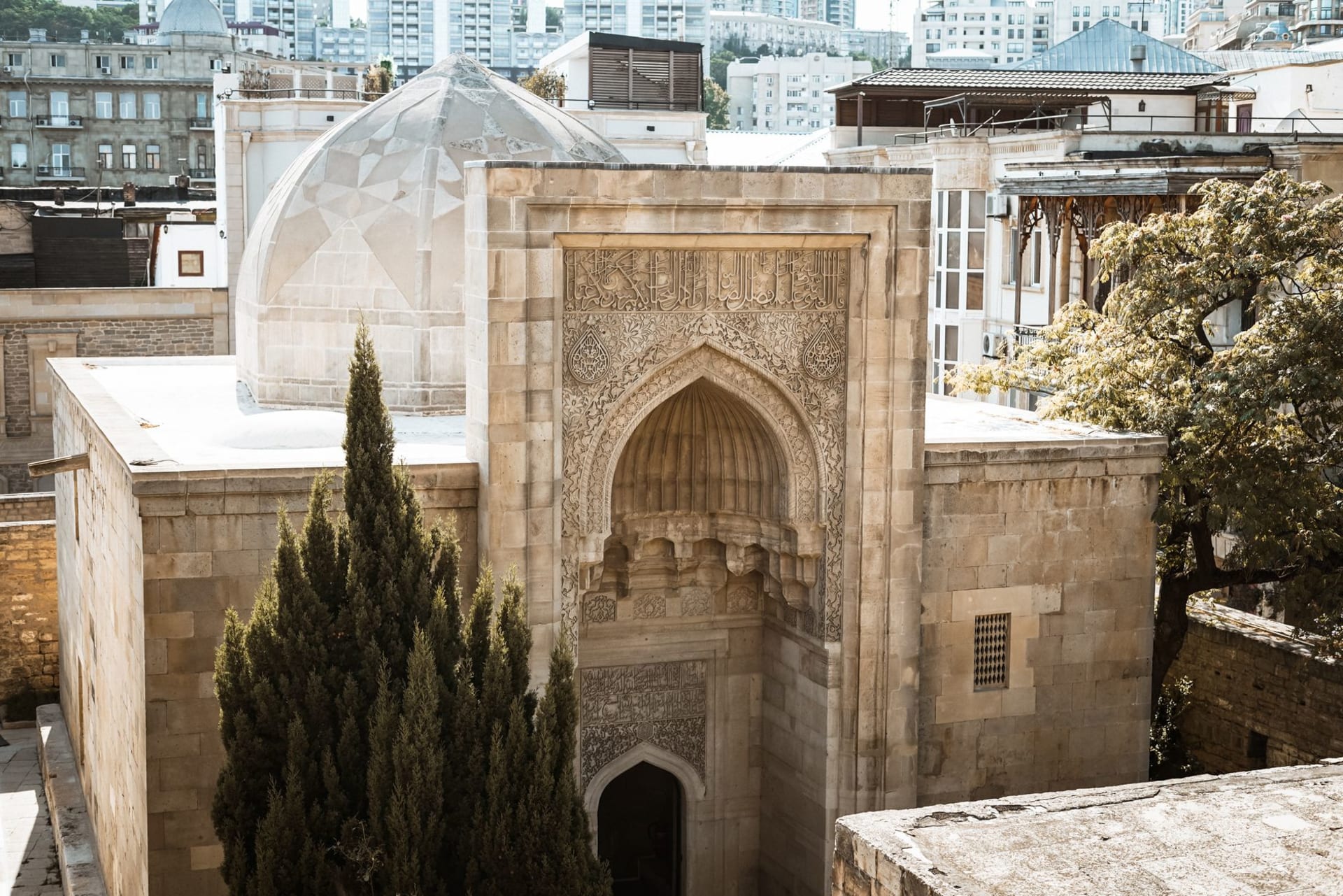
A carpet-weaving mountain town in northern Azerbaijan famous for its apple orchards, the extraordinary Jewish village across the river, and trails pushing toward the high Caucasus.

There’s a moment when you cross the footbridge over the Qudyalçay River at Quba — the water the color of glacial runoff below, rushing over pale stones — and you step into Krasnaya Sloboda, the Red Settlement, one of the last functioning mountain Jewish communities in the world. The transition is that abrupt. Quba on one bank, its mosques and carpet shops and apple stalls. Krasnaya Sloboda on the other, its synagogues, its Russian-influenced architecture, its entirely separate several-hundred-year history. I walked back and forth three times just to feel the shift.
The Red Settlement
Krasnaya Sloboda is home to the Mountain Jews, a community that has been in these valleys since roughly the fifth century, speak their own Iranian-derived language called Judæo-Tat, and have managed to preserve a distinct identity across centuries of shifting empires. The town has been draining slowly since the Soviet collapse — many families have emigrated to Israel, Moscow, New York — but it retains a cohesion that surprises you. New synagogues, built with diaspora money, rise between older stone buildings. The main street on a Friday afternoon has a rhythm of its own: families out, bakeries running, the smell of bread and something savory I couldn’t identify coming from behind half-open doors.
Nobody was trying to sell me anything. I appreciated that.
Carpets Without Theater
Quba proper is one of the classical centers of Azerbaijani carpet production, and the style here — densely geometric, saturated reds and blues, a vocabulary of medallions and botanical borders — is distinct from what you find in Baku’s shops. The difference is that in Quba you can sometimes trace the carpet back to the hands that made it. A few workshops still operate in family settings. I found one through a guesthouse owner who made a call: a woman in her sixties, a loom taking up most of her front room, two partly-finished pieces in progress. She wasn’t set up for tourists. She showed me the work anyway, pointing to the knots and then to the pattern sketched on graph paper beside her. I bought a small piece, not a carpet, a fragment of cut pile she sold by the gram for nothing.
Up to the Falls
North of Quba the road climbs toward the villages of Qrız and Budug, home to communities speaking languages so obscure linguists still debate their classification. The road degrades — shared taxi, then on foot — and the landscape opens into high meadow and limestone scarp. Afurca waterfall, a few kilometers off the main road, drops about seventy meters into a basin of smooth rock. In mid-June the snowmelt feeds it enough to feel the spray twenty meters away. I arrived at noon, ate bread and cheese on a flat rock, watched two local men fishing downstream with remarkable patience.
The apple orchards around Quba fruit in August and September, and the roadside stalls sell varieties I’d never encountered: dense, tart, sometimes almost savory. I ate one that tasted faintly of anise. I should have bought a bag.
When to go: May and June for waterfalls and fresh meadow grass. August and September for apples and cooler mountain air. Avoid the winter months if you’re coming for the villages — some roads close and the footbridge over the river goes icy.
Keep exploring
More from Azerbaijan
 azerbaijan
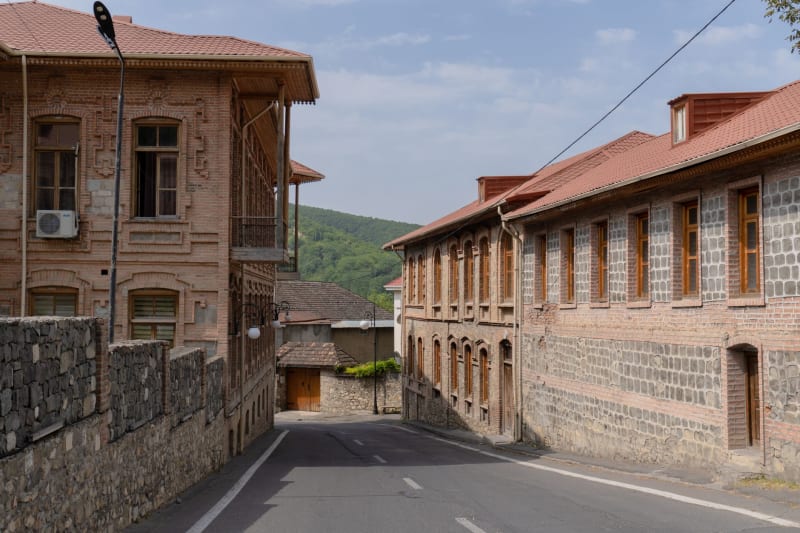
 Shamakhi
An ancient Silk Road capital perched on earthquake-prone hillsides in Azerbaijan's emerging wine country, where vineyards planted with the indigenous Madrasa grape surround one of the Caucasus's oldest surviving mosques.
Explore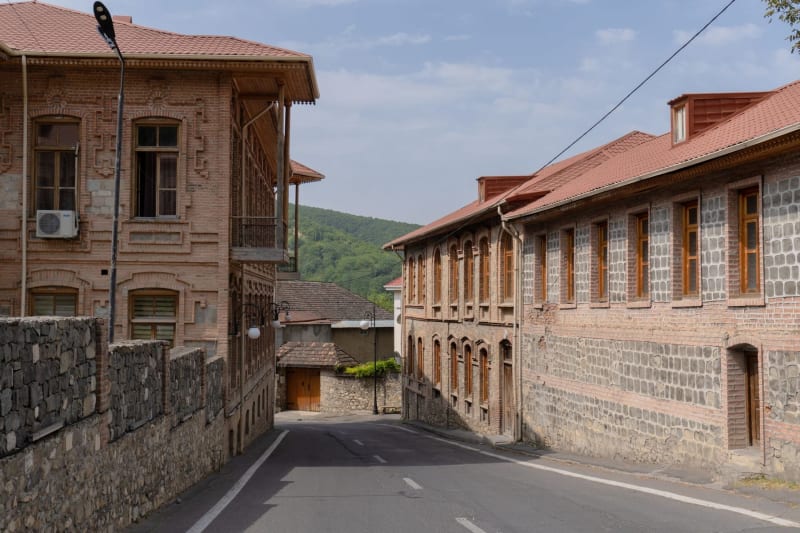 azerbaijan
 Sheki
A Silk Road gem in the Caucasus foothills, famous for its Khan's Palace of intricate shebeke stained glass.
Explore azerbaijan
 Yanar Dag
A hillside on the Absheron peninsula where natural gas has kept a wall of flame burning out of the bare earth for as long as anyone can remember.
Explore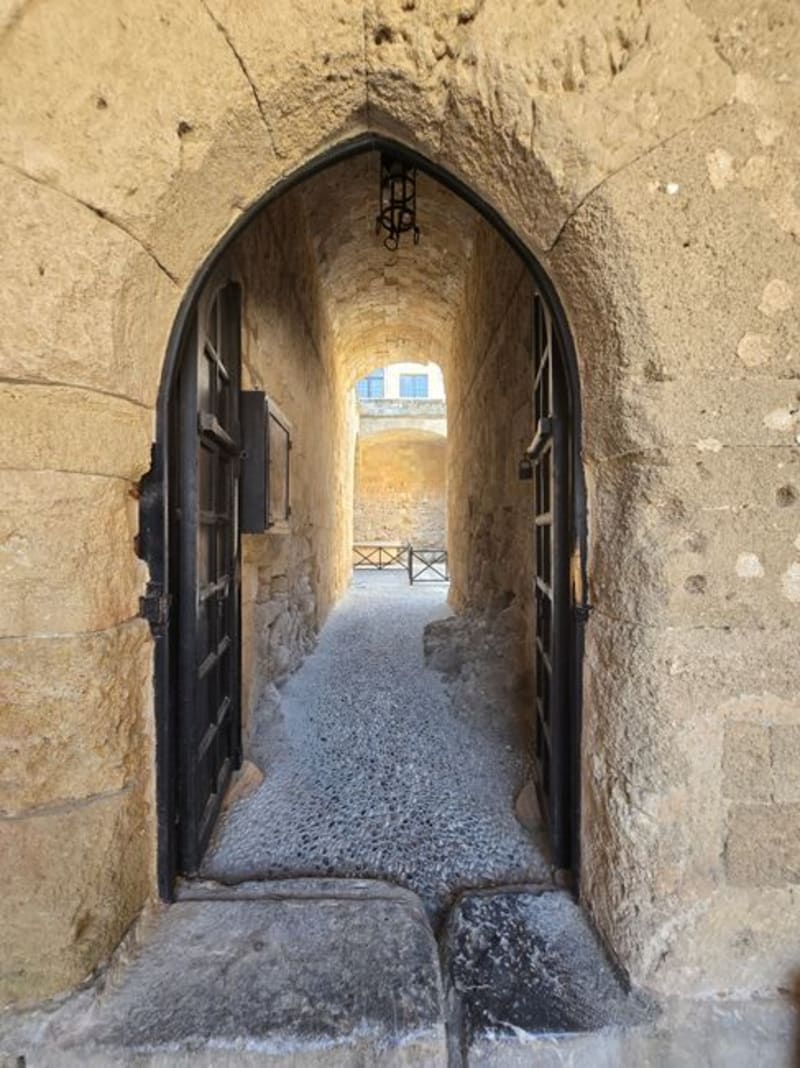 azerbaijan
 Ateshgah Fire Temple (Surakhani)
A pentagonal fire-worship temple outside Baku where traders once prayed beside flames that burned straight out of the earth.
Explore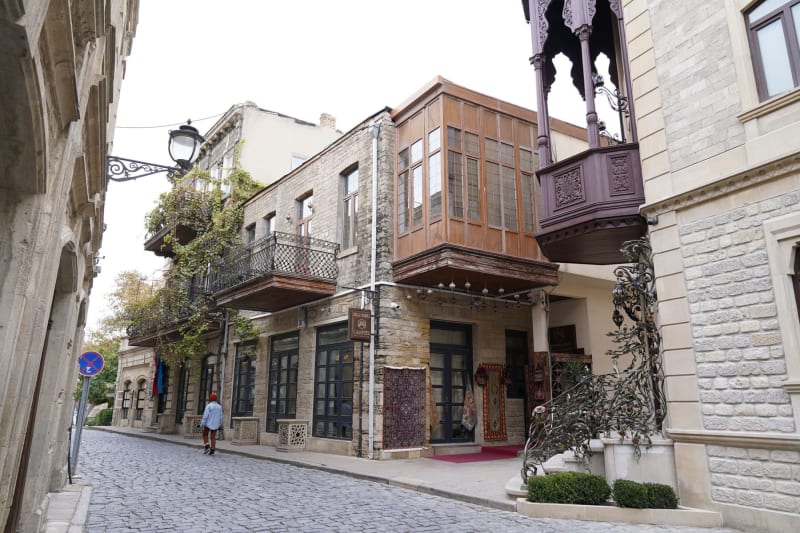 azerbaijan
 Baku Old City
Icheri Sheher — Baku's walled medieval inner city, a UNESCO labyrinth of caravanserais and narrow stone alleys.
Explore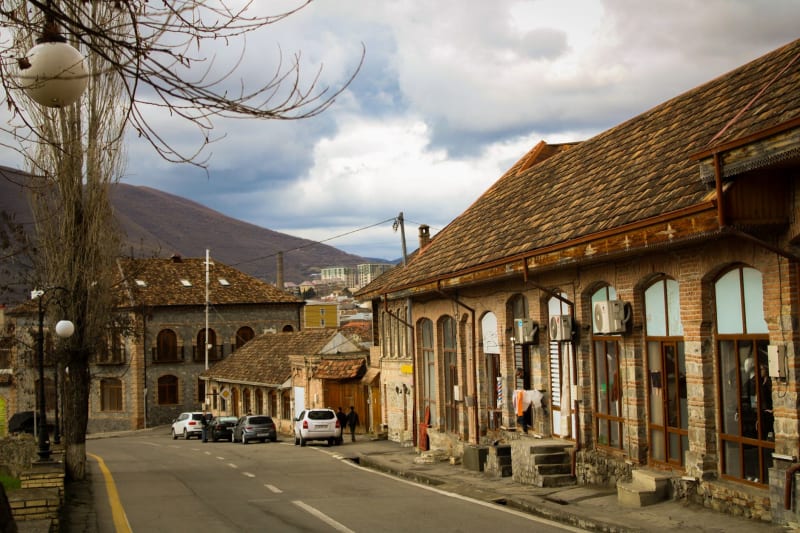 azerbaijan
 Gabala
A mountain resort town nestled in hazelnut orchards at the foot of the Caucasus, where Soviet-era sanatoriums and pine-scented air still draw Azerbaijanis seeking something slower.
Explore