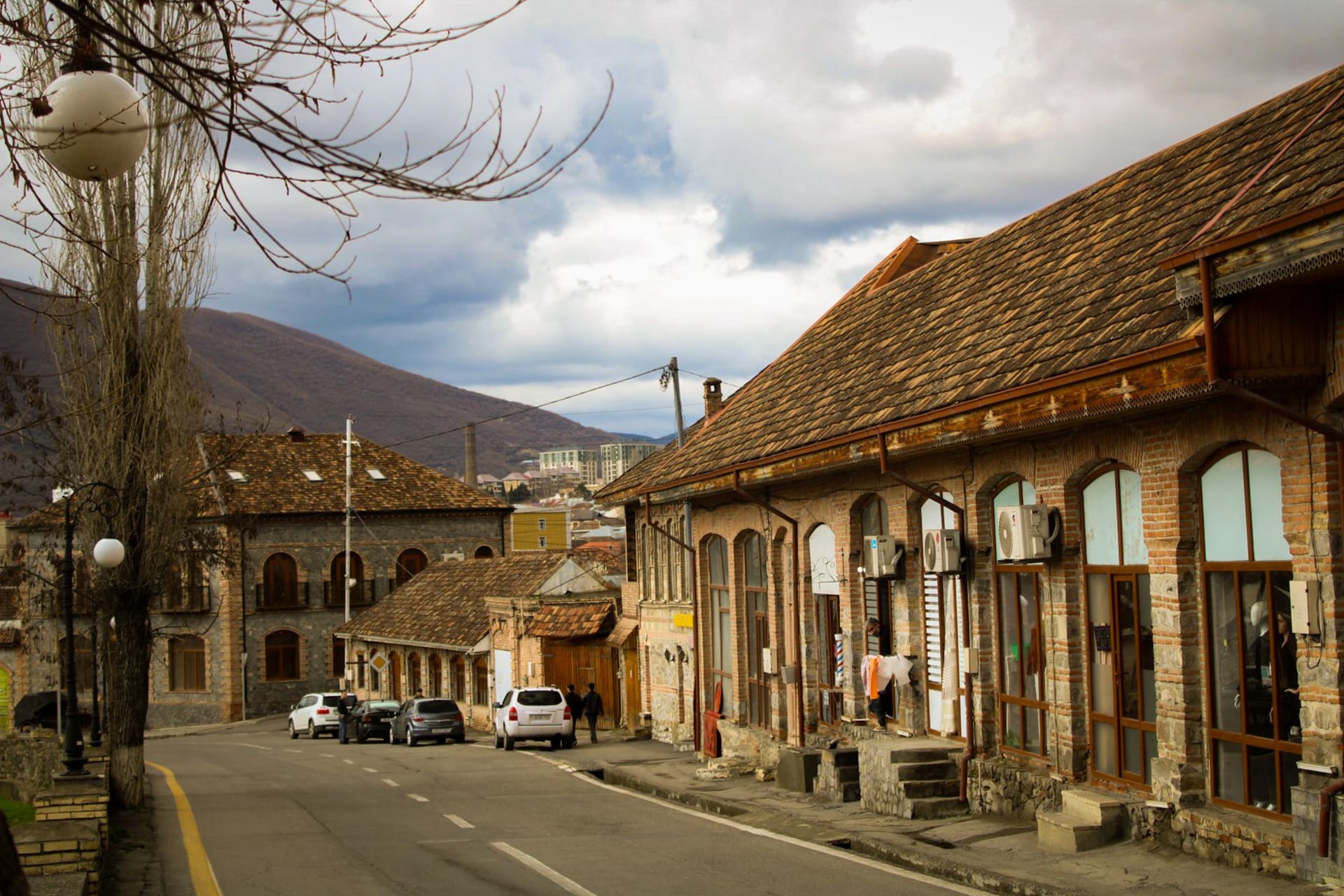
Gabala
"The air smelled of roasting nuts and pine resin. I hadn't planned to stay three days."
Gabala arrived in my itinerary almost by accident — a name someone mentioned on the marshrutka from Sheki, waved off with the phrase “good for families, you know, nature.” That lukewarm endorsement should have told me something. It told me nothing. I arrived in late September when the orchards were dropping and the resort hotels were running at maybe a third capacity, and I ended up staying three days.
The Orchard Belt
The road into town passes through a corridor of hazelnut trees so dense the light goes green and stippled. Azerbaijan produces a serious percentage of the world’s hazelnuts, and the smell here in harvest season is constant — warm, slightly buttery, cut through with wood smoke from somewhere. At the roadside stalls, women sell plastic bags of them still in the shell, and I ate handfuls while wandering the town center, which is modest and unhurried in the way places are when they haven’t fully decided what they are yet.
The market near the bus station is the best orientation. Jars of wild-harvested honey from the hills above town, dried fruit I couldn’t name, churchkhela hanging in ropes from wooden racks. Nobody was performing anything for me. I was just another person with a bag moving through the morning.
Up into the Hills
The reason to leave town is the terrain. Nohur Lake sits above Gabala in a fold of the mountains, clear enough to see bottom at the edges, ringed by forest. I walked up in early morning when the surface was completely still and the surrounding peaks held a thin line of cloud just below the treeline. It’s the kind of scene that stops your internal monologue cold for a few minutes.
Further up, past the ski infrastructure that sits idle in September, trails push into beech and hornbeam forest. The paths are rough and unmarked and I turned around more than once when the GPS suggested I was somewhere it couldn’t confirm. That’s fine. The return view — Gabala spread below in the valley haze, the Caucasus rising behind — justifies the effort.
The Soviet Resort Logic
Gabala has never quite shaken its Soviet sanatorium identity, and I mean that as a compliment. Several of the larger hotels still operate on a rest-and-cure logic: thermal pools, structured mealtimes, medical staff on site. The newer construction leans tourist-resort, with a cable car and an archery park, but the underlying rhythm of the place is still restorative. People come here to slow down. The pace is infectious. By my second afternoon I had started eating dinner at six, which I haven’t done voluntarily since childhood.
The town itself is small enough to walk end to end in twenty minutes. The pleasure is ambient rather than checklist-driven: the smell of the orchards, the cool air arriving by mid-afternoon even in September, the sound of the river that runs through the lower part of town.
When to go: Late May through early October for hiking and mild temperatures. September is ideal — harvest season, cooler air, fewer families than summer. Avoid July and August if you dislike crowds at the lake. Winter works if you ski; otherwise the resort mood goes quiet.