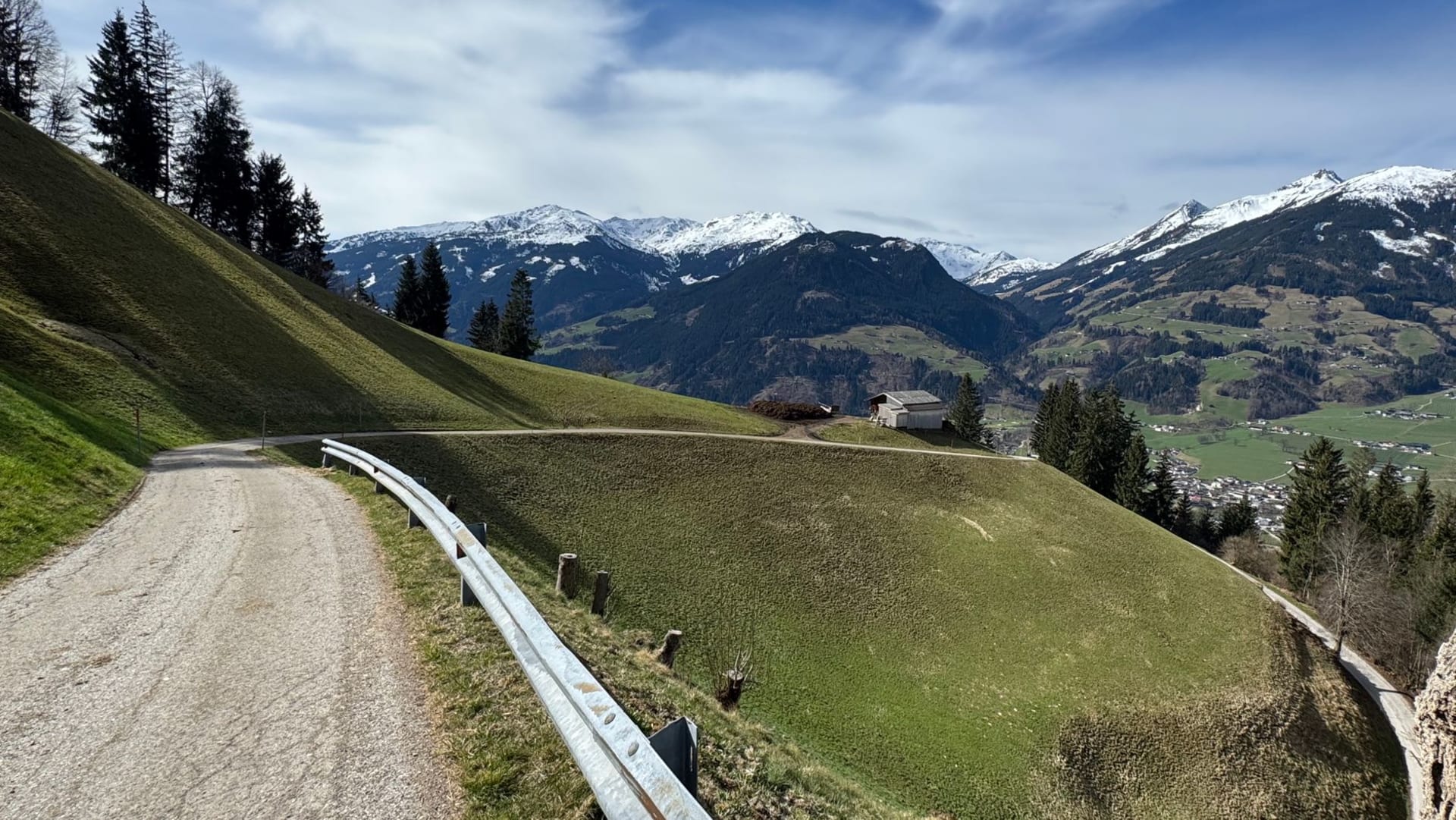
The Zillertalbahn leaves Jenbach station at what feels like a toy-train pace, the narrow-gauge carriages rocking gently as the tracks follow the Ziller river south into the valley. I took it on a Friday morning in early October when the only other passengers were a retired couple from Munich sharing a thermos of coffee and a man in work boots who fell asleep before we left the platform. The steam locomotive up front — this railway has been running since 1902 and still uses heritage traction on certain services — makes a sound that is not quite mechanical and not quite musical. The pines along the embankment smell of resin. The Ziller below runs turquoise between pale grey banks. It takes forty minutes to reach Mayrhofen, which is not long, but the journey earns its time.
The Zillertal is louder than the Ötztal. It is more organized about its pleasures. Where the Ötztal retreats into silence and raw altitude, the Zillertal amplifies and elaborates. There is a folk music tradition here that is genuine and unashamed — not performed for tourists, though tourists certainly witness it, but maintained by people who grew up playing the Hackbrett and Steirische Harmonika at family tables and haven’t stopped. At the Gasthof zum Wirt in Zell am Ziller on a Saturday evening I heard a four-piece ensemble play Tyrolean Volksmusik for two hours to an audience of locals who sang certain verses without needing sheet music, who stamped feet on particular beats without coordinating it, whose relationship to the music was clearly older than any tourist infrastructure in the valley.

Zell am Ziller hosts the Gauderfest in late April and early May — the oldest folk festival in Tyrol, centered on strong Gauder beer brewed once a year specifically for the event. I missed it by five months on my October visit but heard enough stories about it from the man who sold me breakfast rolls to understand that it involves significant quantities of beer, traditional costume worn without irony, and a level of communal enthusiasm that modern life makes increasingly rare. The Zillertal has always known how to have a good time, and it is not embarrassed about this.
The Ahornbahn cable car from Mayrhofen runs up to the Ahorn plateau at 2,000 meters, where the skiing is good in winter and the walking is very good in summer. I went up on a morning when the valley below was in shadow and the plateau was already in full sun, the difference in temperature and light so sharp it felt like stepping through a door. Up there the meadows were still holding the last flowers of the season — gentians in a blue so saturated it looked printed — and the only sound was wind across the grass and the distant mechanical cable of the lift running empty below the station. An older Austrian man was eating a Brettljause — the classic cold-cut platter of Speck, sausage, pickles, and dark bread — at a terrace table, methodically, alone, looking at absolutely nothing in particular and looking very content about it.

The cheese from the valley’s high dairies appears everywhere and demands to be taken seriously. Zillertal Heumilchkäse — hay-milk cheese, made from cows that eat only hay and fresh grass rather than silage — has a cleanness to its flavor, almost sweet, that opens into something deeper and more complex as you eat more of it. I bought half a kilogram at a cooperative shop in Hippach and ate too much of it that evening with a bottle of beer and no bread because I hadn’t planned ahead, and I don’t regret anything.
When to go: The Gauderfest in late April or early May for the full folk-culture spectacle. July and August for hiking with guaranteed weather. October for empty trails and autumn color and the valley reverting to something closer to its everyday self.