
Todra Gorge
"The canyon makes you feel exactly the right size: very small, very temporary, deeply at ease with both."
The approach to Todra Gorge along the Todra River valley is deceptively gentle. You drive through the palmeraie of Tinerhir — long rows of date palms, small vegetable plots, the river running brown and calm through everything — and the road narrows and the walls begin to close in incrementally, the way alarm builds before you consciously name it. Then, quite suddenly, the canyon walls are beside you and above you simultaneously, three hundred metres of banded orange and grey limestone so close together that the sunlight only reaches the river floor for a few hours each day. I stopped the car and got out and stood in the water in my sandals because the gorge is the kind of place that demands a physical response rather than a photographic one.
The river runs cold year-round — snowmelt from the High Atlas feeding it constantly — and in the narrowest section of the gorge, where the walls are perhaps ten metres apart and the sky is a thin stripe of blue far overhead, the air temperature drops sharply. Climbers were already on the north wall when I arrived, their coloured ropes the only signal of human presence against the limestone face. Todra is one of North Africa’s premier climbing destinations and the routes here are serious — long trad lines on compact limestone that takes good gear and better footwork. I watched them from below for a while, necked backward, feeling the particular vertigo of looking straight up a cliff you are not on.
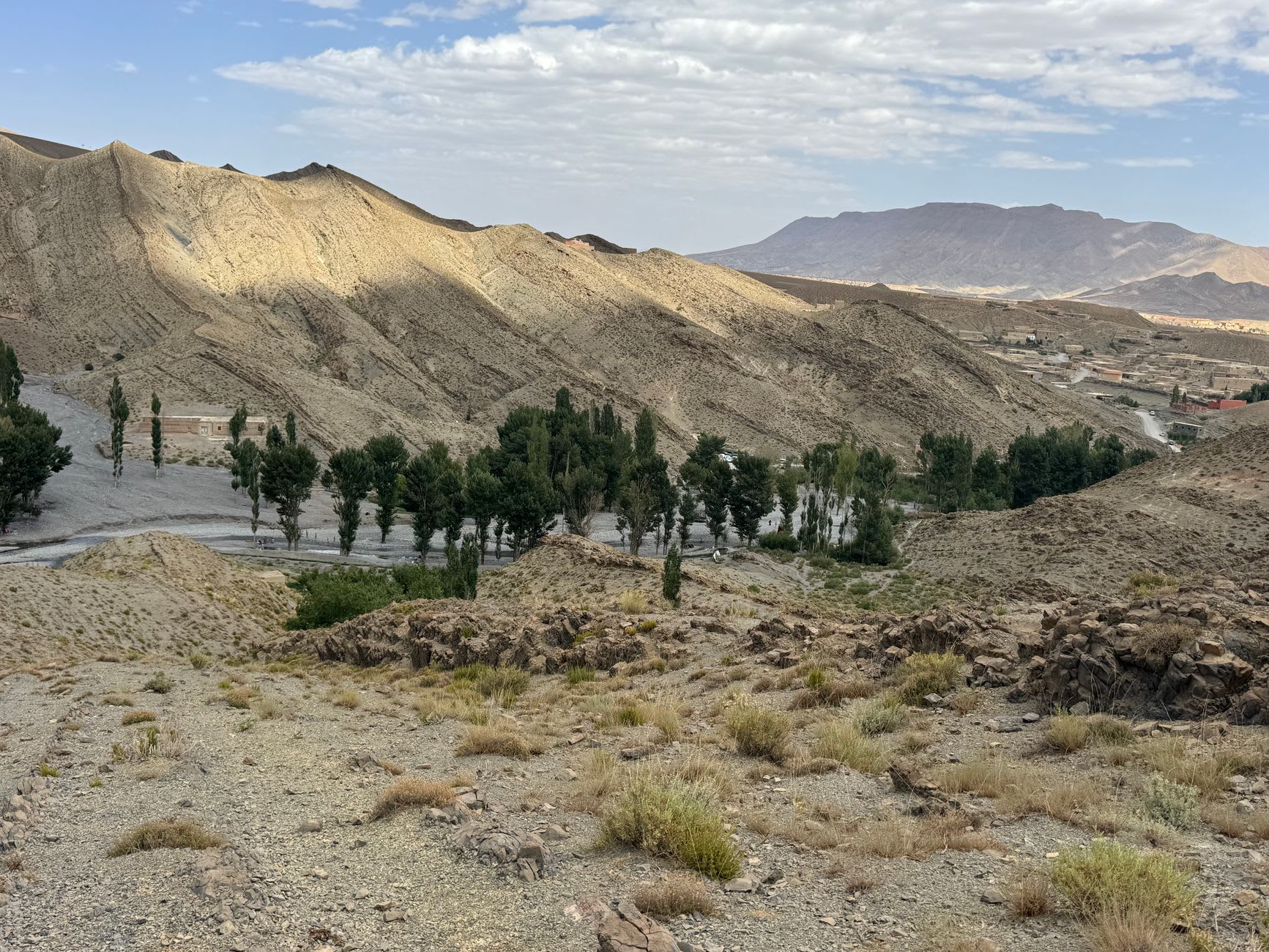
The small cluster of cafés and auberges at the base of the canyon draws a mixed crowd: trekkers resupplying, climbers sleeping close to the rock, families from Tinerhir who come up on weekends to walk in the gorge and eat grilled fish beside the river. The canyon itself is publicly accessible at all hours, and the most honest advice I can offer is to be there before eight in the morning, when the light is still blue and indirect and the walls seem to absorb rather than reflect it, or after five, when the tourists return to Tinerhir and the canyon exhales. At those hours the Todra is something close to wild. In the middle of the day, with tour buses disgorging visitors at the base, it is still spectacular but the spell is different.
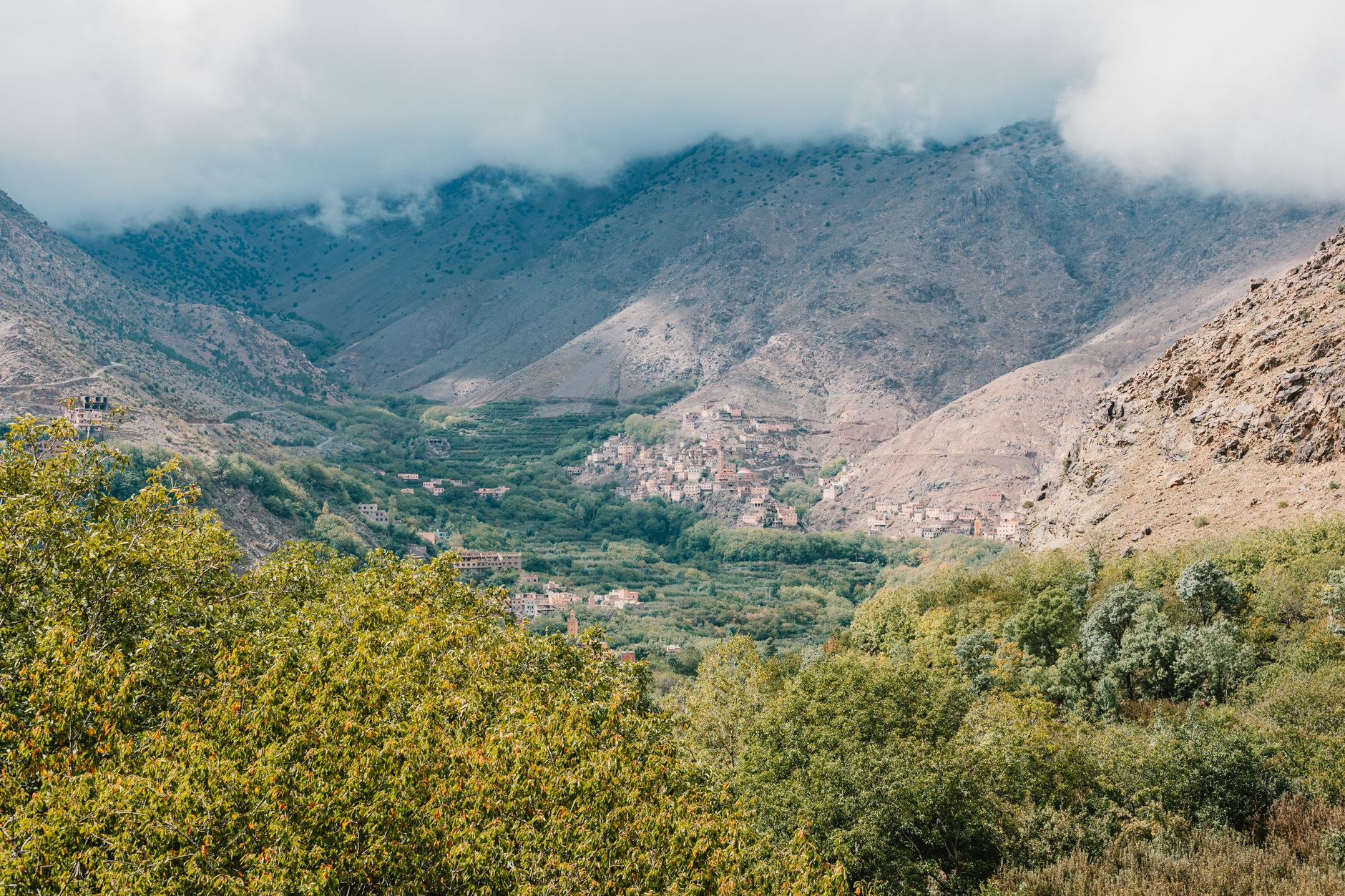
Beyond the main narrows, a track continues up the gorge into the high valley above — a landscape of open plateau, Berber villages, and sheep trails that eventually connects to the road systems around Imilchil. I walked this upper section for three hours one morning and saw nobody. The plateau up there is a different register entirely from the drama of the gorge below: wide, windswept, the geology stretching out flat and ancient, a landscape that has been emptying and filling with human life for ten thousand years and seems entirely unbothered by either process.
When to go: October through April for comfortable temperatures in the canyon. Summer can be tolerable in the gorge itself because the shade is substantial, but the valley approaches are brutal. Spring (March and April) is best for climbing conditions. Come during Ramadan if you want the canyon nearly to yourself — the cafés reduce their hours but the gorge remains entirely accessible.