Africa
Atlas Mountains
"The mountains where Morocco stops performing for visitors."
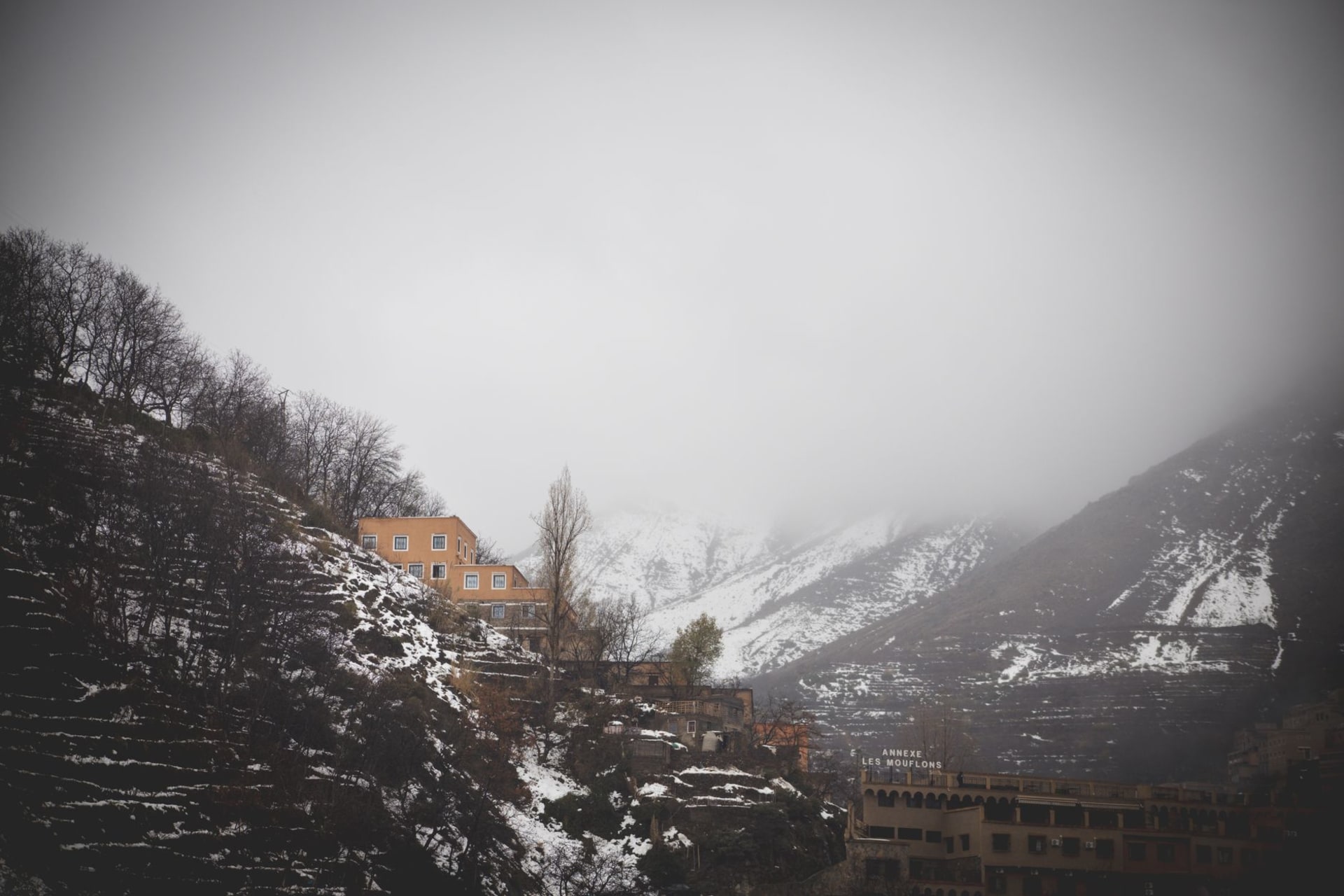
The road from Marrakech to Imlil climbs fast. Within an hour the pink dust of the city gives way to terraced fields of barley, walnut orchards dropping into river gorges, and the particular silence that comes when a valley finally swallows road noise whole. I arrived in late October with nothing booked, asked at a small epicerie for a room, and was sent up a flight of stairs to a mattress on a roof with a view of Jebel Toubkal — at 4,167 metres, the highest summit in North Africa — wearing its first snow of the season. That first night I ate a bowl of whatever the family was having: potatoes, preserved lemon, olive oil so green it was almost fluorescent. I slept under three blankets and woke to the sound of a mule on cobblestones and the smell of woodsmoke and bread.
The Atlas runs in three chains — the High Atlas, the Middle Atlas, and the Anti-Atlas — each with its own personality. The High Atlas is the dramatic one: the one you see in photographs, where the mule tracks to Toubkal zigzag above the treeline and the Aït Benhaddou kasbah poses for film productions. But the Middle Atlas surprised me more. Those mountains hide cedar forests dense enough to shelter Barbary macaques, market towns like Azrou where nobody comes to see you come, and the kind of small Moroccan restaurant where the menu is whatever is in the pot and the cook tells you what you’ll be eating. The Anti-Atlas, farther south toward the Sahara, is where the light turns amber and pre-Saharan villages seem carved from the hillsides rather than built on them.
The food in the mountain villages is nothing like the tourist tagines of Marrakech — it is simpler, heavier, and more honest. Amlou, a paste of argan oil, almonds, and honey, appears at breakfast here in a way it never does in the city. Smen — aged, fermented butter — goes into the bread. A plate of rfissa, the slow-cooked pigeon or chicken dish over lentils and msemen, appears for celebrations and sometimes just because it is a cold afternoon and a family felt like cooking it.
When to go: April to June and September to November. The high passes can be snowbound from December to March, which is either a problem or the entire point depending on your intentions. Summer brings trekkers to Toubkal in numbers, which changes the energy around Imlil significantly.
What most guides get wrong: They funnel you to Toubkal base camp and back, treating the Atlas as a day trip annex to a Marrakech itinerary. The mountains reward staying — three, four, five nights in a single valley, walking between villages rather than summiting, eating with the family running your gîte rather than at the tourist lodge. The Atlas is not scenery. It is a place where people live, and they are worth slowing down for.