Telouet
"A ruin that still has its best rooms intact is a strange and wonderful thing to walk into."
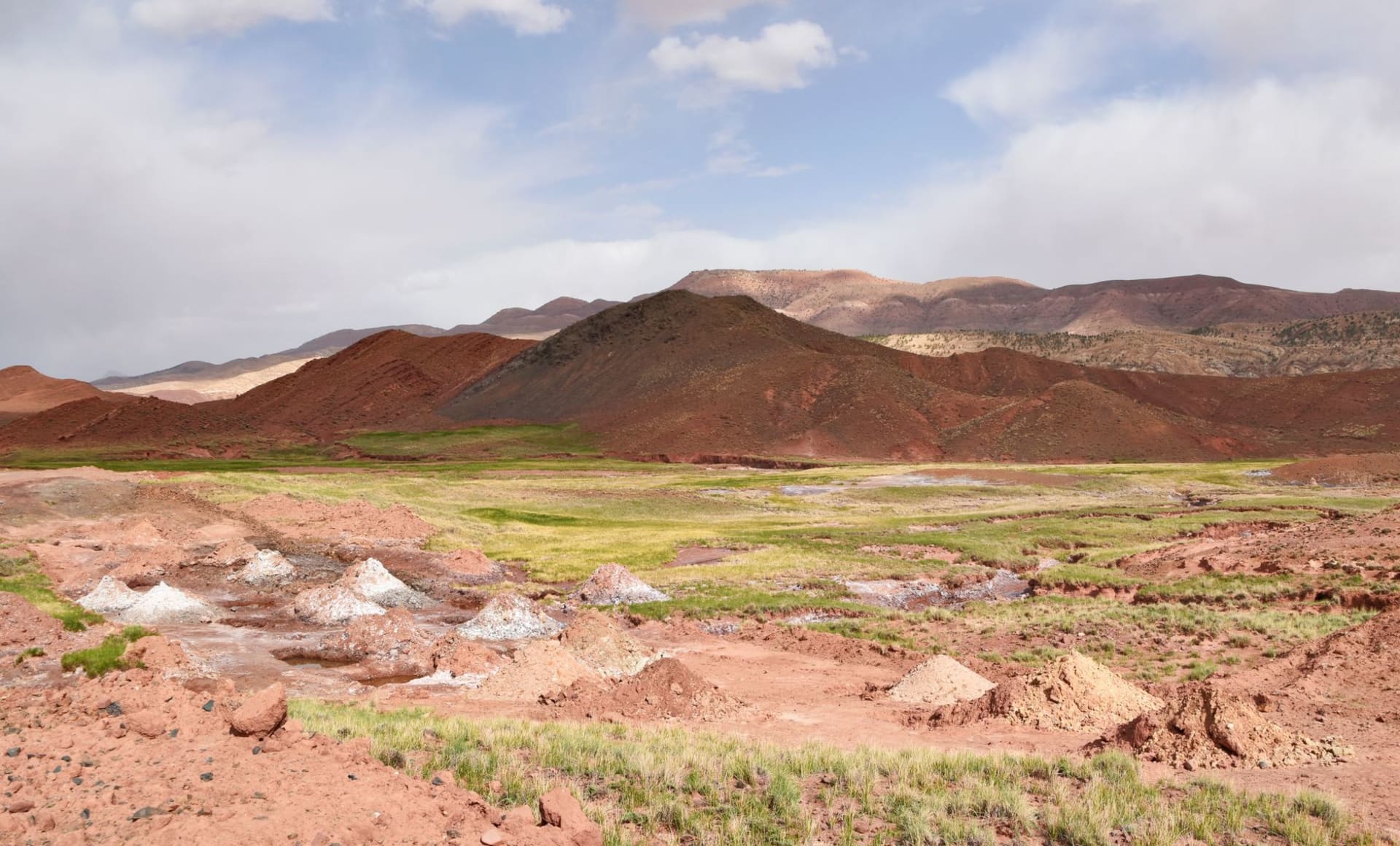
Telouet is the kind of place you reach by deciding not to take the easy road. The modern highway over the Tizi n’Tichka pass bypasses it entirely, and most people heading from Marrakech to Ouarzazate sail straight past the turnoff without knowing what they are missing. We took the old road — a narrow, winding affair through bare ochre hills — and arrived at a village dominated by an enormous, crumbling earthen kasbah that looks, from a distance, as though it is slowly melting back into the mountain.
The palace of the Glaoui
The kasbah was the seat of the Glaoui family, the pashas who controlled the High Atlas passes and, for a time in the early twentieth century, much of southern Morocco. Telouet sat on the salt caravan route, and the family grew immensely powerful and immensely wealthy taxing everything that crossed. Then the road moved, the caravans stopped, the family fell from favour after independence, and the palace was left to the weather. Most of it is now a genuine ruin — collapsed walls, open rooms full of rubble, the mud brick returning to the earth it came from.
And then you go inside. A local guardian unlocked a plain door and led us through a couple of dim, dusty corridors, and we stepped into a reception room that stopped me cold. The reception halls the Glaoui used for their most important guests have survived almost completely intact: walls of intricate zellij tilework, ceilings of carved and painted cedar, stucco worked into impossible geometric lace, all of it executed by craftsmen brought from Fes in the 1940s. The contrast between the collapsing exterior and these jewel-box rooms is genuinely disorienting, like finding a perfect interior inside a sandcastle.

The road and the silence
What stays with me about Telouet is less the palace than the quiet around it. The village is small and very poor, the kasbah’s former glory sitting in stark contrast to the simple homes around it, and there is none of the polish or pressure of the more visited Aït Benhaddou down the road. We were the only visitors for most of our time there. The guardian seemed in no hurry, the light came low and gold across the bare hills, and from the rooftop terrace you can see the old caravan route winding away toward the salt valleys it once served.
I have a weakness for places that history has finished with — that had their moment of importance and were then quietly abandoned when the world rerouted around them. Telouet is exactly that: a monument to a power that evaporated, left to dissolve in the mountain air, with a handful of perfect rooms still hidden inside as evidence of how high it once reached. Lia called it the most melancholy place we visited in the Atlas, and she meant it as a compliment.

When to go
Spring and autumn are best — summer bakes the bare hills and winter can close the high passes with snow. Telouet works well as a detour off the old Tizi n’Tichka road between Marrakech and Ouarzazate, and it pairs naturally with Aït Benhaddou via the scenic back route through the Ounila valley. A small entry fee goes to the guardian who unlocks the interior rooms; tip him, and ask to see the reception halls specifically, because the exterior alone does not prepare you for what is inside.