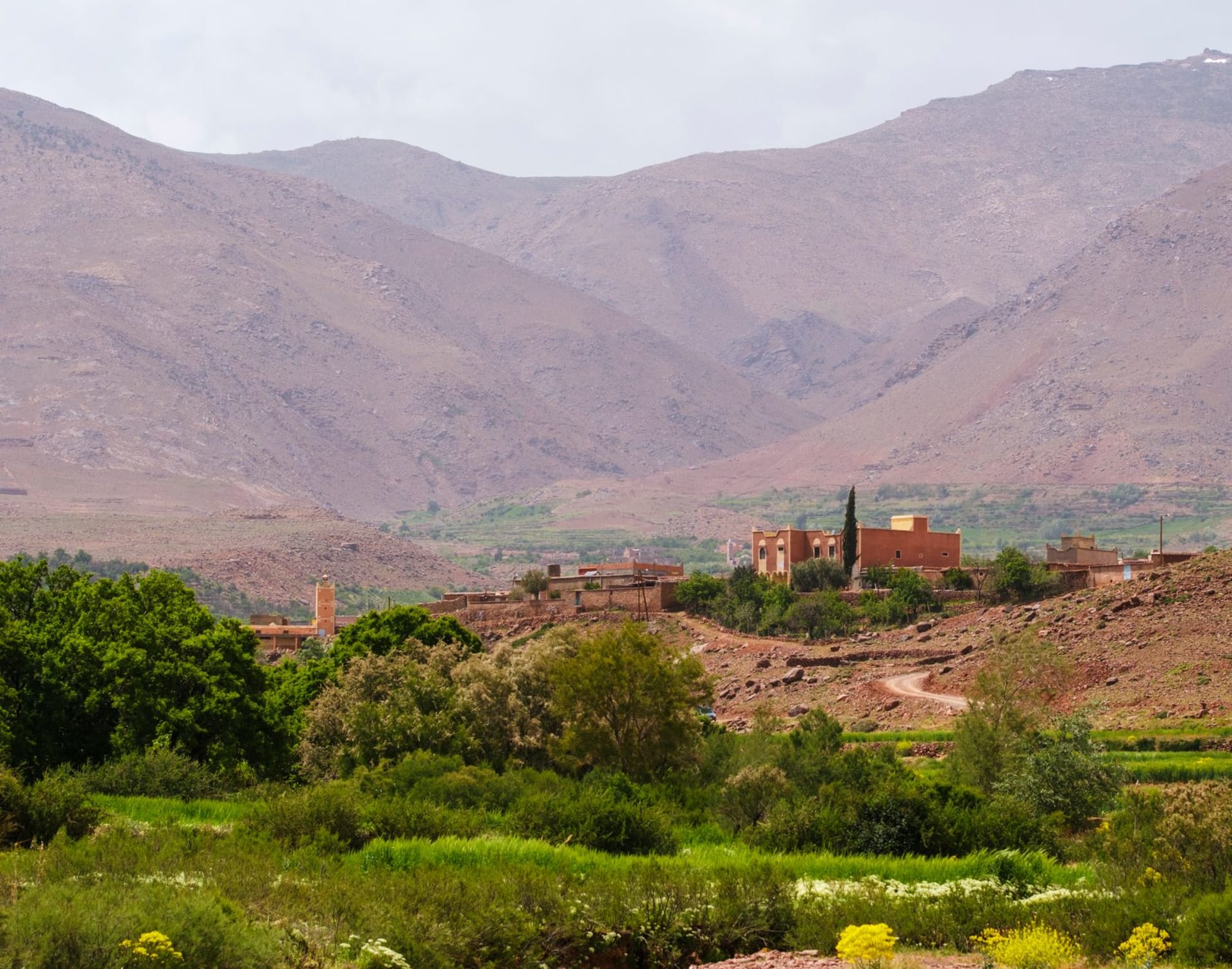
Tafraoute
"The boulders here look like they were placed by someone with time and a very particular aesthetic. Nobody placed them. That's the unsettling part."
The Anti-Atlas does not announce itself. Coming south from Agadir on the N1 and then cutting inland, the landscape transitions so gradually — the argan trees thinning, the soil lightening, the hills smoothing from the alpine drama of the High Atlas into something older and more eroded — that you don’t notice the change until you’re already in it. By the time you reach Tafraoute, you are in a basin ringed by outcrops of pale pink granite that have been worn by a hundred million years of wind and rain into shapes that resist easy description: rounded, organic, vaguely animal, stacked improbably. The village sits among them like something incidental. The geology is the main character here. Everything else — the palm trees, the painted houses with their blue shutters, the almond orchards on the terraced slopes — is supporting cast.
I arrived in late February, which is the right time to arrive, though I didn’t fully understand this until I woke on the first morning to find the almond trees in full bloom: thousands of them on the hillsides surrounding the village, white flowers so dense they read as snow from a distance, the air carrying a thin sweetness that was almost not there, the way some perfumes only register when the wind moves them past you. The bloom lasts two weeks, sometimes less, and the light in the valley during those two weeks is something that defies description without sounding like you’re selling something. I’ll say only that I spent two mornings just walking through the orchards and that both mornings were among the best I’ve spent in Morocco.
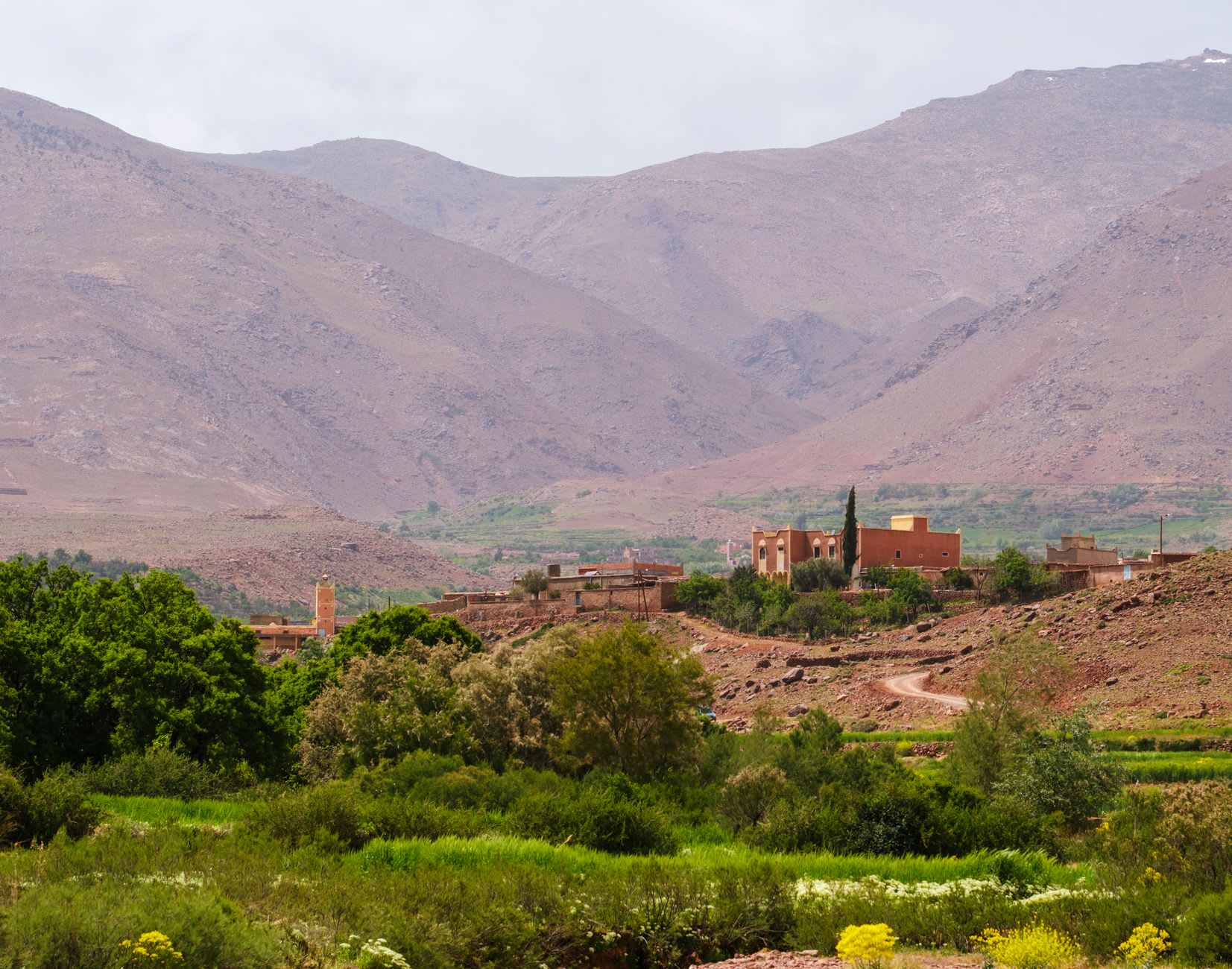
Three kilometres south of the village, in a boulder field that looks like a giant’s game of pétanque interrupted mid-play, the Belgian artist Jean Vérame painted several tonnes of rocks in bold primary colours in 1984: blue, red, orange, violet. They were painted with the blessing of the Moroccan government and the resources of a military operation — trucks, compressors, paint pumped through hoses — and they remain partially visible, the colours fading slowly back into the granite, the blue ones most legible, the red ones already returning to the rust of the natural stone. I spent an hour in that boulder field and found the painted rocks increasingly moving as I walked: not because they are great art but because they are evidence of a gesture, a person’s decision to mark something enormous and indifferent with colour, and the mountain’s patient refusal to retain the marking permanently.

The town itself is small, orderly, and has a particular self-possession I associate with places that developed their own internal logic before anyone external decided they were worth visiting. The Souss Amazigh people who live here are known across Morocco as traders and grocers — the corner shop owners you find in every major Moroccan city often have roots in the Tafraoute valley — and the town has a commerce-derived prosperity that expresses itself in the painted houses and the well-stocked market and the half-dozen patisseries selling almond-based sweets that make Marrakech’s versions look like they weren’t really trying. I bought a bag of amlou — argan oil, almonds, honey — from a woman whose stall had the most serious product hierarchy I’ve seen in any market, everything priced, nothing negotiable, absolutely correct.
When to go: February for the almond blossom — the Tafraoute Almond Blossom Festival usually falls in February and is genuinely one of Morocco’s better festivals. October through November for warm days, cool nights, and the granite boulders in the low-angle autumn light. The town is accessible year-round and receives very few international visitors relative to the High Atlas destinations.