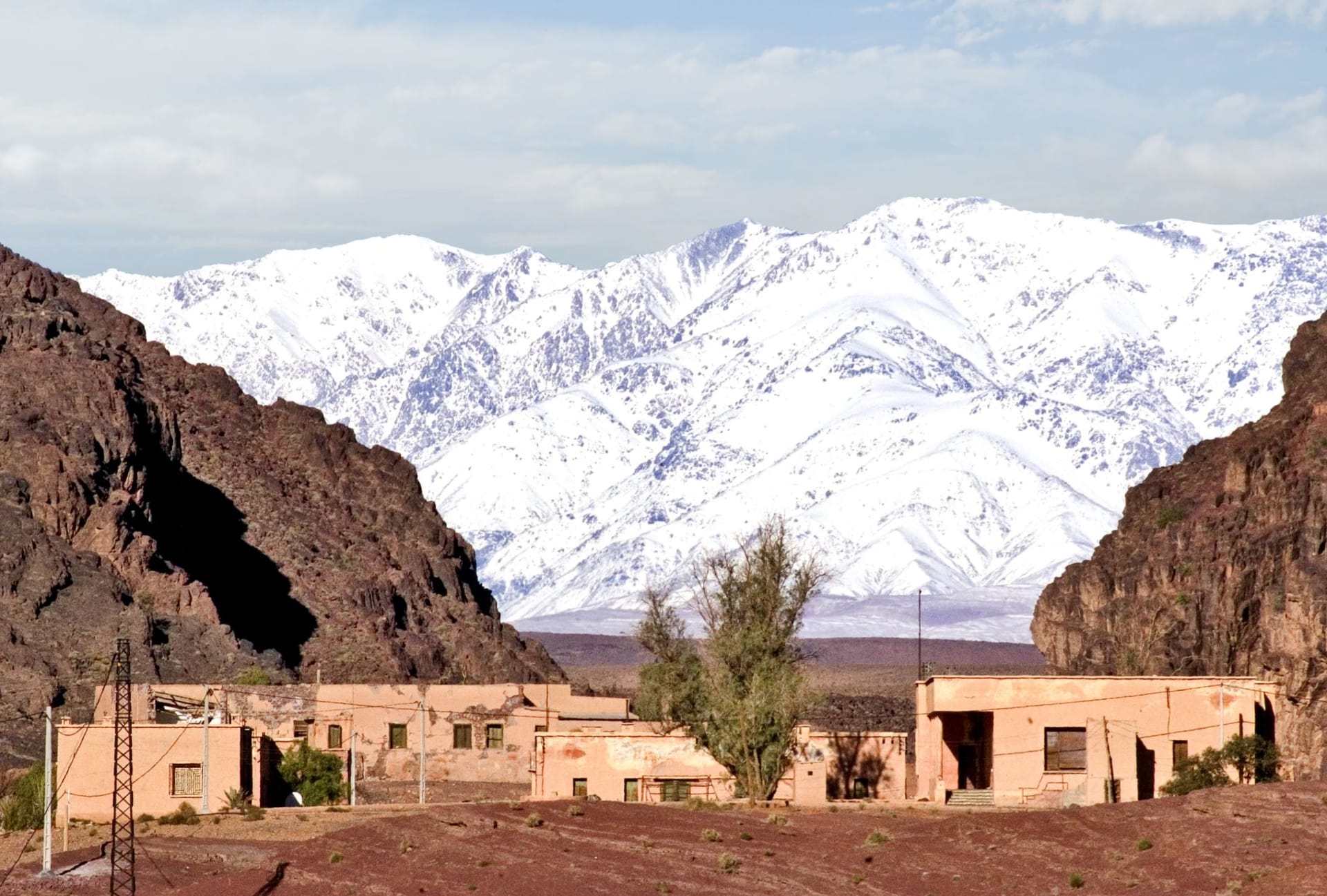
Ouarzazate
"The light here isn't better because it's the Sahara. It's better because the air has nothing left in it to stop the light."
You know you’re approaching Ouarzazate when the colour of everything shifts. The Atlas has been keeping the air cool and somewhat northern in character — greens in the valleys, grey-blue shadows in the high gorges — but coming over the Tizi n’Tichka pass and dropping down the southern flank, the palette bakes dry in about thirty minutes. By the time you reach the plain the scrubland is ochre, the road is bleached, and the pre-Saharan haze hangs in the air like a lens filter permanently attached to the horizon. I arrived in the early afternoon when the heat was absolute and the town was doing the sensible thing: almost nothing. A dog slept in the shadow of a wall. A man sat outside a shop with his phone face-down on his knee. Two birds disputed a wire with total conviction. This is Ouarzazate at midday in October, and it is perfectly calibrated.
The town exists because of the French military garrison that established it in the 1920s and because of the road that made the journey over the Atlas possible. What it became — the self-styled “Hollywood of Africa,” home to two major film studios and the production base for dozens of international films and series — is one of Morocco’s more entertaining accidents. Atlas Corporation Studios, a few kilometres out of town, is the place where Gladiator built its Roman Colosseum set, where Lawrence of Arabia got its exterior shots, where the Yunkai exteriors for Game of Thrones were constructed. You can walk through the sets that remain standing — a strange archaeology of fictional ancient worlds left in the desert sun — and feel the peculiar dissonance of standing in a place that has been many other places on screen.
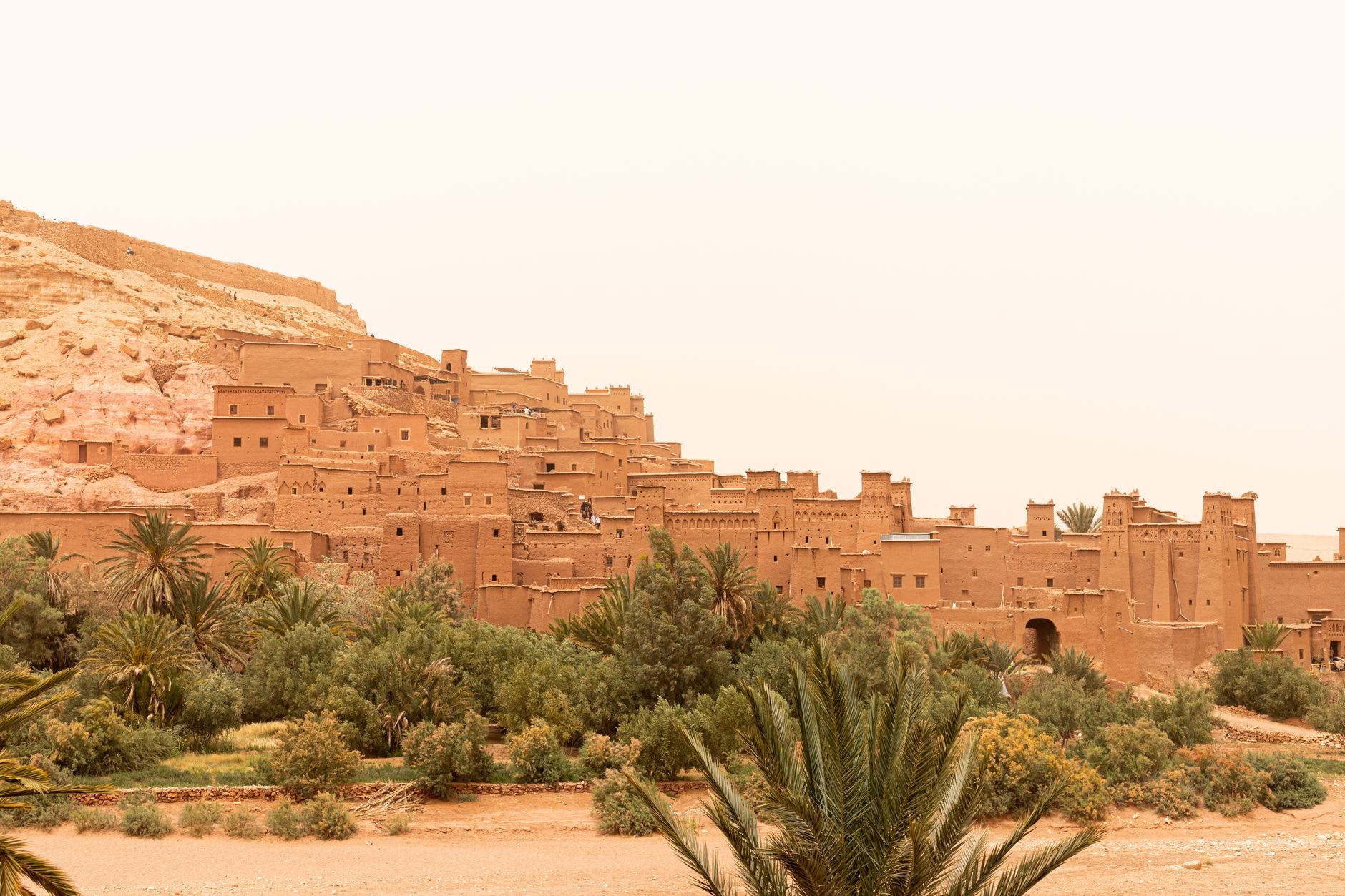
The Taourirt Kasbah in the centre of town is the thing Ouarzazate built before the cameras arrived. It was one of the great kasbahs of the Glaoui dynasty — the family that controlled the Atlas passes and exacted tribute from all traffic crossing between the Sahara and Marrakech — and its mudbrick towers rise directly from the modern town in a way that makes the surrounding concrete look apologetic. The interior is partially restored, partially still inhabited by a few families, and the rooftop gives a view over the surrounding palmeraie and east toward the Draa Valley that confirms why someone strategic chose to build here. You can see everything coming. You always could.
The food in Ouarzazate is the cooking of the south: heavier on lamb, more generous with ras el hanout, and built for people who’ve been crossing desert rather than climbing mountains. A mechloui — a whole roasted lamb, the kind that requires advance ordering and a minimum of serious appetite — is what celebrations in this part of Morocco look like. I ate mine at a riad whose courtyard had a single orange tree and more cats than chairs, and the lamb came apart at a touch, the fat rendered, the skin crackling, the meat underneath the colour of mahogany. There was cumin to dip it in and that was all it needed.
When to go: October through March. Summer temperatures regularly exceed 40°C and the town empties of anyone not working on a film production. Spring (March to May) is ideal — warm, clear, the palmeraie at its most photogenic — though accommodation books quickly around the film festival in April.