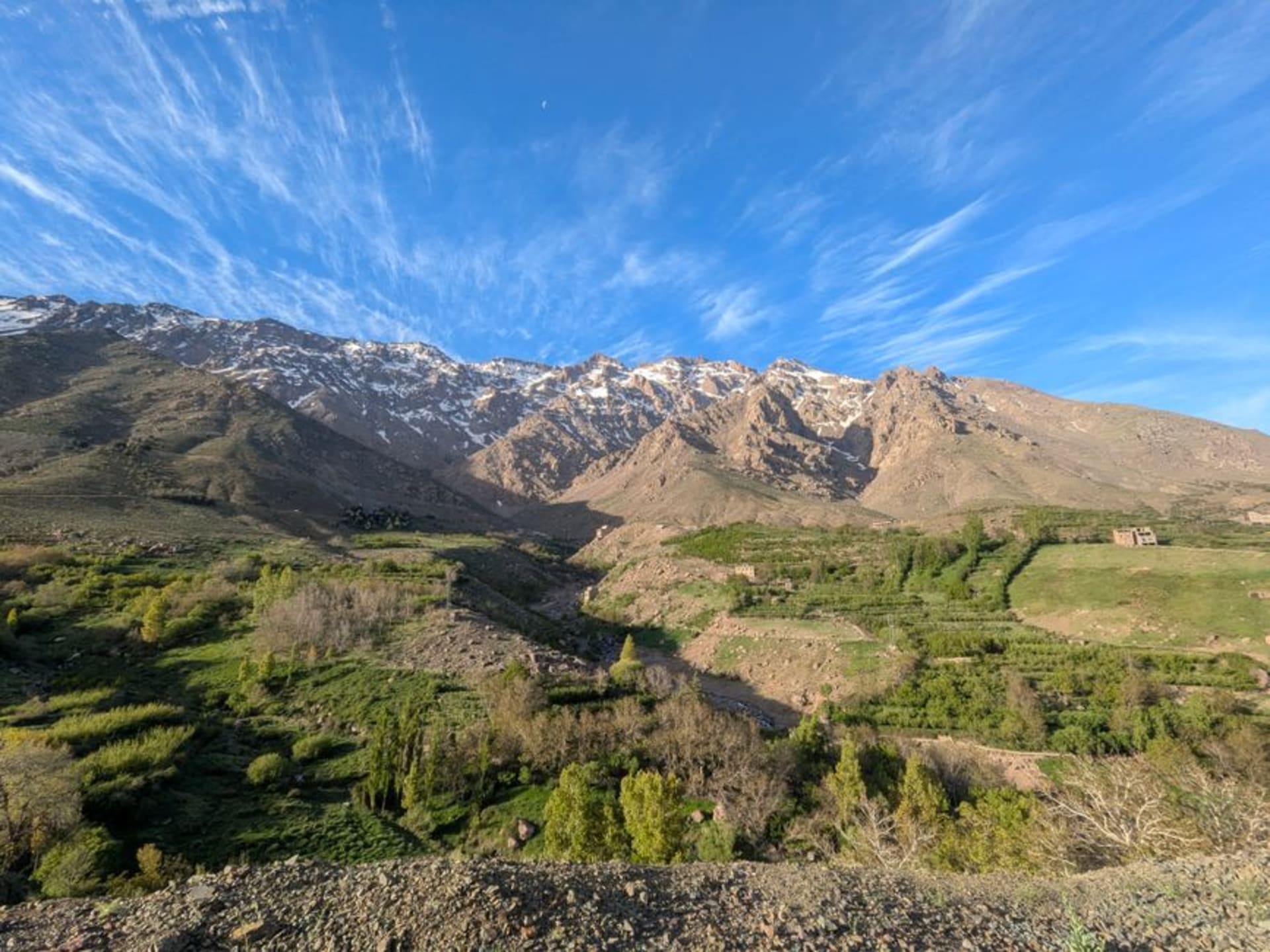
Mount Toubkal
"Four thousand meters up, and the only sound was my own breathing and Lia's boots on scree."
Climbing North Africa's highest summit through Berber villages, mule trails, and a night at the Neltner refuge before dawn.
I’d told Lia for months that I wanted to stand on the highest point in North Africa, and she’d rolled her eyes every time, but when we finally landed in Marrakech in early June, she was the one checking the weather forecast for Imlil obsessively. We hired a guide there, a soft-spoken Amazigh man named Hassan whose family has been leading trekkers up this mountain for three generations, and he laughed when I asked if 4,167 meters would be hard. “Not technical,” he said, “just long.” That distinction would matter more than I expected.
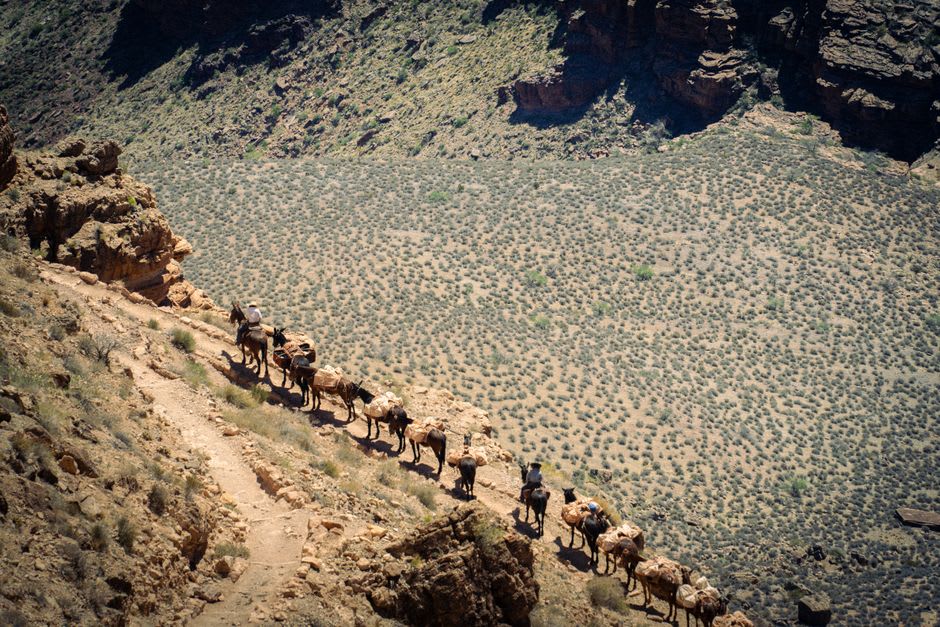
The walk in from Imlil to Aroumd felt almost gentle, mule trains passing us loaded with gas canisters and crates of eggs bound for the refuge, kids waving from doorways of stone houses stacked against the hillside. It’s easy to forget, staring up at that bare grey pyramid of rock, that an entire economy of Berber villages sustains every ascent — the muleteers, the refuge cooks, the guides like Hassan who grew up on these slopes. Somewhere in the lower valley, he pointed out, Barbary macaques still move through the juniper forest, though we never spotted one ourselves.
We spent the night at the Neltner refuge, a crowded, cheerful bunkhouse at around 3,200 meters where I barely slept between the altitude headache and the 4:30am wake-up call. Hassan handed us headlamps and we set off in the dark, scrambling over scree that shifted underfoot with every step, the toubkal massif slowly turning silver as the sky lightened behind us. The final stretch is a grind rather than a climb — no ropes, no technical moves, just thin air and stubbornness — but reaching that summit marker, watching the whole High Atlas unfold in every direction with the Sahara’s edge somewhere hazy to the south, made every wheezing step worth it.
We came down legs shaking, ravenous, already talking about coming back in winter to see it under snow — though Hassan was quick to warn us that’s an entirely different mountain then, one that demands crampons and real mountaineering experience rather than just stubborn legs.
When to go: The standard two-day route via the Neltner refuge is best tackled between April and October; outside that window, snow and ice turn Toubkal into a proper winter mountaineering objective requiring crampons and experience.
Keep exploring
More from Atlas Mountains
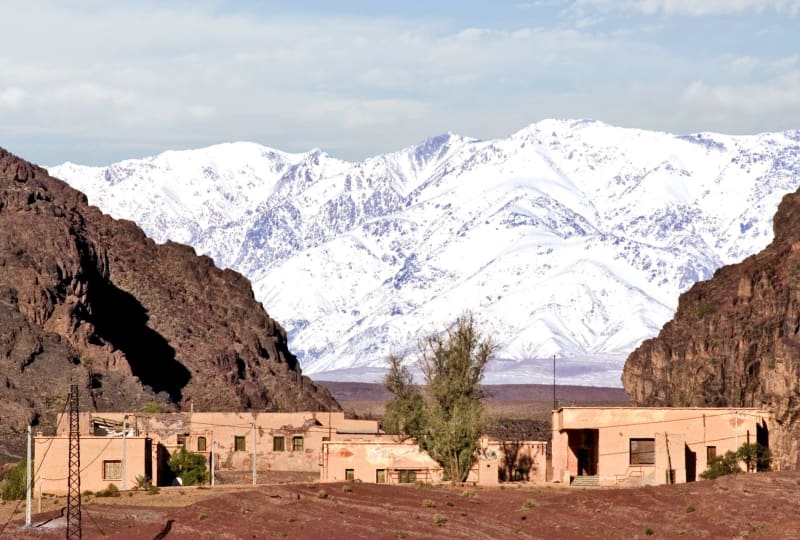 atlas-mountains
 Ouarzazate
A sun-bleached film city at the Saharan edge where the Atlas runs out of height and the light turns a quality of gold that directors have been chasing for decades.
Explore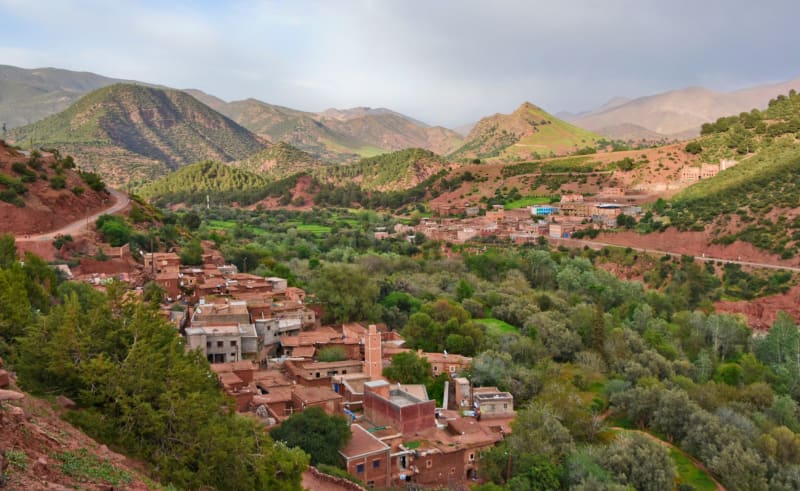 atlas-mountains
 Ourika Valley
A green corridor climbing south of Marrakech where Berber villages and rose farms line a cold river the day-trippers always leave by four.
Explore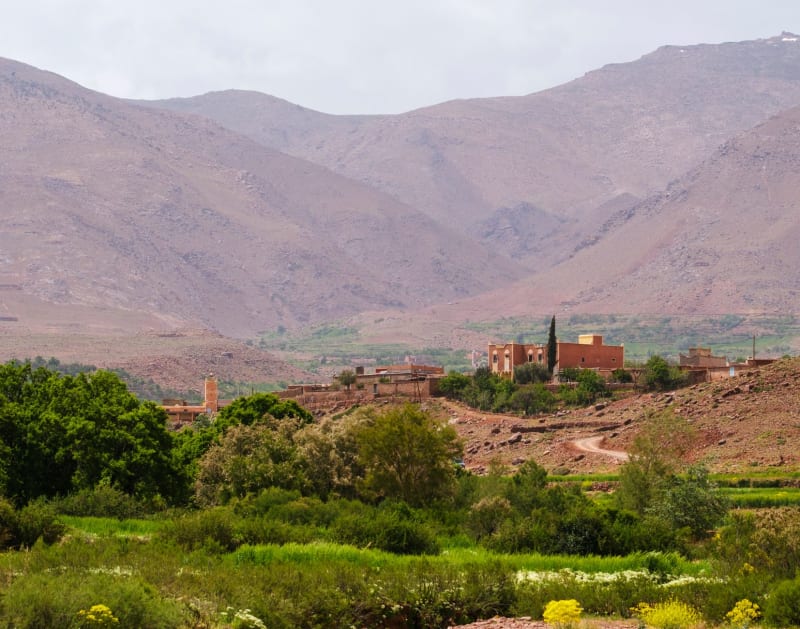 atlas-mountains
 Tafraoute
An Anti-Atlas village set among pink granite boulders where the almond trees bloom in February and the painted rocks of Jean Vérame have been slowly fading into the desert since 1984.
Explore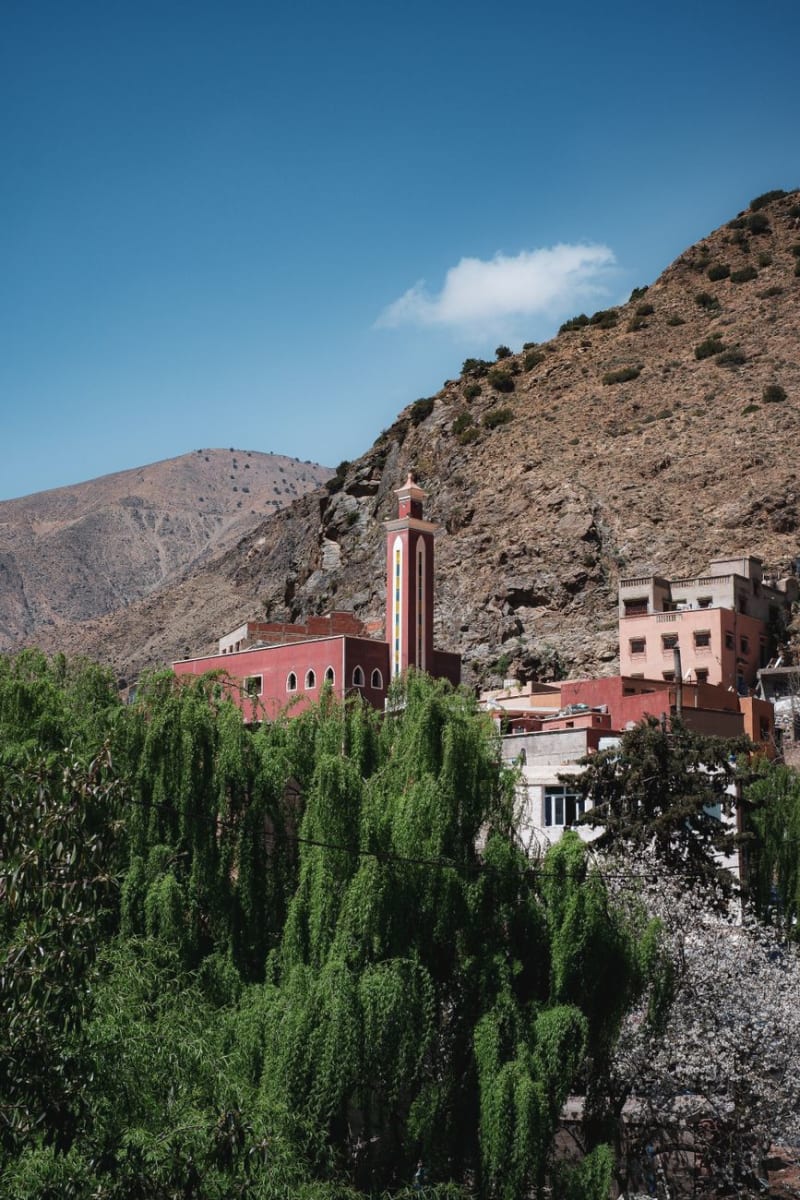 atlas-mountains
 Telouet
A crumbling kasbah on the old caravan road over the High Atlas, where the half-ruined palace of the Glaoui still hides rooms of carved cedar and zellij behind its collapsing mud walls.
Explore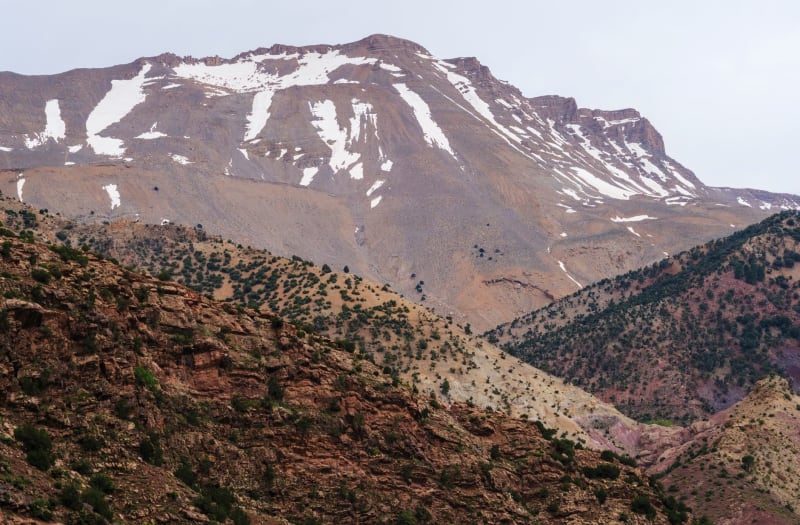 atlas-mountains
 Tizi n'Test Pass
A 2,092-metre mountain pass between Marrakech and the Souss Valley that is one of the great road experiences in Africa — and one of the least driven.
Explore atlas-mountains
 Todra Gorge
Three hundred metres of vertical limestone rising from a river you can cross in four steps — the Atlas at its most geological and indifferent to human scale.
Explore