Africa
Atlas Mountains
"The mountains where Morocco stops performing for visitors."
A corrugated spine of Berber villages, muleteers, and snowbound passes that divides Morocco's crowded north from its desert south — and the tourist circuit from something rawer.

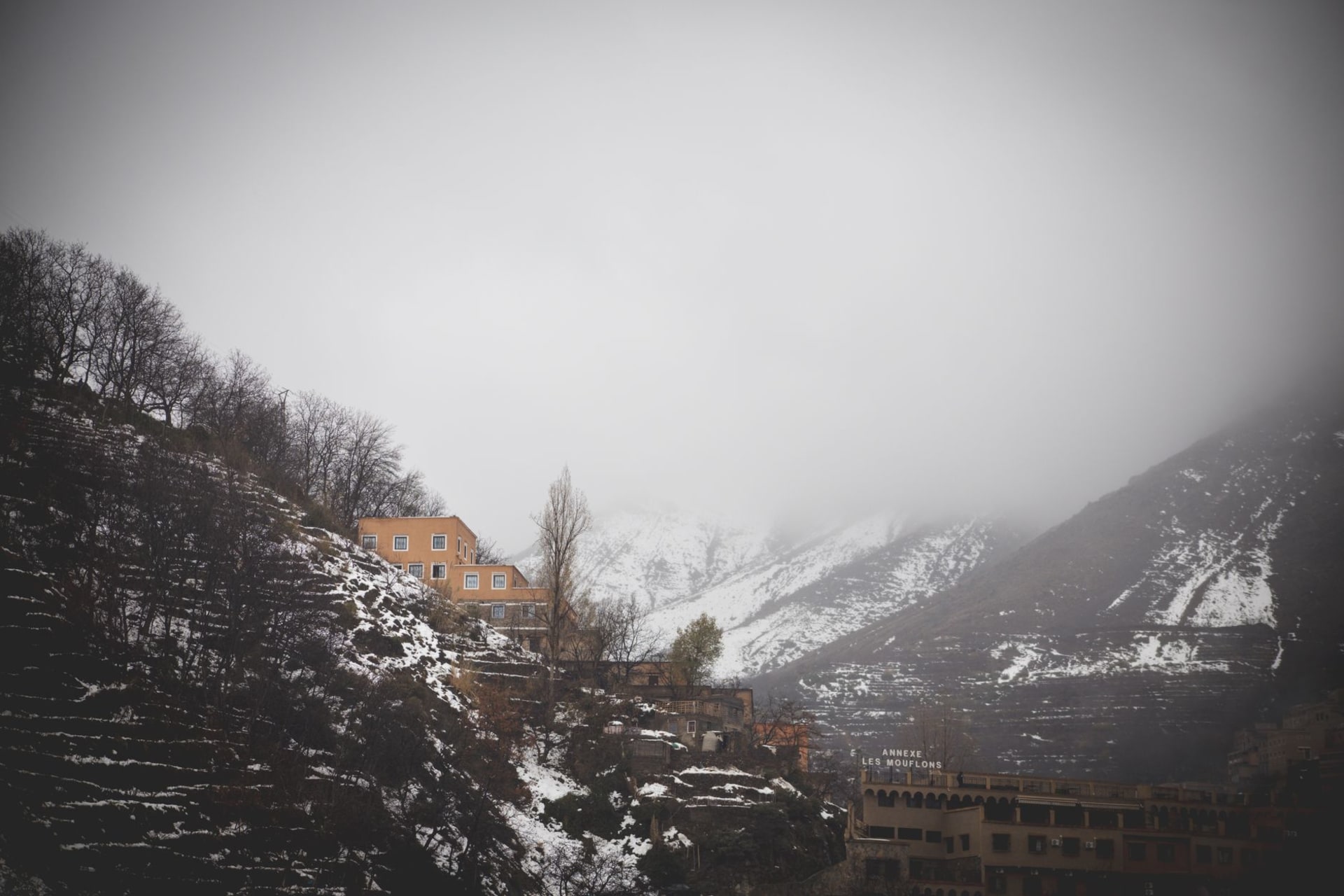
The road from Marrakech to Imlil climbs fast. Within an hour the pink dust of the city gives way to terraced fields of barley, walnut orchards dropping into river gorges, and the particular silence that comes when a valley finally swallows road noise whole. I arrived in late October with nothing booked, asked at a small epicerie for a room, and was sent up a flight of stairs to a mattress on a roof with a view of Jebel Toubkal — at 4,167 metres, the highest summit in North Africa — wearing its first snow of the season. That first night I ate a bowl of whatever the family was having: potatoes, preserved lemon, olive oil so green it was almost fluorescent. I slept under three blankets and woke to the sound of a mule on cobblestones and the smell of woodsmoke and bread.
The Atlas runs in three chains — the High Atlas, the Middle Atlas, and the Anti-Atlas — each with its own personality. The High Atlas is the dramatic one: the one you see in photographs, where the mule tracks to Toubkal zigzag above the treeline and the Aït Benhaddou kasbah poses for film productions. But the Middle Atlas surprised me more. Those mountains hide cedar forests dense enough to shelter Barbary macaques, market towns like Azrou where nobody comes to see you come, and the kind of small Moroccan restaurant where the menu is whatever is in the pot and the cook tells you what you’ll be eating. The Anti-Atlas, farther south toward the Sahara, is where the light turns amber and pre-Saharan villages seem carved from the hillsides rather than built on them.
The food in the mountain villages is nothing like the tourist tagines of Marrakech — it is simpler, heavier, and more honest. Amlou, a paste of argan oil, almonds, and honey, appears at breakfast here in a way it never does in the city. Smen — aged, fermented butter — goes into the bread. A plate of rfissa, the slow-cooked pigeon or chicken dish over lentils and msemen, appears for celebrations and sometimes just because it is a cold afternoon and a family felt like cooking it.
When to go: April to June and September to November. The high passes can be snowbound from December to March, which is either a problem or the entire point depending on your intentions. Summer brings trekkers to Toubkal in numbers, which changes the energy around Imlil significantly.
What most guides get wrong: They funnel you to Toubkal base camp and back, treating the Atlas as a day trip annex to a Marrakech itinerary. The mountains reward staying — three, four, five nights in a single valley, walking between villages rather than summiting, eating with the family running your gîte rather than at the tourist lodge. The Atlas is not scenery. It is a place where people live, and they are worth slowing down for.

Explore
Places in Atlas Mountains
 atlas-mountains
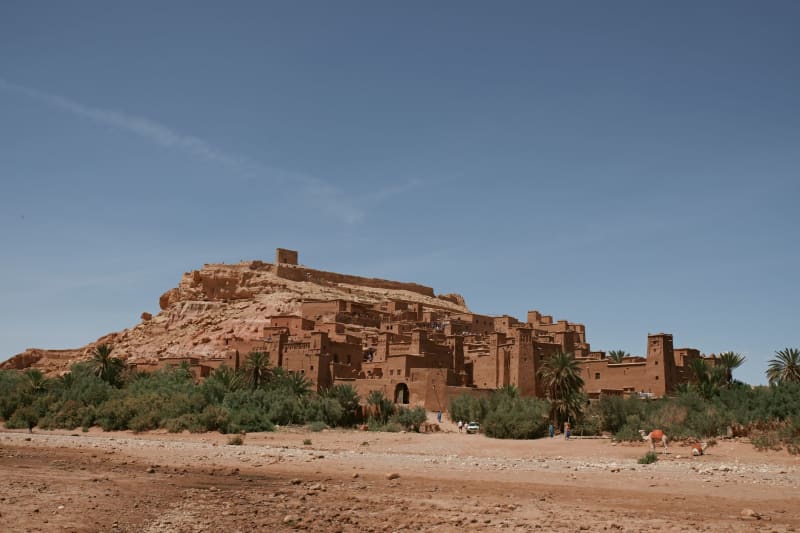
 Aït Benhaddou
A UNESCO kasbah city that has played ancient Rome, medieval Persia, and slave-trading Yunkai — and is somehow more real than all of them.
Explore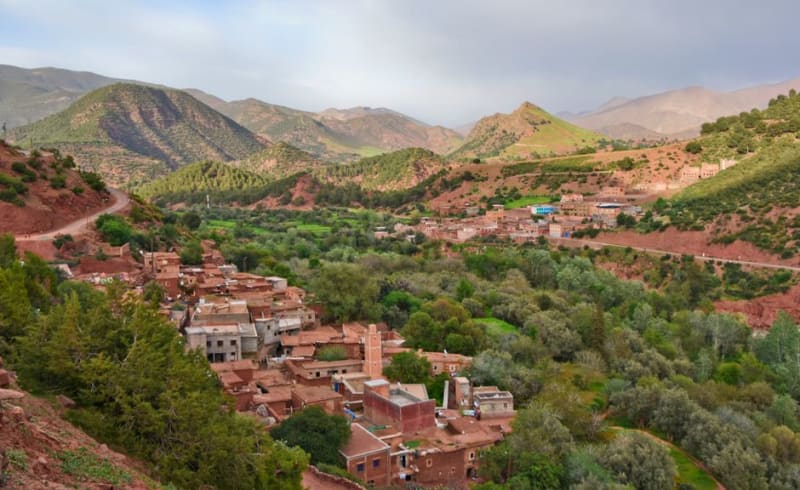 atlas-mountains
 Ait Bouguemez Valley
A fertile highland valley of pisé villages and communal granaries, where irrigation channels still run the way they have for centuries.
Explore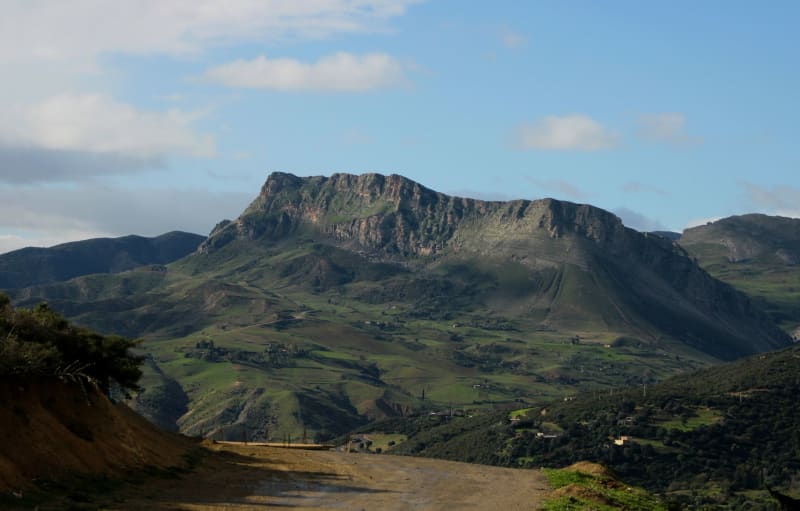 atlas-mountains
 Azrou
A Middle Atlas market town ringed by cedar forest where Barbary macaques outnumber tourists and the Tuesday souk is entirely for locals.
Explore atlas-mountains
 Dades Gorge
A sinuous canyon of rose farms and 'monkey finger' rock formations where the road climbs past reason and the valley grows more beautiful the further in you go.
Explore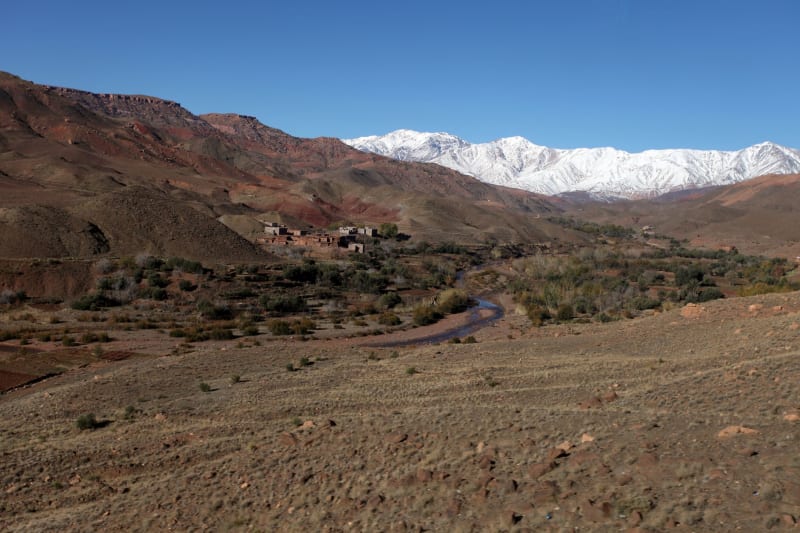 atlas-mountains
 Imilchil
A remote High Atlas village on a windy plateau above 2,000 metres where the Aït Hadiddou tribe has gathered every September for a marriage festival older than the road.
Explore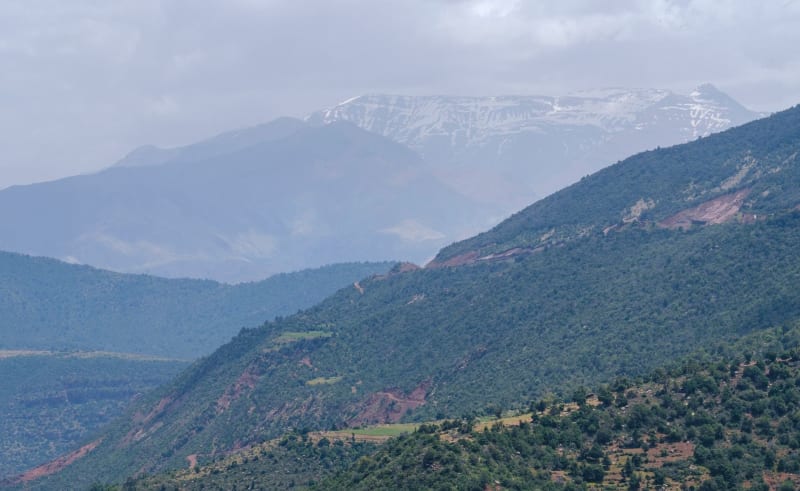 atlas-mountains
 Imlil
The Berber village where the road ends and Toubkal begins — and where most visitors make the mistake of not staying.
Explore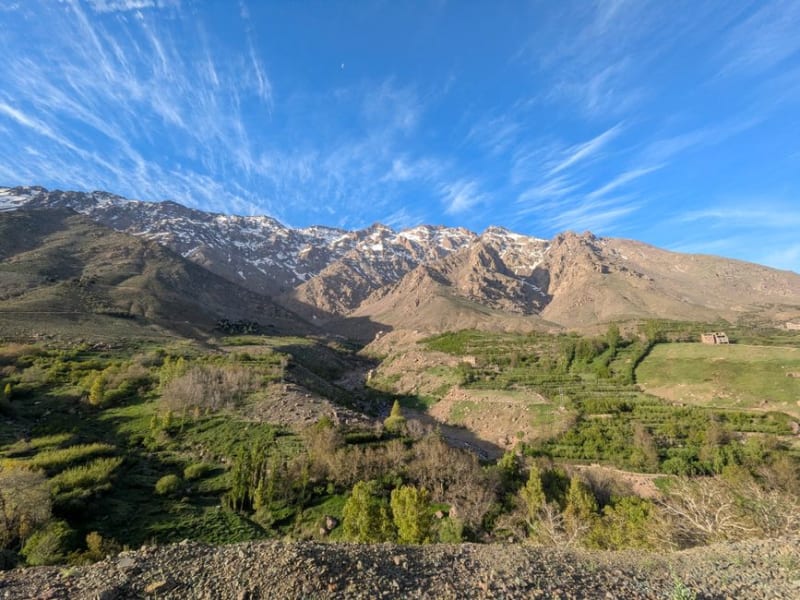 atlas-mountains
 Mount Toubkal
Climbing North Africa's highest summit through Berber villages, mule trails, and a night at the Neltner refuge before dawn.
Explore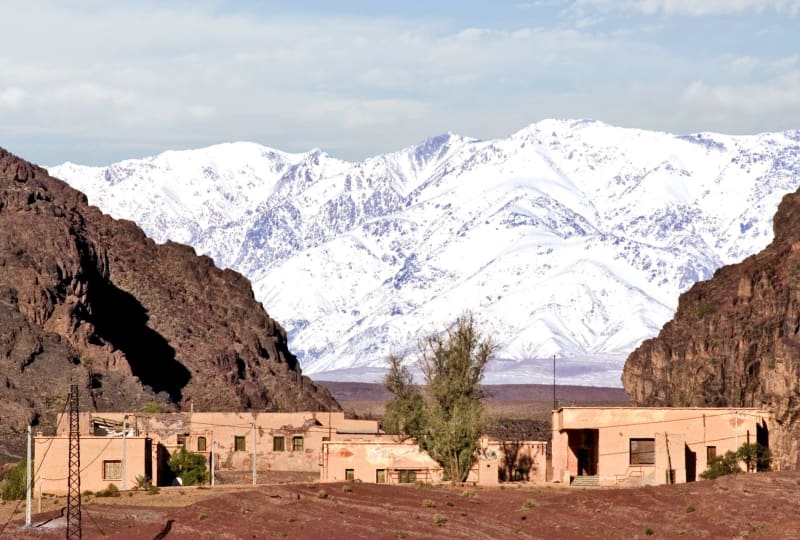 atlas-mountains
 Ouarzazate
A sun-bleached film city at the Saharan edge where the Atlas runs out of height and the light turns a quality of gold that directors have been chasing for decades.
Explore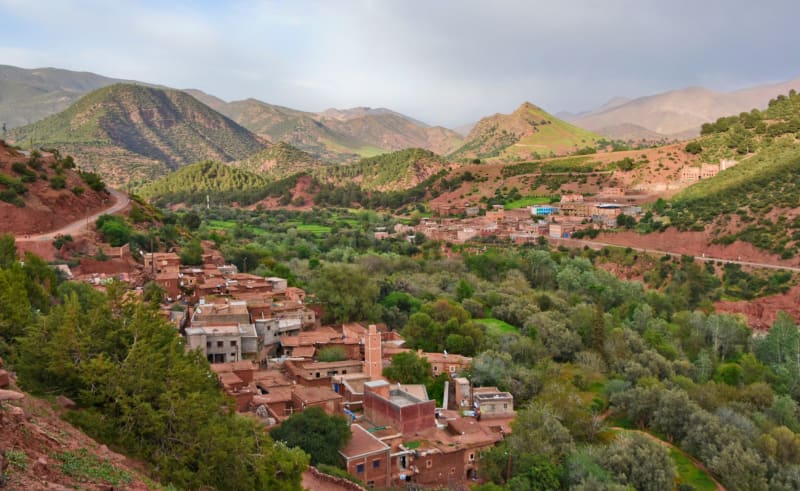 atlas-mountains
 Ourika Valley
A green corridor climbing south of Marrakech where Berber villages and rose farms line a cold river the day-trippers always leave by four.
Explore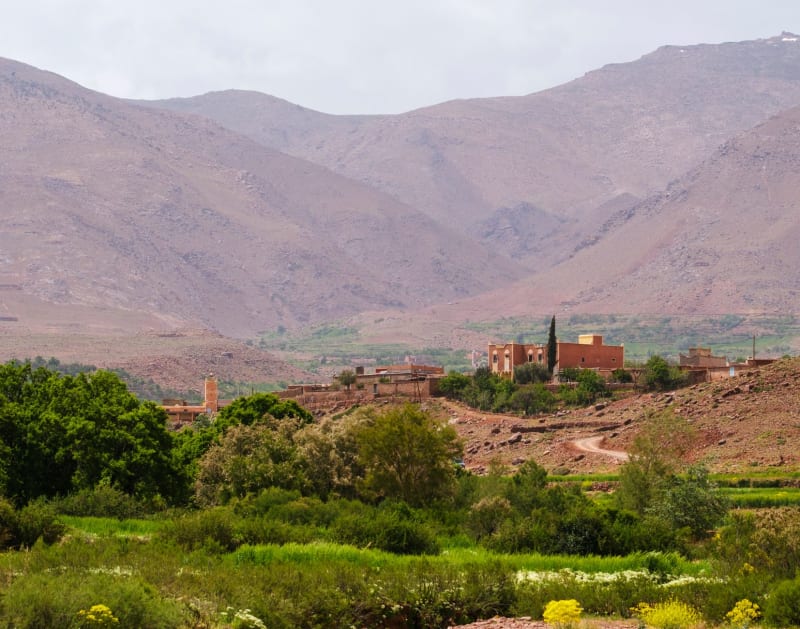 atlas-mountains
 Tafraoute
An Anti-Atlas village set among pink granite boulders where the almond trees bloom in February and the painted rocks of Jean Vérame have been slowly fading into the desert since 1984.
Explore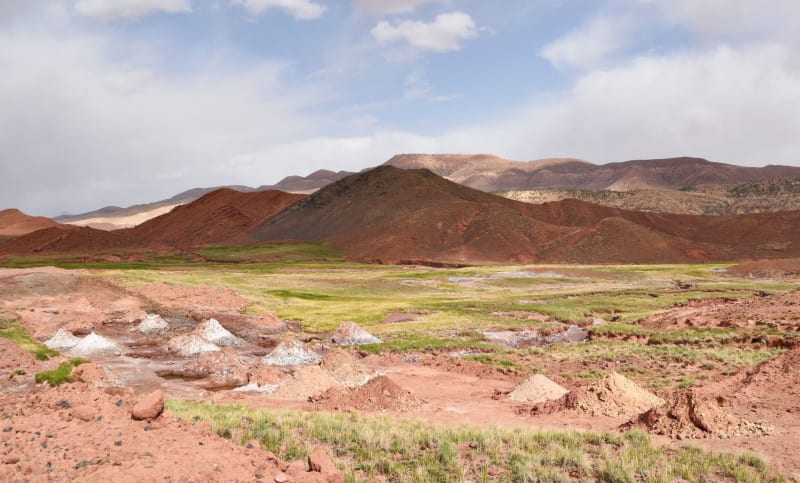 atlas-mountains
 Telouet
A crumbling kasbah on the old caravan road over the High Atlas, where the half-ruined palace of the Glaoui still hides rooms of carved cedar and zellij behind its collapsing mud walls.
Explore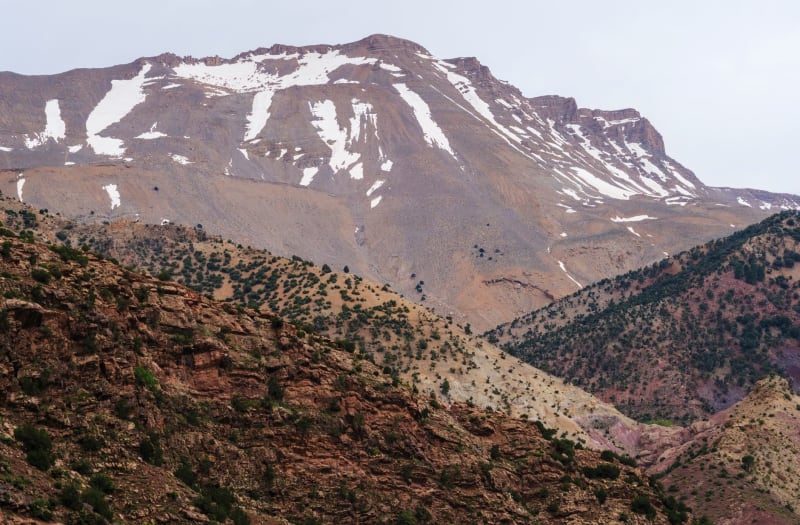 atlas-mountains
 Tizi n'Test Pass
A 2,092-metre mountain pass between Marrakech and the Souss Valley that is one of the great road experiences in Africa — and one of the least driven.
Explore atlas-mountains
 Todra Gorge
Three hundred metres of vertical limestone rising from a river you can cross in four steps — the Atlas at its most geological and indifferent to human scale.
Explore