Imlil
"The mule was already gone by the time I finished my tea. That's Imlil — life moves at exactly the pace it chooses."
The road from Marrakech to Imlil is one of those drives that reorganises your sense of scale. You leave the city and within twenty minutes the pink dust and the scooter noise drop away, replaced by a valley that tilts upward and keeps tilting. By the time you pass through Asni and the road begins its final climb, the air has changed — cooler, cleaner, carrying the faint mineral edge of snowmelt. I arrived late on an October afternoon when the shadows were already long and the village was doing its quiet evening business: women carrying bundles of dried grass, a boy herding three goats back toward a stone enclosure, an old man sitting outside a door with no particular purpose I could identify.
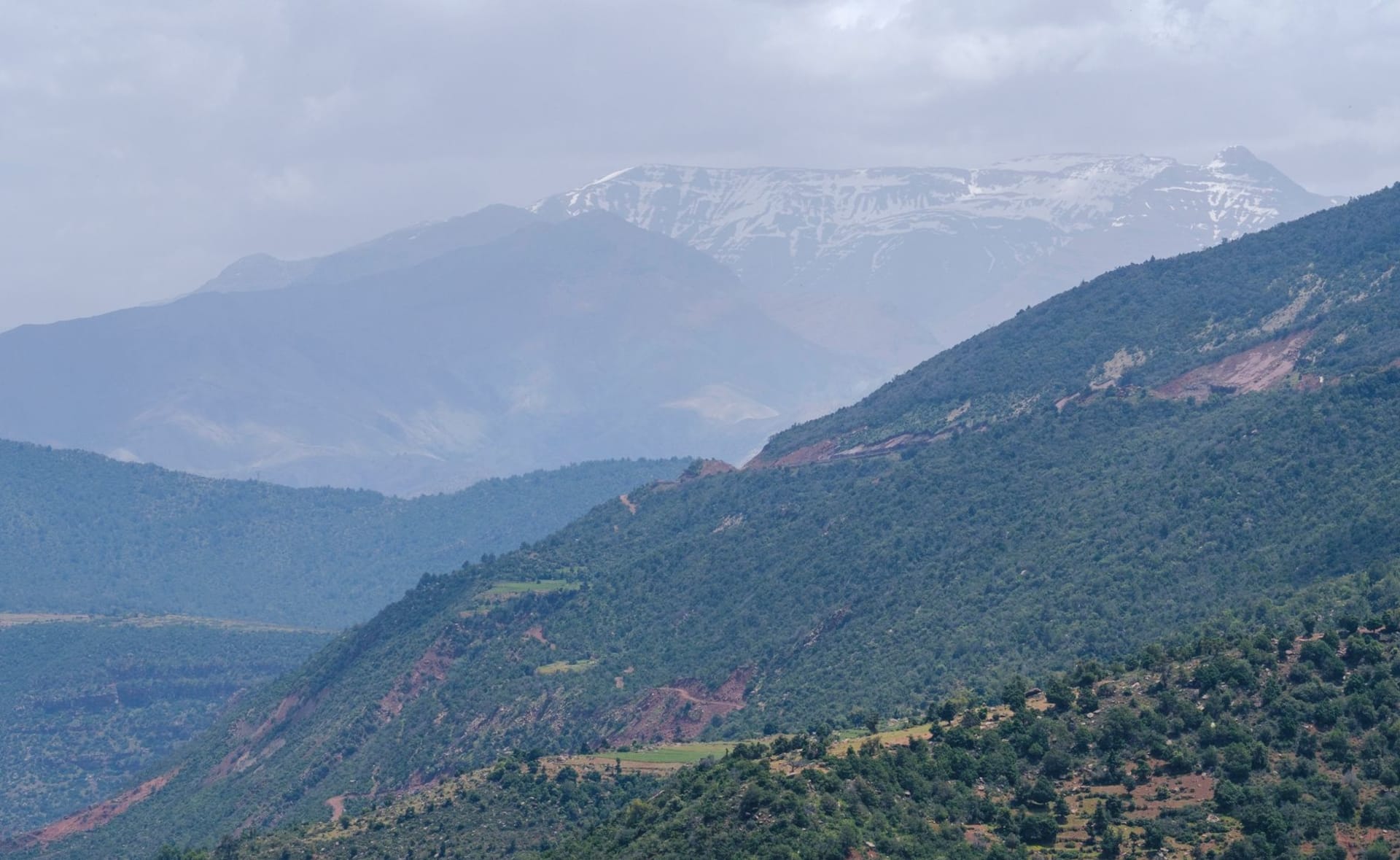
Imlil itself is not a dramatic place. It is a cluster of stone and mud-brick houses pressed against the valley slope, a handful of small shops selling hiking gear and phone credit and dusty tins of sardines, a square where guides gather in the morning to meet trekkers heading for Toubkal base camp. But sit here for a day or two and it begins to reveal itself. The village is threaded by narrow stone paths that link households, by water channels — seguias — that carry glacier melt down through the terraced gardens. In those gardens in autumn: walnut trees dropping their fruit, the last of the potatoes coming out, fig trees going bare. Above it all, Jebel Toubkal wears its first seasonal snow like a crown it’s been waiting to put back on.

The food at the gîtes here is exactly what the mountains call for. Breakfast is a ceremony: argan amlou in a clay bowl, honey from the valley bees, bread pulled from a clay oven with a single blackened crack across its surface, rounds of msemen folded into layers of butter and semolina. The cook — usually the wife of whoever runs the place, and she is always the better cook — brings everything at once and sets it on a low round table with a pot of mint tea so sweet it makes your eyes water. I ate the same breakfast three mornings running and wanted it on the fourth. Dinner would arrive around eight: a proper tagine with preserved lemon, the vegetables from the garden out back, and sometimes, if you asked right and gave enough notice, a pot of harira with enough chickpeas and lamb to constitute its own weather system.

What most people who pass through Imlil miss — because they arrive by taxi from Marrakech at nine in the morning and leave for base camp by ten — is the village’s afternoon rhythm. By three o’clock the trekkers are gone, the guides are off-duty, and the place breathes out. Children come back from school and immediately shed their shoes. Smoke rises from kitchen vents. Someone somewhere is hammering something. The valley below the village catches a particular quality of late-afternoon light, amber and long, that makes the walnut trees glow from the inside. I walked up the path above the village for no reason other than that path, and stood at a bend where I could see both down into the valley and up toward the snowline, and thought: this is what they mean when they say a place is alive.
When to go: April through June for the valley in flower and manageable Toubkal conditions. September and October for the harvest atmosphere and cooler air without high-season crowds. Come in winter if you want the village to yourself and snow on every surface — the road stays open, the gîtes still light their fires.