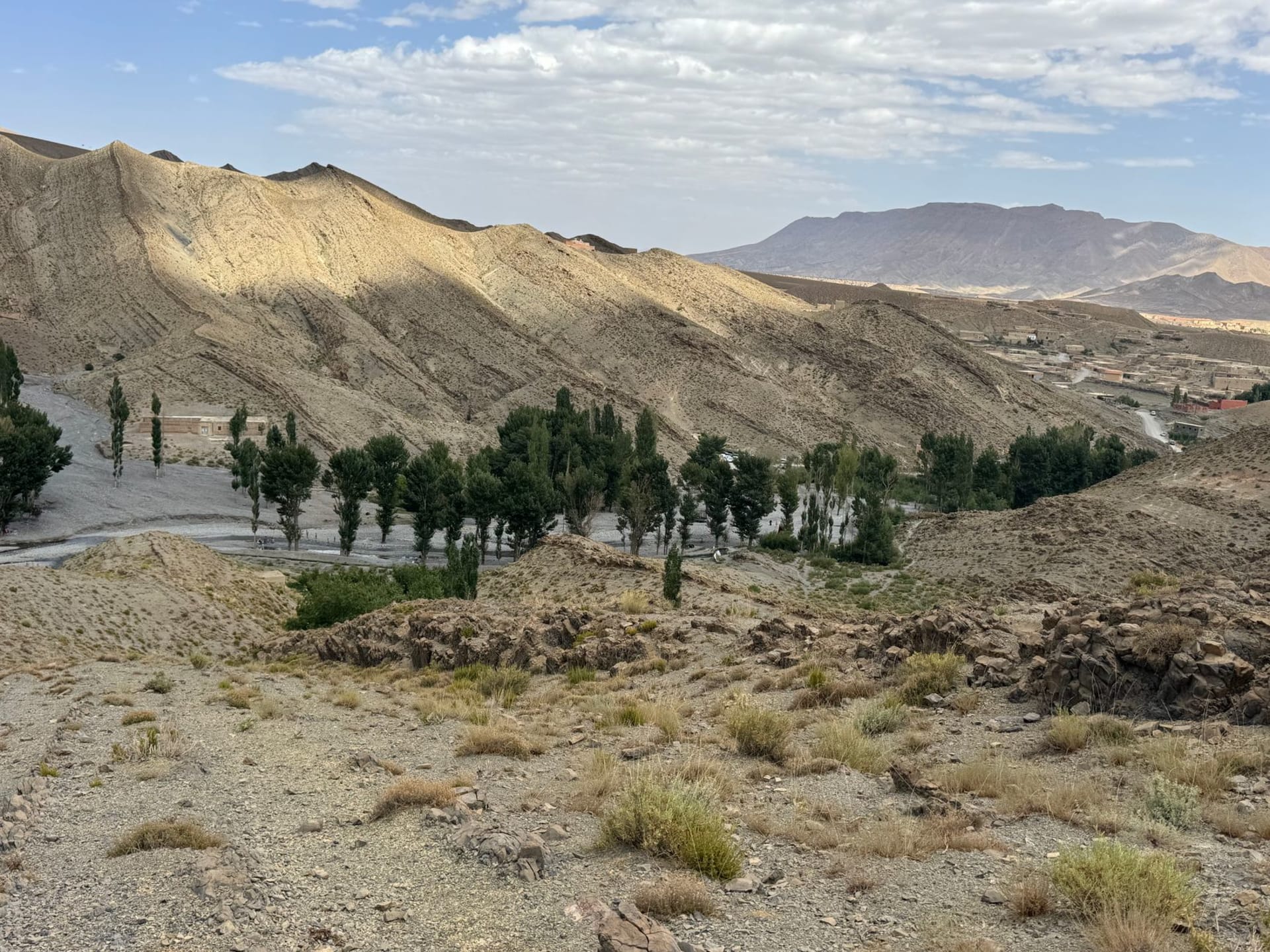
Dades Gorge
"The rock formations in the upper gorge don't look like geology. They look like the earth changed its mind mid-sentence."
The road into the Dades Gorge follows the river upstream from Boumalne Dades, and the first twenty minutes are pleasant rather than dramatic: date palms, kasbah ruins in various states of picturesque collapse, the river running rust-red after rain. Then the canyon walls begin to assert themselves and the light changes, and by the time you reach the famous hairpin bends in the upper gorge — a sequence of tight switchbacks that cling to the cliff face above the river — you have entered somewhere categorically different from the tourist road of the Draa Valley below. I pulled over at the hairpins and got out and stood on the outside edge and looked back down at the road I’d just driven and felt the mild vertigo of having arrived somewhere without quite noticing the journey ending.
The middle section of the gorge is where most visitors stop, at the cluster of hotels and guesthouses built against the cliff face at what seems like an implausible angle. But the upper gorge — another thirty kilometres of increasingly rough piste — is where the geology becomes genuinely strange. The rock formations called “monkey fingers” or “doigts de singe” appear above the road: columns of compressed earth and stone eroded into organic shapes, some of them fifteen metres high, their surfaces striated in layers of red, ochre, and grey that read like geological timelines. They are strange in the way that only things formed over millions of years by entirely impersonal forces can be strange — beautiful and slightly threatening at the same time.
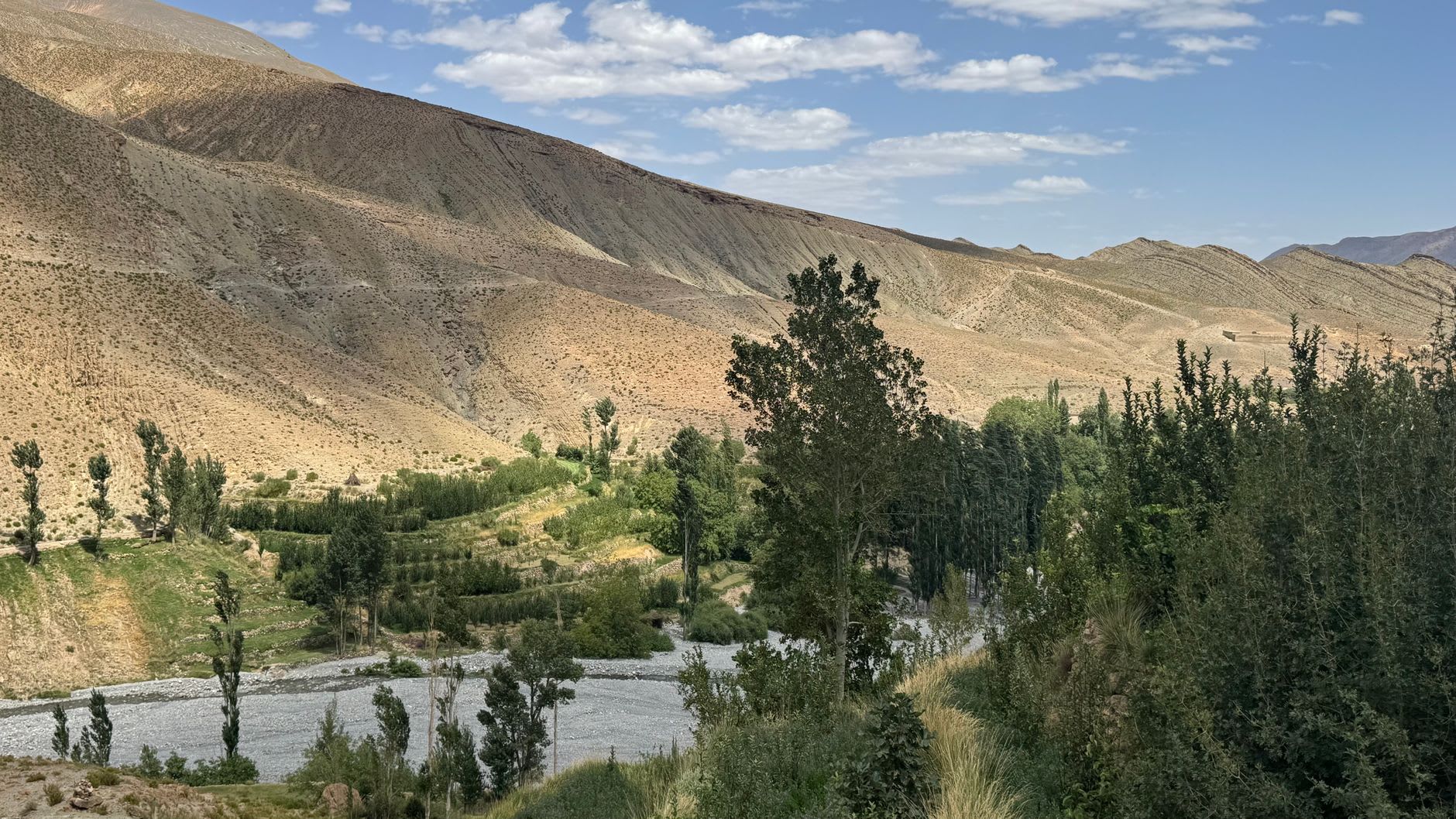
In May, the lower gorge is a different place entirely. The damask roses bloom along both sides of the road — planted in long rows on the terraced banks of the river, their petals harvested at dawn before the heat can reduce their yield — and the air in the early morning carries a sweetness that seems almost artificial until you understand it is real. The rose harvest runs for three to four weeks and involves entire families, the work starting before sunrise because the essential oils are most concentrated in the pre-dawn cool. I came through in mid-May and stopped to help pick for an hour alongside a family who seemed neither surprised nor particularly inconvenienced by the addition of a confused Frenchman to their operation. My contribution was modest. My understanding of the morning deepened considerably.
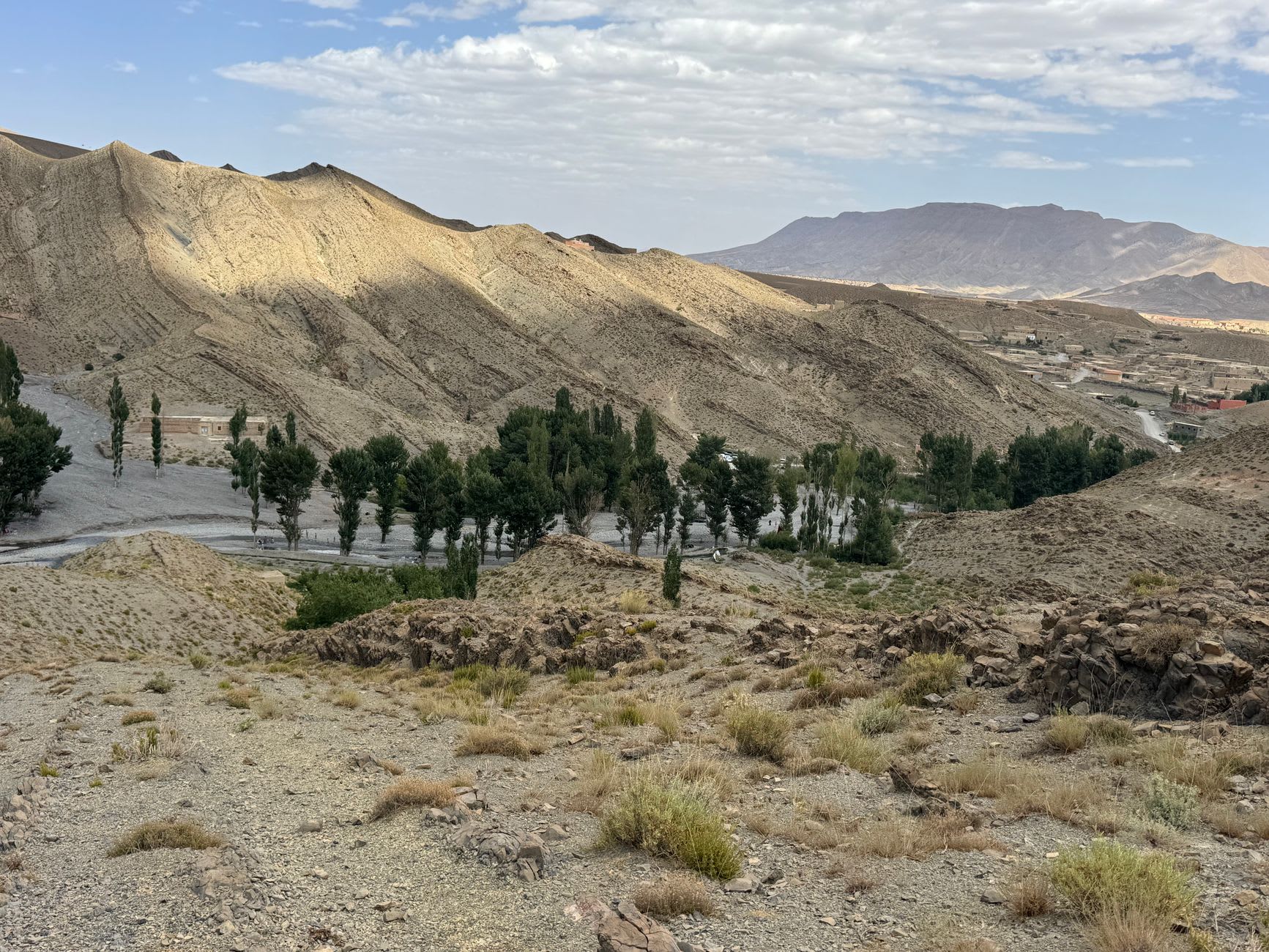
The guesthouses in the gorge itself tend to be family-run and more honest about their limitations than the big hotels in Boumalne below. The best ones cling to terraces cut into the gorge wall with views directly down the canyon — some with rooftop dining platforms where you eat dinner with the gorge going dark below you and the sound of the river carrying up from the shadows. The food is heavy mountain cooking: mutton tagine with winter vegetables, khobz bread baked in the morning and eaten all day, argan oil on everything. I ate well in the Dades Gorge. I slept badly because the canyon wind at night is relentless and exhilarating in equal measure.
When to go: May for the rose harvest and optimal road conditions. October and November for autumn light on the canyon walls and the gorge at its least crowded. The upper gorge requires a 4WD from the hairpin bends upward, particularly after rain when the piste deteriorates. April can be cold at altitude with residual winter mud on the upper sections.