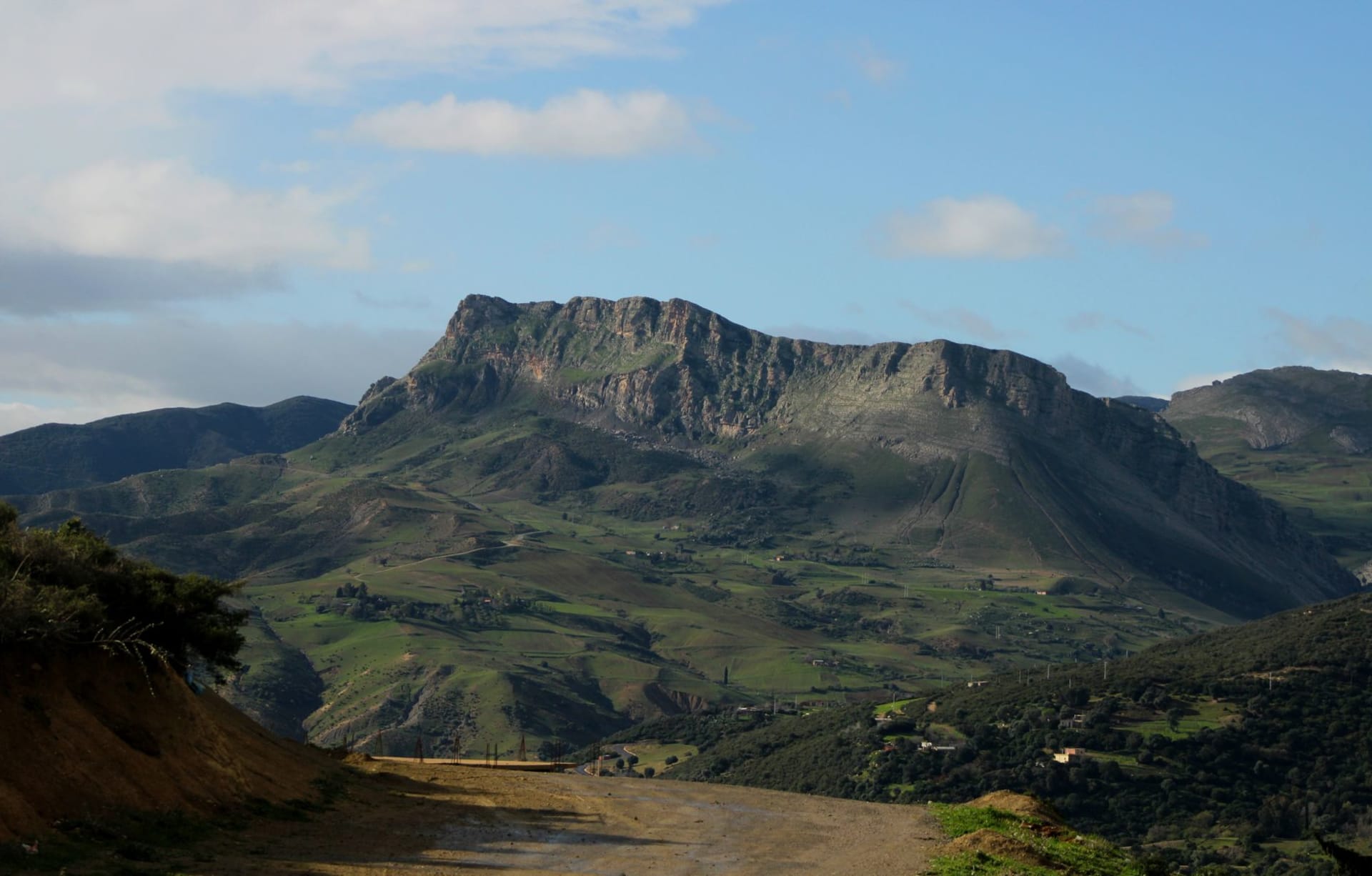
Azrou
"The macaque took my orange. I like to think we made an even trade — I got to watch it eat."
The Middle Atlas is the Atlas most people skip. The tour itineraries say Marrakech, Imlil, maybe Ouarzazate, and then the desert — a clean narrative arc from imperial city to Saharan dunes. Azrou does not fit that arc. It is a Berber market town in the folds of the Middle Atlas plateau, three hours northeast of Marrakech and about as far from the tourist circuit as you can get while still sleeping in a proper bed, and I came here almost by accident, changing buses in Meknès and choosing Azrou over Ifrane because the name sounded better and I had no particular plan.
The town itself is built around a monolithic volcanic rock — azru means “rock” in Tamazight, so there is a certain municipal commitment to accuracy here — and it has the unhurried pace of a place that has never needed to reinvent itself for outside consumption. The Tuesday souk draws Berber farmers from the surrounding plateau villages: women in striped wool jellabas, men selling sacks of dried chickpeas and bottles of cedar honey, a livestock section where the goats are moved with considerably more urgency than anything else in town. I wandered through it for two hours and nobody tried to sell me a carpet.

Above the town, the Forêt des Cèdres Gouraud begins within walking distance — a cedar forest of Atlas cedars some of which are eight hundred years old, their trunks thick enough that two people can’t link hands around them. The forest smells of something I can only describe as green cold: resinous, damp, alive. The Barbary macaques are everywhere. These are Morocco’s only wild primate, barrel-chested and watchful, and they move through the cedar canopy with a fluid confidence that makes you feel like the intruder, which you are. A family of them descended to the road while I was sitting on a fallen log eating lunch, and the boldest one — a juvenile with enormous ears and no fear whatsoever — relieved me of an orange segment before I’d fully registered what was happening. The tourists who visit the forest to feed them peanuts from their hands are, I’d argue, missing the point: you don’t need to feed them to feel them. You just need to sit still.

The guesthouses in Azrou are modest and the cooking is better than it has any right to be. I ate dinner twice at a small restaurant near the main square where a woman ran the kitchen and her son ran the tables. She made a lamb and prune tagine — the prunes almost caramelised, the meat falling from the bone, the sauce reduced to something glossy with preserved lemon — that I thought about for days afterward. There was a plate of bissara, the fava bean soup with olive oil and cumin, to start. There was bread. There was silence except for the television in the corner showing a Moroccan football match nobody in the restaurant appeared to be watching.
When to go: April through June and September through November. The forest is accessible year-round but winter snow can close the higher roads. In spring the meadows around the cedar forest are covered in wildflowers and the light in the forest has a particular crystalline quality. Avoid Azrou on its Tuesday souk day if you want quiet; come specifically for the Tuesday souk if you want to see the town alive.