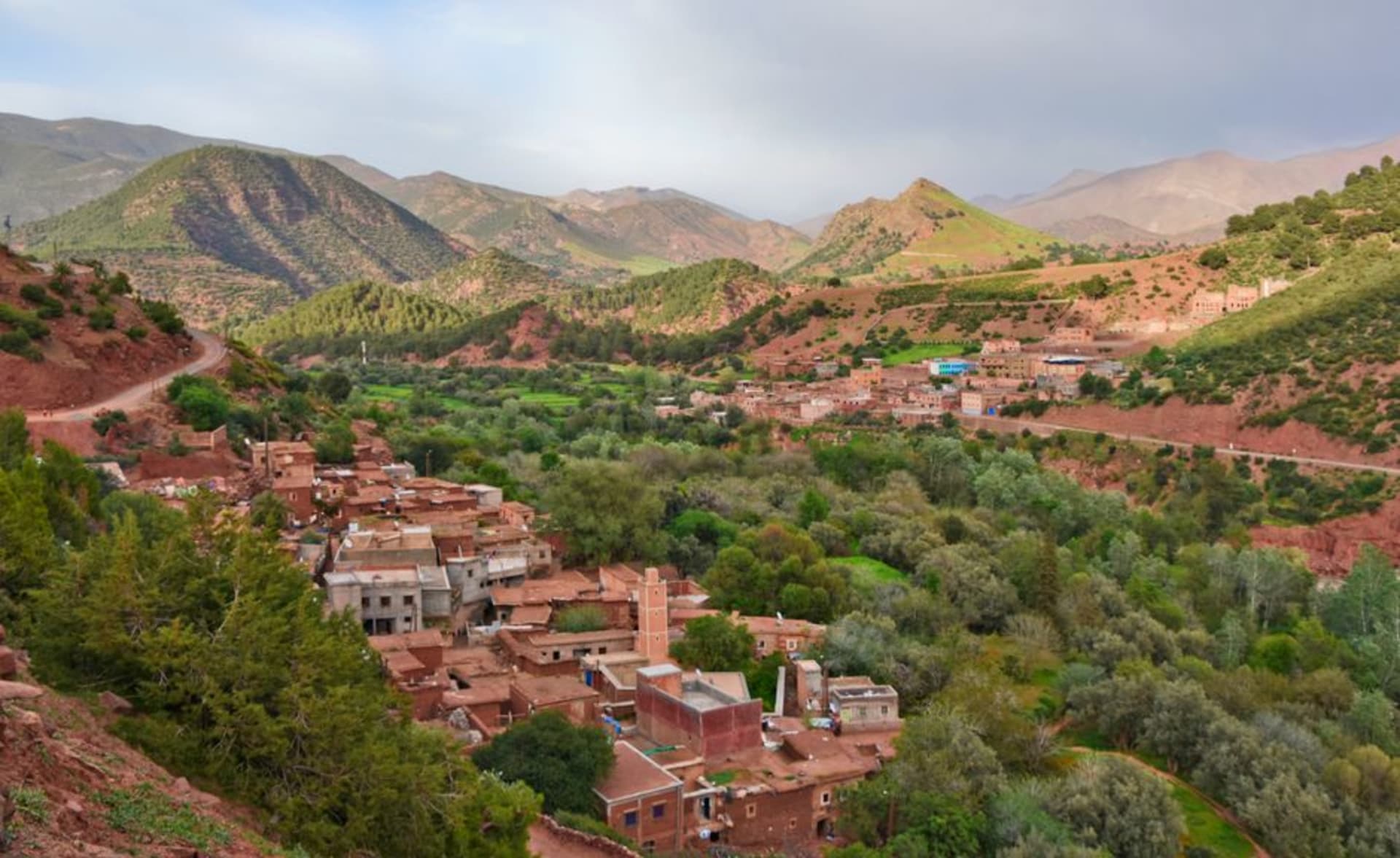
Ait Bouguemez Valley
"Some valleys you visit. This one, I felt like I'd been let in on."
A fertile highland valley of pisé villages and communal granaries, where irrigation channels still run the way they have for centuries.
We’d been told to expect something special once the road climbed over the pass, but nothing quite prepared me for the moment Ait Bouguemez opened up below us. Lia grabbed my arm and just pointed — a whole valley floor, green and gold, checkered with terraced barley fields, walnut groves, and villages the exact color of the earth they’re built from. We’d driven up from Azilal on a road that, until the 1990s, didn’t fully exist, which is part of why the place still feels the way it does. They call it the Vallée Heureuse, the Happy Valley, and by the second morning I understood why — not because life there is easy, but because there’s a rhythm to it that felt genuinely rare.
We stayed three nights in a family-run guesthouse in one of the pisé villages, and our host Hassan walked us out one afternoon to the local agadir, the communal granary that sits above the village like a small fortress. He explained how families still store grain and valuables there collectively, each household with its own locked chamber inside one shared structure — a system that predates any bank and, in his words, “works because everyone needs everyone.” Standing inside that dim, cool stone building, thick-walled against heat and thieves alike, I felt the same thing I feel in old churches back home: the weight of something built to outlast its builders.
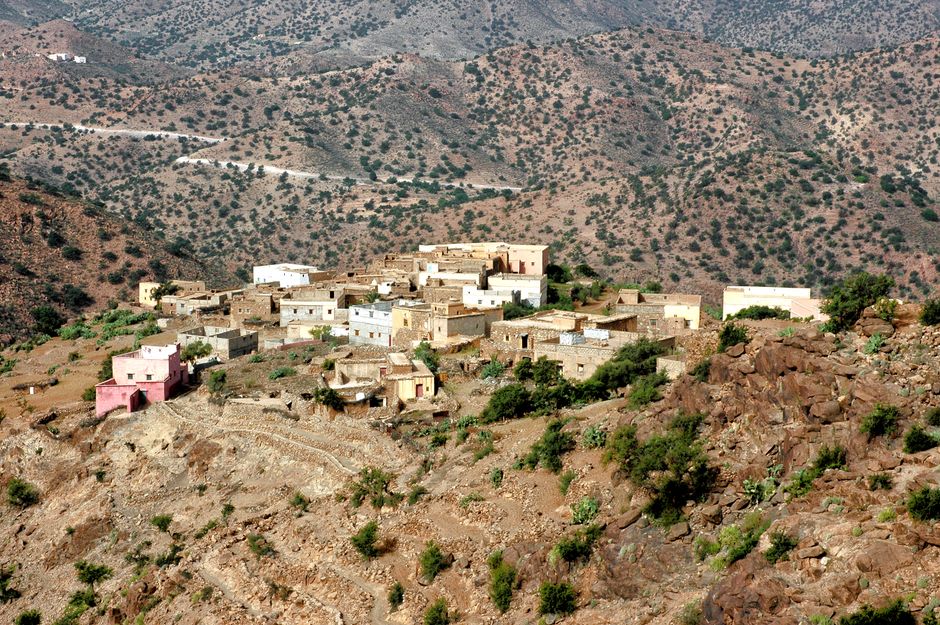
The valley sits at nearly 1,900 meters, ringed by the Mgoun massif, and it’s the usual jumping-off point for treks up Irhil M’Goun, the second-highest peak in the whole Atlas range. We didn’t attempt the summit — that’s a multi-day trip we’re saving for a future trip with proper gear — but we did a long day hike above the villages, following one of the old irrigation channels (seguias, Hassan called them) that still carry snowmelt down to the terraces exactly as they’ve done for generations. Lia kept stopping to photograph the water dropping from one tiny stone channel to the next, feeding fields of barley and clusters of walnut trees in a system so old and so quietly ingenious that no engineer we know has managed to improve on it.
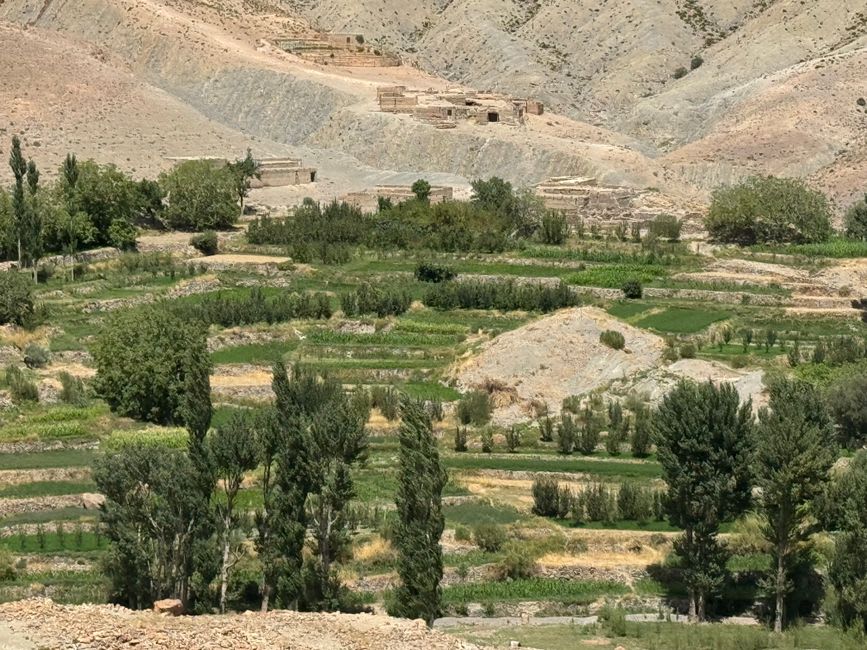
What stayed with me longest wasn’t the scenery, though it’s extraordinary — it was how unhurried everything felt. Kids herding goats waved without breaking stride. Women called out greetings from rooftop terraces while laying out wool to dry. Nobody was performing “authentic Morocco” for us; they were just living in a valley that happened to be one of the most beautiful I’ve seen in the country. We left already talking about coming back for the trek to Irhil M’Goun, and about which walnut groves we’d walk through again first.
When to go: aim for May to June, when the wildflowers carpet the terraces, or September for harvest season — both windows bring comfortable trekking temperatures without the summer heat that can make the high passes brutal.