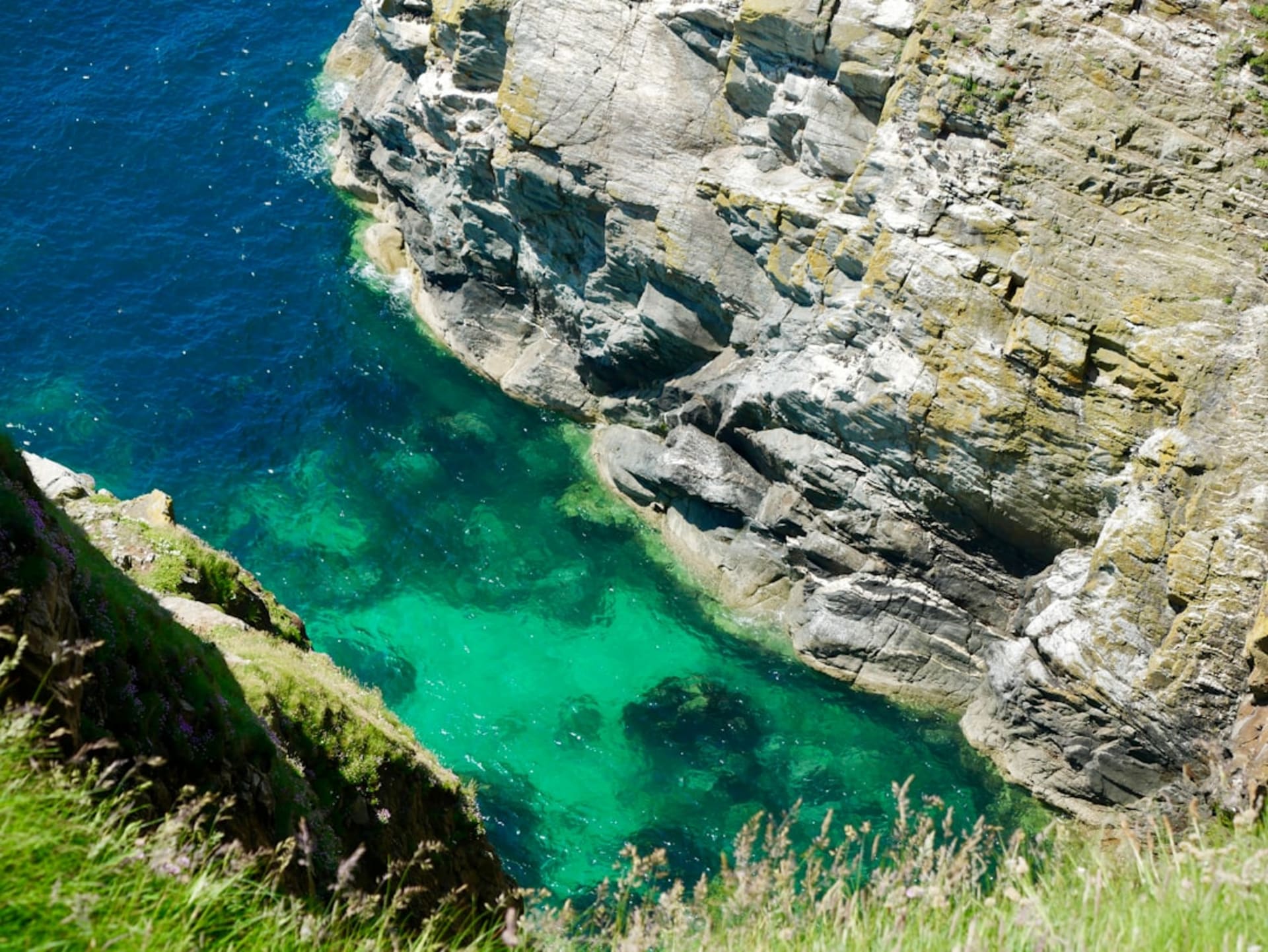
Playa del Silencio
"We climbed down close to two hundred steps to reach Playa del Silencio, and for the first ten minutes neither Lia nor I said a word — the name just makes you obey it."
A cove beach hemmed in by cliffs and sea stacks near Cudillero, quiet enough to earn its name even in high season.

The name does a lot of the marketing for Playa del Silencio, and I went in half-suspicious it would be one of those cases where the poetic name oversells an ordinary beach. It doesn’t. You approach from a clifftop parking area near the hamlet of Castañeras, not far from Cudillero, and there’s a long staircase — I lost count somewhere past a hundred and fifty steps — that drops you down through gorse and bramble to a crescent of sand hemmed in on both sides by dark cliffs and a scatter of jagged sea stacks standing offshore like broken teeth.
What actually earns the “silence” in the name, I think, is the shape of the cove. The cliffs curve around and swallow the sound of the road above and even mute the wind a bit, so what’s left is just the waves working against the rock formations and the occasional gull. We went in early June, before the peak crowds, and had long stretches where it really did feel like nobody else existed. Lia waded out and got knocked back twice by a wave that looked gentler than it was — the Cantabrian Sea here is cold and has real force behind it, nothing like the flat warm water we get used to on the Riviera Maya.
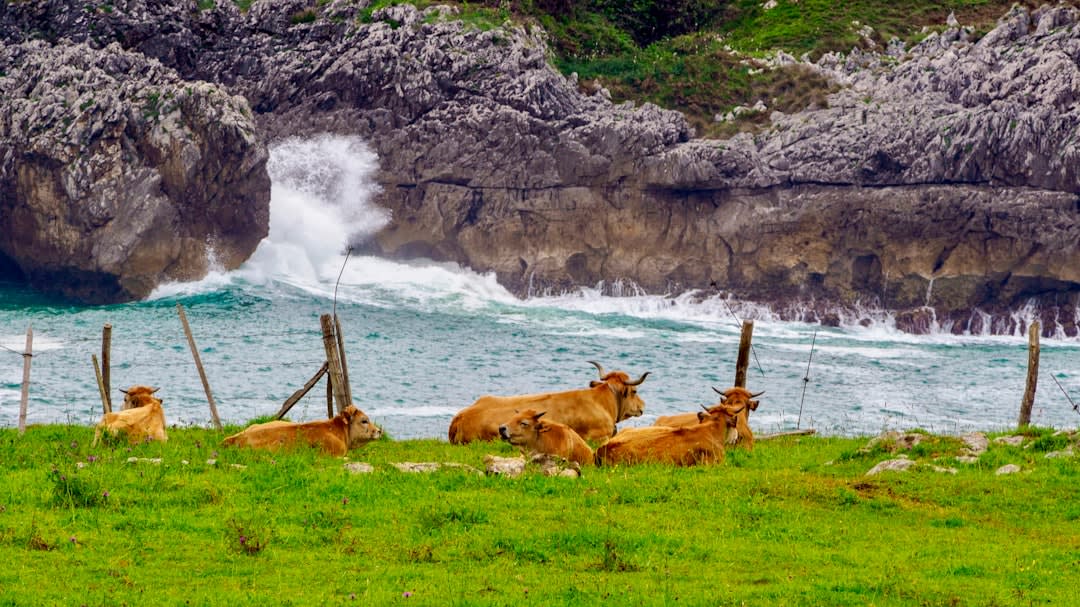
Tide matters enormously here, more than at most beaches I’ve written about. At high tide the sand mostly disappears and you’re left picking across rocks; at low tide it opens into a wide, flat expanse of sand and you can walk out among the stacks and look back at the cliffs properly. We got the timing wrong on our first visit and ended up sitting on rocks eating bocadillos while the water crept in, which in hindsight is not the worst way to spend an hour, just not what I’d planned.

Climbing back up those steps at the end, thighs burning, I remember thinking it was a fair toll to pay — the effort of getting down there is exactly what keeps it from turning into another parking-lot beach. There’s no chiringuito, no umbrellas for rent, nothing but sand, rock, and whatever you carried down yourself.
When to go: Check the tide tables before you go and aim for low tide, ideally on a weekday between June and September when the water is warm enough to swim without gasping.
Keep exploring
More from Asturias
 asturias
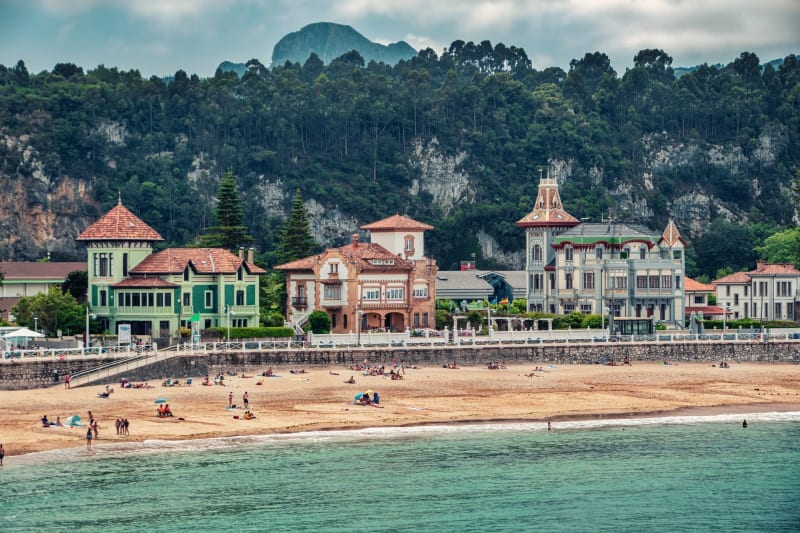
Ribadesella
A coastal town split by a river estuary, famous for cave paintings twenty thousand years old and a kayak race that turns the river briefly insane every August.
Explore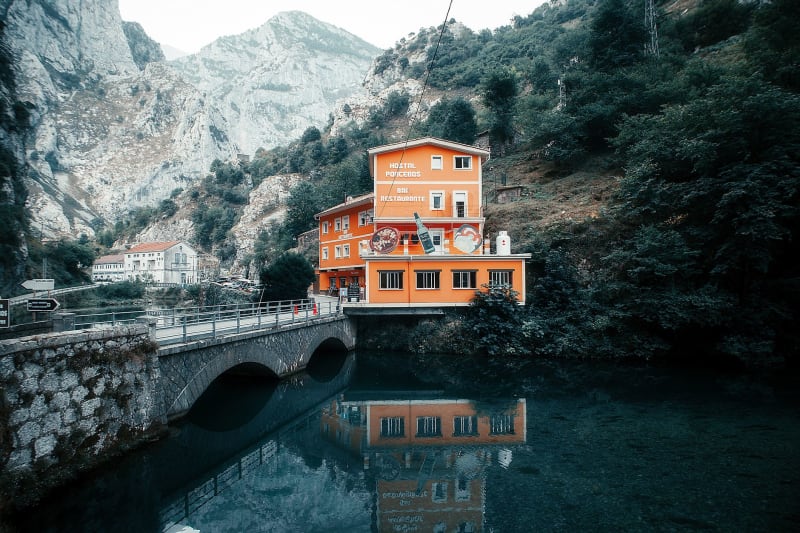 asturias
Somiedo Natural Park
One of the last wild corners of Western Europe — glacial lakes, brown bears, and stone huts used by herders whose families have worked these mountains for centuries.
Explore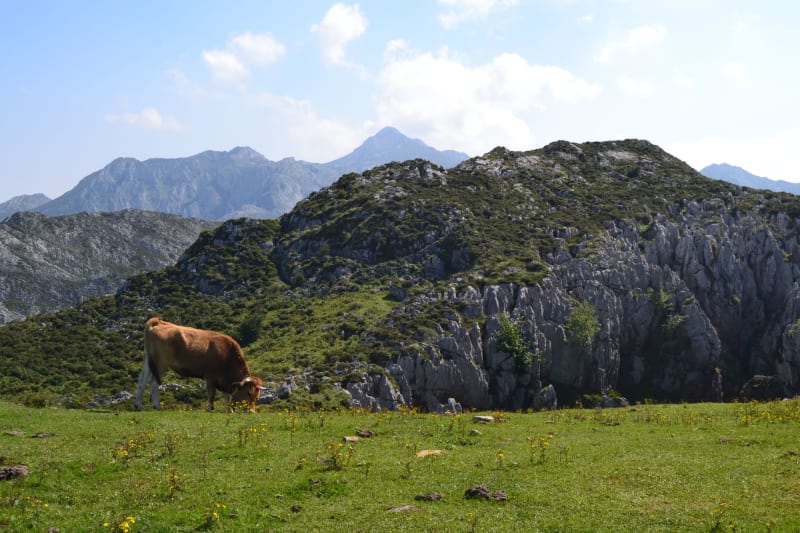 asturias
Taramundi
A remote western Asturian village where traditional knife-making has never stopped and the mountain silence is thick enough to notice.
Explore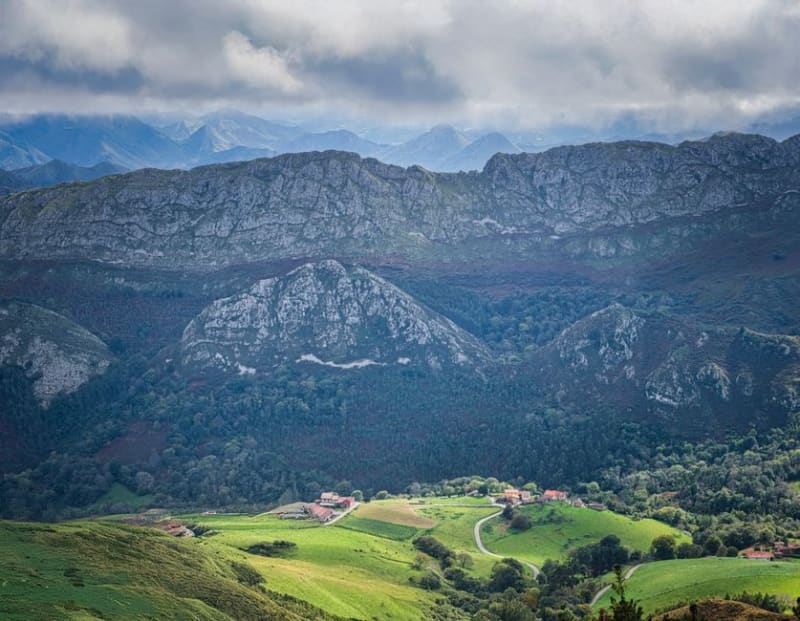 asturias
Teverga
A rural council of limestone gorges and painted caves in the interior mountains, an hour from Oviedo but decades slower in pace.
Explore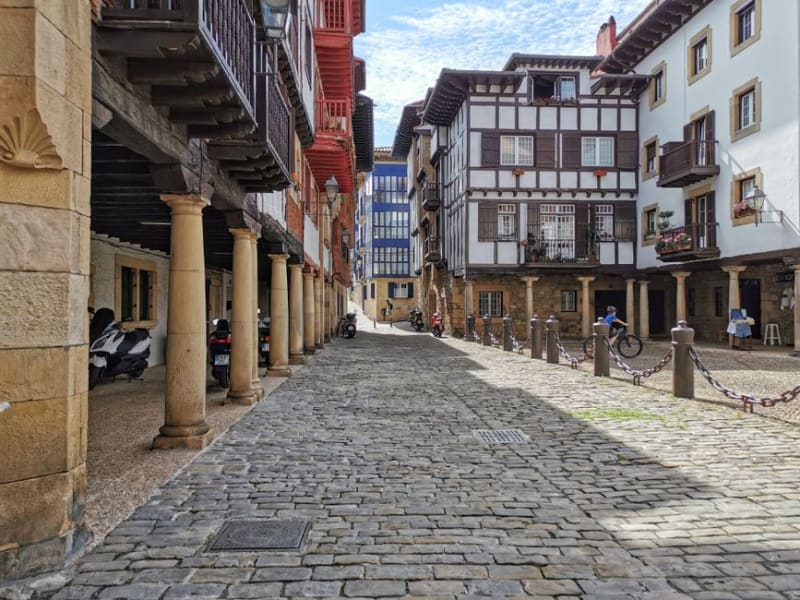 asturias
Avilés
A working port town where a restored medieval quarter and Oscar Niemeyer's curving white cultural center sit a ten-minute walk apart.
Explore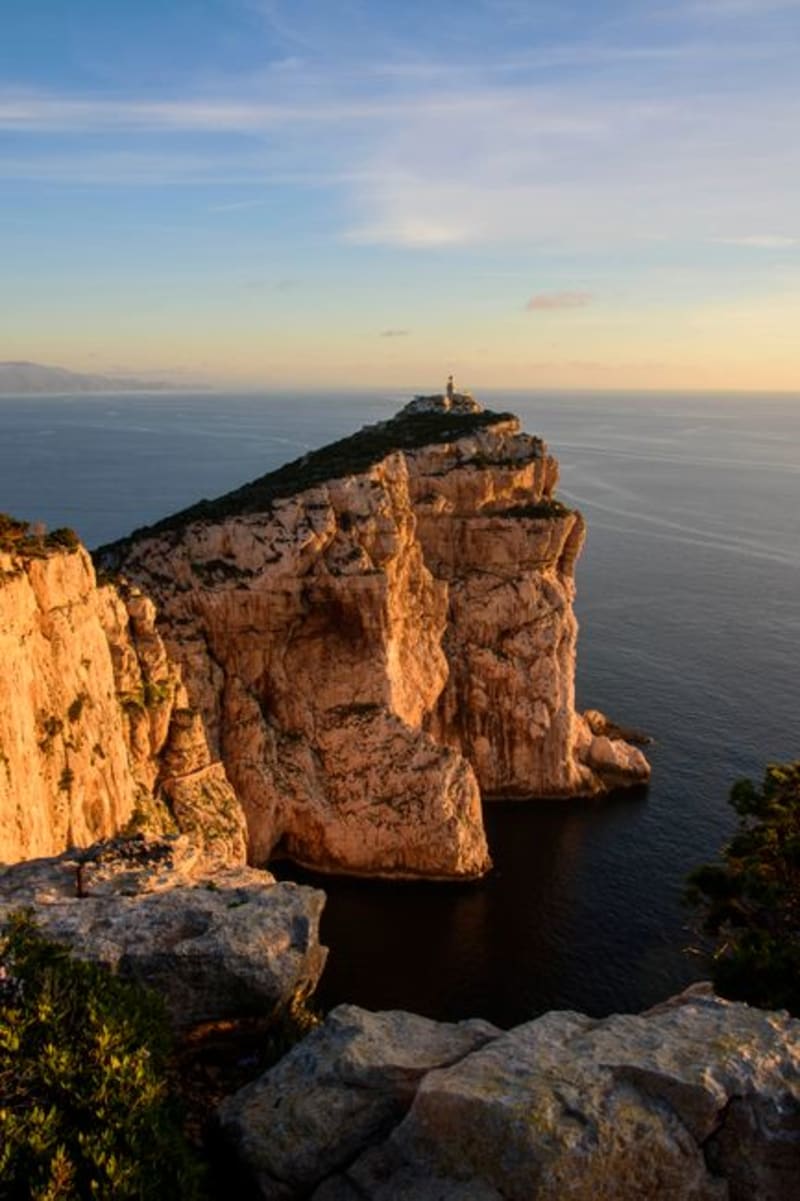 asturias
Cabo de Peñas
The northernmost tip of Asturias, where cliffs fall into the Bay of Biscay and a 19th-century lighthouse still watches over the fog.
Explore