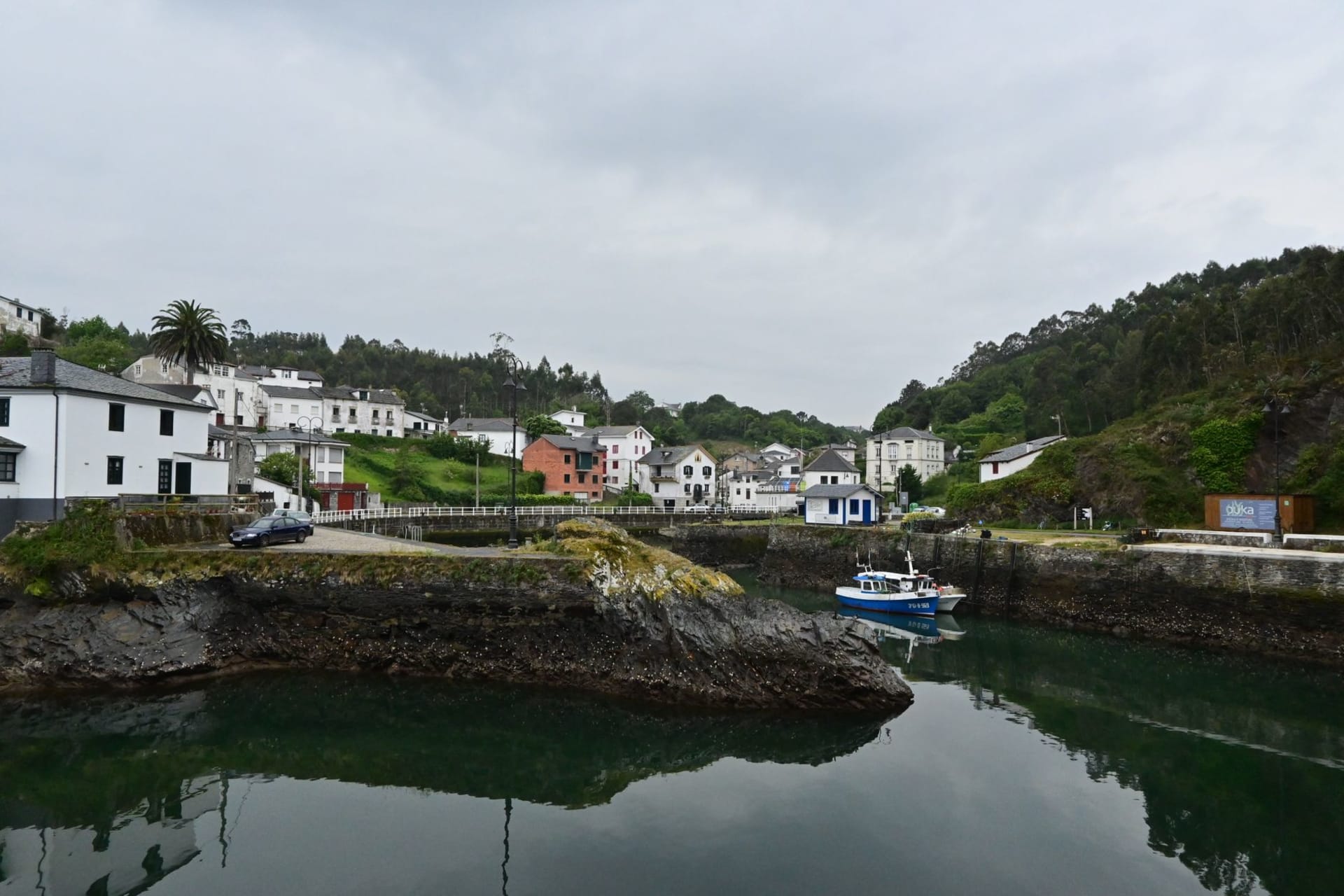
Lastres
"A fishing village that still fishes is rarer than it should be. Lastres is one of the survivors."
Lastres — Llastres in Asturian — is built on a slope so steep that it seems less like a village and more like a controlled landslide of houses arrested halfway to the sea. It clings to a cliff on the central Asturian coast, the lanes dropping in a series of stairs and ramps toward a small harbour at the bottom, and the whole thing is so picturesque that I was prepared to be cynical about it. I wasn’t, in the end, mostly because the harbour is still a working one.
Down to the harbour
We came down through the village on foot, because you have to — the upper streets are barely wide enough for a person carrying shopping, let alone a car — and the descent is a pleasure in itself. The houses are stacked at improbable angles, their balconies hung with washing and geraniums, and at every gap between them the sea appears below in a flat grey-blue band. The smell changes as you go down: woodsmoke and damp stone up top, then progressively more salt, diesel and fish until you reach the port itself.
The harbour is small and entirely unromantic in the best way. There were men mending nets, a couple of small fishing boats unloading crates, and a fish market that operates with the brisk efficiency of a place that has no time for tourists getting in the way. I stood and watched a crate of hake come in and got a look from a fisherman that suggested I should either buy something or move along. Lia, who is far better at this than I am, struck up a conversation with the woman running the market and we left twenty minutes later knowing more about the local octopus season than either of us strictly needed to.

The view from the mirador
Above the village, near the church of Santa María de Sábada, there is a mirador — a viewpoint — that gives you the whole thing at once: the stacked houses, the harbour, the curve of the coast and, on a clear day, the snow line of the Picos de Europa hanging improbably behind the green hills. It is one of the more photographed views in Asturias and it earns it. We sat there for a while in the late afternoon, eating a bag of the region’s excellent hard cider sweets that Lia had bought somewhere on the way down, watching the light go flat and golden over the water.
Lastres also has a quiet fame as a film location — a long-running Spanish television series was shot here, which has brought a certain number of visitors who come looking for the houses they saw on screen. It hasn’t ruined the place. The village is too steep, too working, and too genuinely lived-in to be flattened into a set, and the fishermen plainly could not care less about who has filmed what. That indifference is, I think, exactly what keeps it honest.

When to go
Late spring through early autumn for the most reliable weather, though Asturias is green precisely because it rains, so pack accordingly. Come in the late afternoon when the boats return and the harbour is busiest, and eat the seafood as close to the port as you can get — the restaurants down by the water serve hake and octopus that was swimming that morning. Wear shoes you can climb in; the village is all gradient.