Europe
Asturias
"The Spain nobody warned me about — and the one I keep going back to."
I arrived into Asturias on a bus from Santander in a light drizzle that nobody apologized for, and by the time I’d checked into a small guesthouse in Oviedo and found my way to a sidería off Calle Gascona, I understood that this was not the Spain of the tourist posters. There was no flamenco, no blinding white light, no orange groves. Instead: a long wooden bar, cider poured from shoulder height in a thin amber arc that caught the light before it hit the glass, a wedge of Cabrales blue so intense it made my eyes water, and a table of men in their seventies arguing about football with the focus of diplomats negotiating a ceasefire. I felt, immediately, that I had found something real.
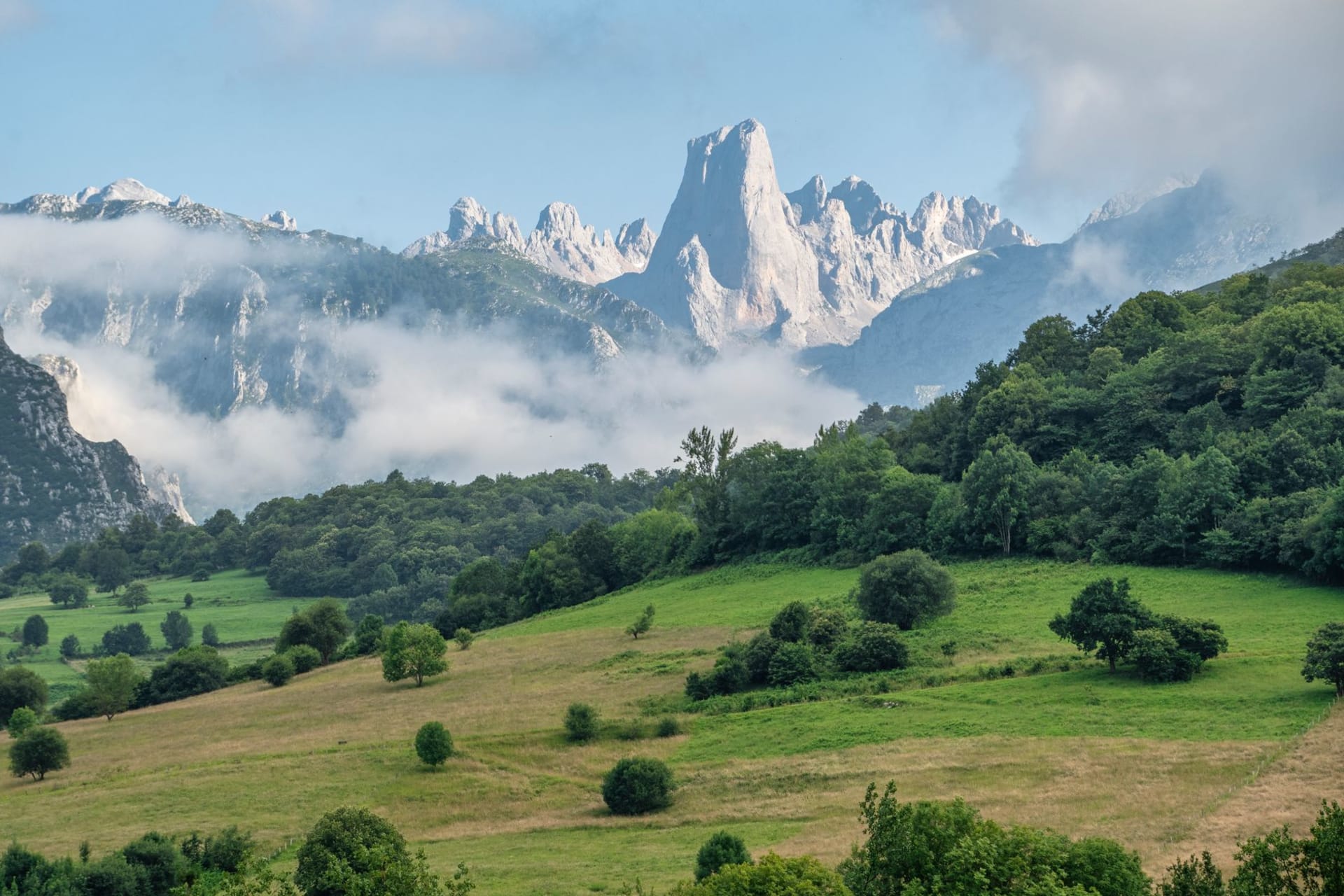
Asturias sits in the northwest corner of the Iberian Peninsula, sandwiched between the Cantabrian Sea and the Picos de Europa — a range of limestone peaks so dramatic they look like someone crumpled the earth and forgot to smooth it back out. The coast is nothing like Andalucía: it’s wild, green, frequently gray, with beaches like Playa de Gulpiyuri — a pocket of sand completely surrounded by cliffs, its waves arriving through underground tunnels — that you’d expect to find in Ireland, not Spain. Inland, the villages of the Somiedo Natural Park sit in valleys so remote that the bears and wolves that went extinct elsewhere in Western Europe never quite got the memo. The cheese — Afuega’l Pitu, Gamonéu, Cabrales — is aged in mountain caves and tastes like it. Fabada asturiana, the region’s great bean stew with chorizo and morcilla, will rearrange your opinion of what a bowl of legumes can do.
The cider culture deserves its own paragraph. Asturian sidra natural is nothing like Breton or English cider — it’s tart, barely carbonated, meant to be consumed in small pours poured high and drunk immediately before the fizz dies. The ritual of the escanciado, that theatrical pour, is not performance for tourists: it’s how you aerate the drink. Every sidería in Oviedo will hand you a glass and expect you to participate. By the third round I had stopped spilling it on my shoes.
When to go: May through September for the best weather, though “best” in Asturias still means a cardigan in the evenings. July and August bring Spanish domestic tourists to the coast, which thickens the beaches without ruining them. June is my preference — the valleys are absurdly green, the mountain paths still quiet, and the festivals haven’t started crowding the villages yet.
What most guides get wrong: They present Asturias as a detour from the rest of Spain, a green footnote before you head south to the real thing. It isn’t a detour. It’s a destination that makes the rest of Spain look slightly homogenized by comparison. The region never had a Moorish occupation, never got absorbed into the Castilian aesthetic mainstream, and it shows — in the food, the architecture, the temperament of the people, the particular stubbornness of the culture. Come here first, or come here last, but don’t treat it as an afterthought.