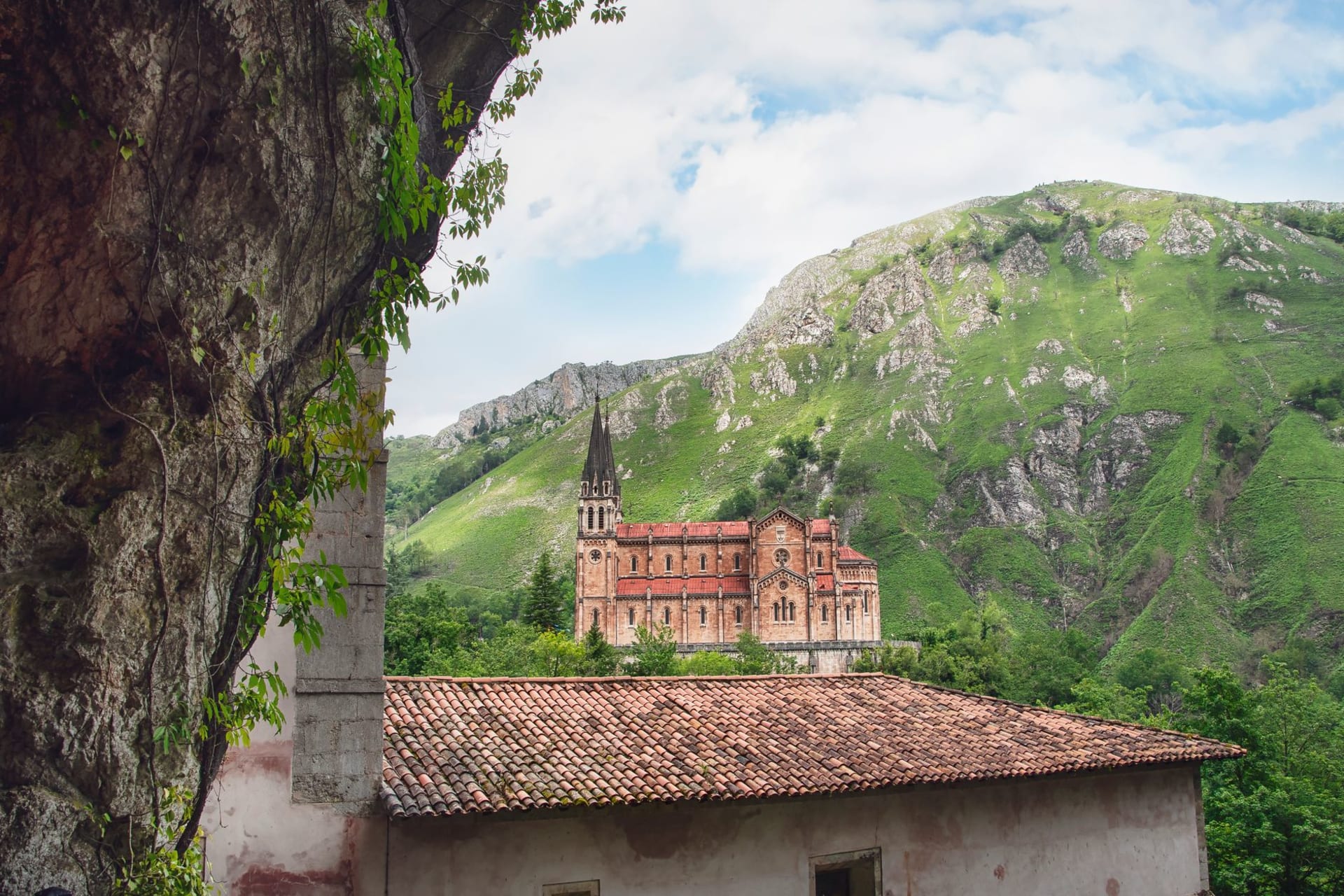
Covadonga
"I'm not religious, but I stood in that cave with the waterfall and thought: I understand why people built a shrine here."
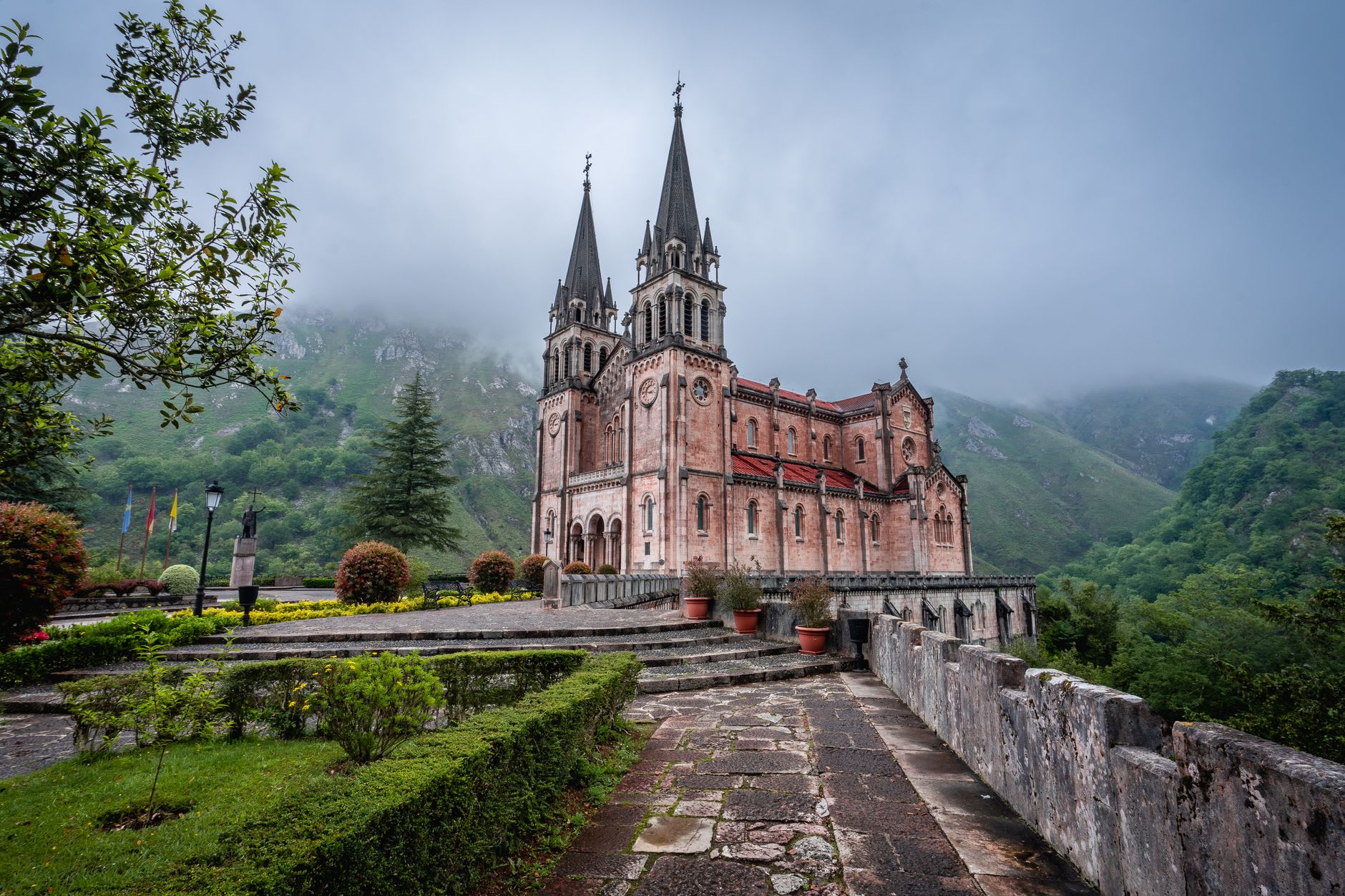
I arrived at Covadonga at seven in the morning, before the buses from Cangas de Onís had started running, and for twenty minutes I had the place almost entirely to myself. The pink neo-Romanesque basilica — completed in 1901, looking exactly like a building that was designed to make an impression on approaching pilgrims — glowed in the early light against the dark green of the mountains behind it. A priest was sweeping the steps. A cat was sitting on the wall of the lower fountain, watching the priest with apparent indifference. I stood there eating a piece of bread I’d bought in the village and felt briefly that everything about this moment was exactly right.
Covadonga is where — according to the historical account, though historians debate the details — the Visigoth king Pelayo defeated a Moorish army in 722, beginning the long Christian reconquest of the Iberian Peninsula. The cave beside the basilica holds the statue of the Virgin of Covadonga, patroness of Asturias, set into the rock face above a waterfall that drops into a pool below. The cave is damp and cool and the sound of the water never stops, and people have been coming here to pray for thirteen centuries. I’m not religious, but I stood there for a while and I understood, completely, why this particular place would generate devotion. There’s something in the combination of rock and water and enclosed space and a view of mountains through the entrance that works on a very old part of the human brain.
The Lagos de Covadonga — Enol and Ercina — sit twelve kilometers up the mountain road from the basilica, at around 1,100 meters, and are genuinely startling. Glacial lakes in a limestone landscape, their water a deep reflective green-grey, surrounded by peaks that in May still hold patches of snow. The road up is narrow and in high season closed to private vehicles — you take a shuttle bus from the lower car park, which is annoying in the way all shuttle buses are annoying, but then you round a bend and the first lake appears and you immediately forgive everyone involved. On the day I went, a family of cows was standing at the water’s edge drinking with the total nonchalance of animals that have been doing this for generations and find the scenic acclaim from tourists entirely unremarkable.
The hiking around the lakes covers terrain that ranges from an easy circuit of Lake Enol to more demanding routes up toward the peaks that require proper footwear and a weather window. In June the wildflowers are extraordinary — mountain saxifrage, gentians, narcissus on the higher slopes. The air at this altitude has a quality I can only describe as clean in a way that city air is not even when city people call it fresh.

The village below the basilica has a handful of restaurants that do a solid fabada and a local trout dish that comes with boiled potatoes and a sense that this is what the people on their way down from the lakes have been eating for decades. Nothing inventive. Everything right.
When to go: Late May to early June for the wildflowers and the best light without peak crowds. September is excellent for the golden autumn atmosphere and cooler hiking temperatures. Avoid the last two weeks of August entirely — the road to the lakes is overwhelmed and the experience becomes a queue management exercise rather than a visit to a mountain landscape.